At Shermac, we spend a lot of time on mine sites and civil projects talking with engineering managers, asset teams and field technicians about what keeps operations running smoothly. Service truck fleet management is always part of that conversation.
Well-managed fleets are built on clarity. When service trucks are designed around real site conditions and supported by disciplined planning, they become a stable foundation for maintenance operations.
Over the years, we’ve seen the same principles deliver consistent results across demanding Australian environments. The following best practices reflect what works in the field, not just in theory.
Effective service truck fleet management focuses on a few core operational principles:
When these fundamentals are applied consistently, service truck fleets operate with greater reliability, lower downtime and stronger long-term lifecycle value.
Service truck fleet management starts with a defined strategy.
We always encourage operators to step back and assess what their service trucks are required to support. Site conditions, terrain, haul distances, climate, equipment size and fluid demand all influence how a fleet should be configured.
A clear strategy aligns truck capacity with workload. It defines tank volumes, pump flow rates, storage requirements and access systems based on real servicing patterns. It also sets expectations for uptime targets, response times and maintenance intervals.
When planning is aligned across sites, the operational benefits are tangible:
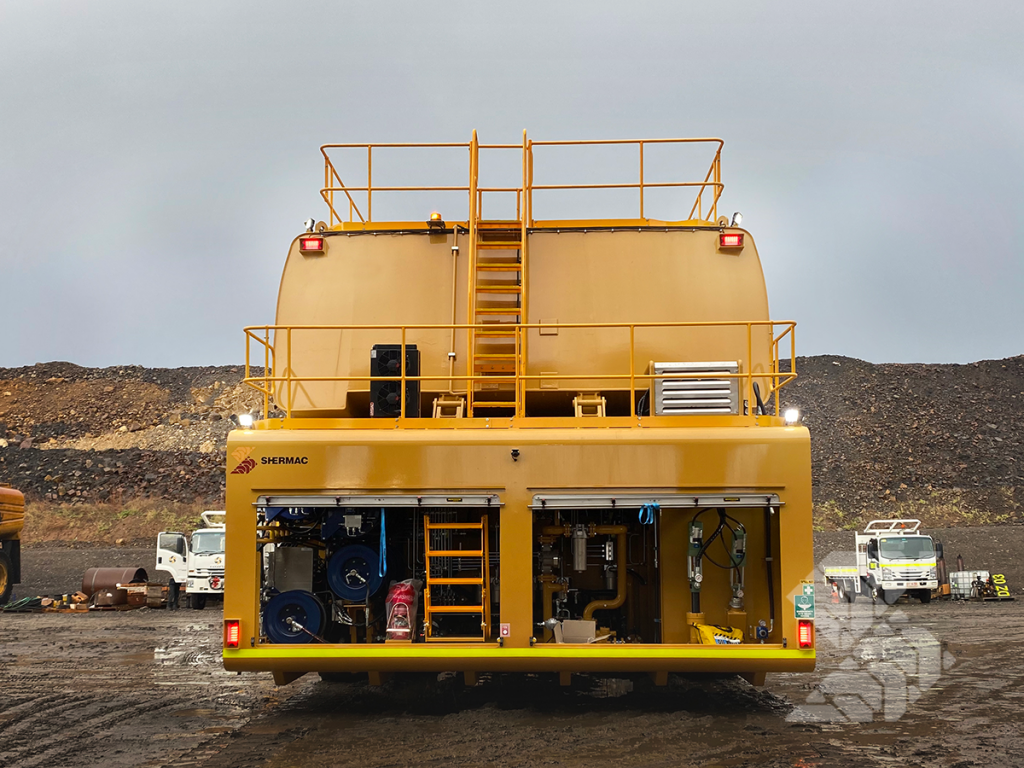
Standardisation is one of the most effective ways to strengthen service truck fleet management across multiple sites.
When service trucks share consistent layouts, tank configurations and core components, maintenance teams work with familiar systems every day. That familiarity improves servicing speed, reduces training time and lowers operator error.
Modular design also plays an important role here. Structured tank layouts, repeatable hose reel placement and consistent pump systems allow fleets to scale without adding unnecessary complexity.
Across growing operations, standardised service truck builds support:
In practical terms, consistency across your fleet creates operational stability. And stability is what keeps uptime predictable.
Strong service truck fleet management relies on measurable performance.
Telematics, utilisation data and maintenance records provide clear insight into how each truck is operating in the field. Fuel usage, idle time, service response times and repair frequency all highlight where adjustments are required.
Condition-based maintenance builds on that data. Instead of relying purely on fixed service intervals, maintenance planning reflects actual workload, environment and equipment stress.
Key metrics worth tracking include:
When data is reviewed consistently, fleet decisions become more precise and long-term reliability improves.
In mining and civil operations, safety and compliance sit at the centre of effective service truck fleet management.
Every truck in the fleet should meet site-specific requirements as a baseline. ROPS, compliant lighting, spill control, guarding and documented inspections all need to be embedded into the fleet from day one.
At Shermac, we build mine-spec compliance into every service truck as standard. That approach simplifies fleet management for engineering and procurement teams because the safety framework is already engineered into the vehicle.
Fleet-wide compliance discipline should include:
When compliance is engineered into the fleet and supported by disciplined processes, risk is reduced and operational confidence improves.
Parts availability directly affects uptime.
Service truck fleet management should include a clear strategy for critical spares, consumables and high-wear components. When fleets are standardised, parts forecasting becomes more accurate and stockholding is easier to control.
We encourage operators to review usage patterns and align inventory levels with actual servicing demand across sites.
A disciplined parts strategy supports:
When the right parts are available at the right time, service trucks stay productive and field teams stay on schedule.
Well-configured trucks still rely on capable operators.
Service truck fleet management should include structured training around safe operation, fault identification and correct servicing procedures. When crews understand the systems they’re working with, tasks are completed faster and with fewer errors.
We’ve seen consistent layouts and clear labelling make a measurable difference in the field. Familiar systems reduce hesitation and improve confidence.
No two sites operate under the same conditions. Terrain, climate, haul distances and equipment size all influence how service trucks should be specified.
Service truck fleet management needs to account for heat, dust, corrosion exposure and payload demands. Tank material selection, pump capacity, filtration systems and access design all affect long-term durability.
At Shermac, we design and build service trucks specifically for Australian mining and civil environments. That means aligning each configuration to the realities of the site it will support, not relying on a generic template.
When fleets are engineered for their operating conditions, reliability improves and lifecycle costs remain controlled.
Strong service truck fleet management develops over time through review and refinement.
As your operation grows, servicing patterns shift. Reviewing how your service trucks are performing in the field helps you stay aligned with those changes.
That means looking at uptime trends, maintenance spend, response times and operator feedback together. If certain layouts slow tasks down, adjust them. If utilisation data shows consistent pressure on specific units, rebalance capacity.
Ongoing review keeps your fleet aligned with real site demands and protects long-term performance.
Service truck fleet management achieves stronger, more sustainable results when it is guided by engineering discipline and operational alignment from the outset.
At Shermac, our approach begins with a comprehensive understanding of your site environment, servicing requirements, equipment profile and compliance obligations. We assess how maintenance is performed in the field, how frequently assets require support, and where efficiency, safety and reliability matter most.
From this foundation, configuration decisions are made with intent. Tank capacities are aligned with actual fluid demand. Layouts are designed to support practical servicing workflows. Mine-spec compliance and safety systems are integrated as standard. Standardisation is considered early to ensure scalability across multiple sites without introducing unnecessary complexity.
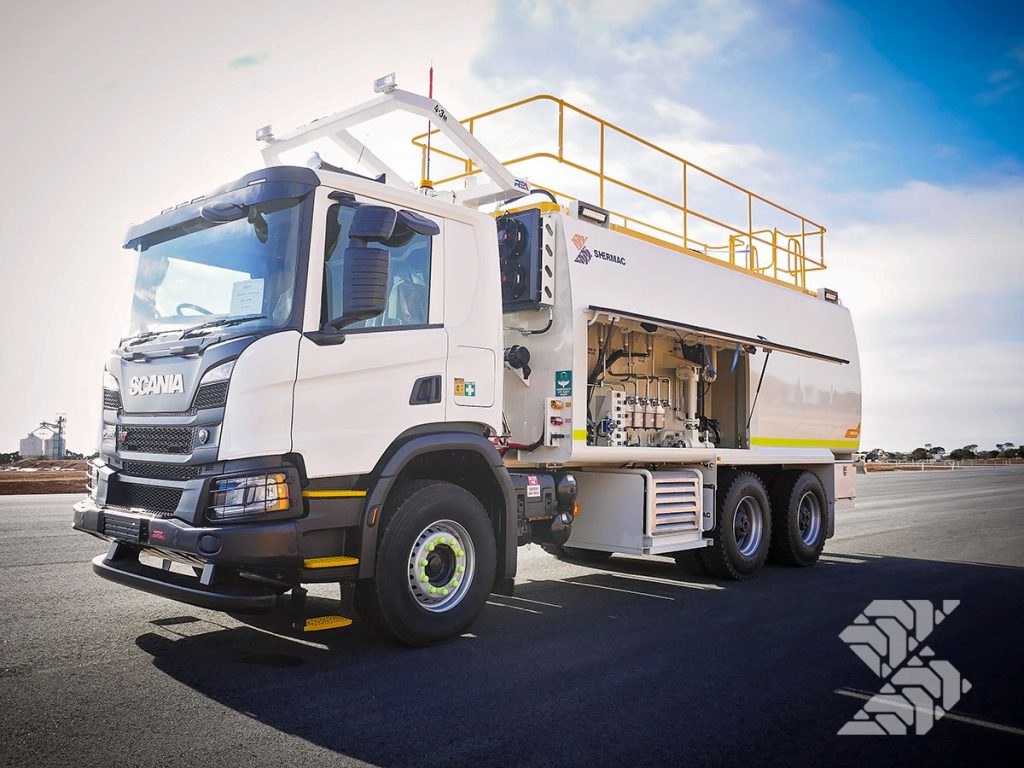
Our involvement doesn’t end at delivery. Shermac provides ongoing fleet support and maintenance, including spare parts supply, field servicing and technical assistance to keep your service trucks operating at peak performance. This lifecycle approach ensures your fleet remains compliant, reliable and aligned with evolving operational demands.
This collaborative process ensures that operational insights are translated into practical vehicle configurations that simplify fleet management, protect uptime, and deliver long-term lifecycle value.
If your current fleet is due for review, or you’re planning to expand, now is the time to reassess how your service trucks are supporting your operation.
At Shermac, we design and manufacture Australian-made, mine-spec compliant service trucks engineered around your site requirements. From tank configuration and pump systems to safety integration and ergonomic layouts, every build is developed to strengthen reliability and simplify fleet management.
To bring greater structure and control to your service truck fleet, speak with our team.
Talk to our well-trained and knowledgeable team to find out more about our customisation process and how we can help you.
Call our team on 1300 799 943 or email [email protected] with your inquiry.