1300 799 943 Enquire Now

Why Mine-Spec Service Trucks Are a Smart Investment

You can tell when a site has invested properly in its support equipment. Servicing is consistent, equipment is fuelled and maintained when it should be, and machines are ready to go for the next crew without delays carrying over between shifts.

That level of consistency doesn’t happen by accident. It comes from having the right systems in place to support the fleet on the ground.

A mine spec service truck plays a key role in that. When it’s engineered around your operation, it allows your team to service equipment efficiently on site, keep workflows moving, and maintain control over uptime across the day.

To understand where that impact comes from, it starts with what “mine-spec” actually means in practice.

What makes a service truck “mine-spec”?

Mine spec starts with compliance built into the vehicle from day one. Safety systems, fluid handling and site requirements are all accounted for at the engineering stage, so the truck arrives ready to operate within strict mine-site standards.

Every Shermac service truck is delivered mine-spec compliant as standard. That includes ROPS, wheel chocks, safety rails, strobes, high-vis markings and spill control systems, all integrated into the build to support safe, controlled operation on site.

Environmental control is also designed into the system. Tanks, pumps and storage layouts are configured to manage diesel, oils and waste safely, reducing risk during daily servicing tasks.

With that foundation in place, the value of a mine spec service truck comes through in 6 key areas that directly impact uptime, efficiency and long-term fleet performance.

1. Reduced downtime starts with engineered reliability

Downtime drops when your service truck can handle the conditions it works in and keep performing day after day. When servicing is reliable on your site, response times improve and equipment can get back to work faster.

That comes down to how the truck is built. Shermac service trucks use curved polytank technology to reduce stress and prevent cracking under constant movement and heat. Heavy-duty components are selected for remote, high-pressure environments, with systems designed to handle dust, vibration and extreme temperatures as part of normal operation. Every build follows a mine-spec standard, so reliability is consistent across the entire unit.

In operation, that means fewer breakdowns, less reactive maintenance and a more stable servicing process across your fleet.

2. Faster on-site servicing improves fleet productivity
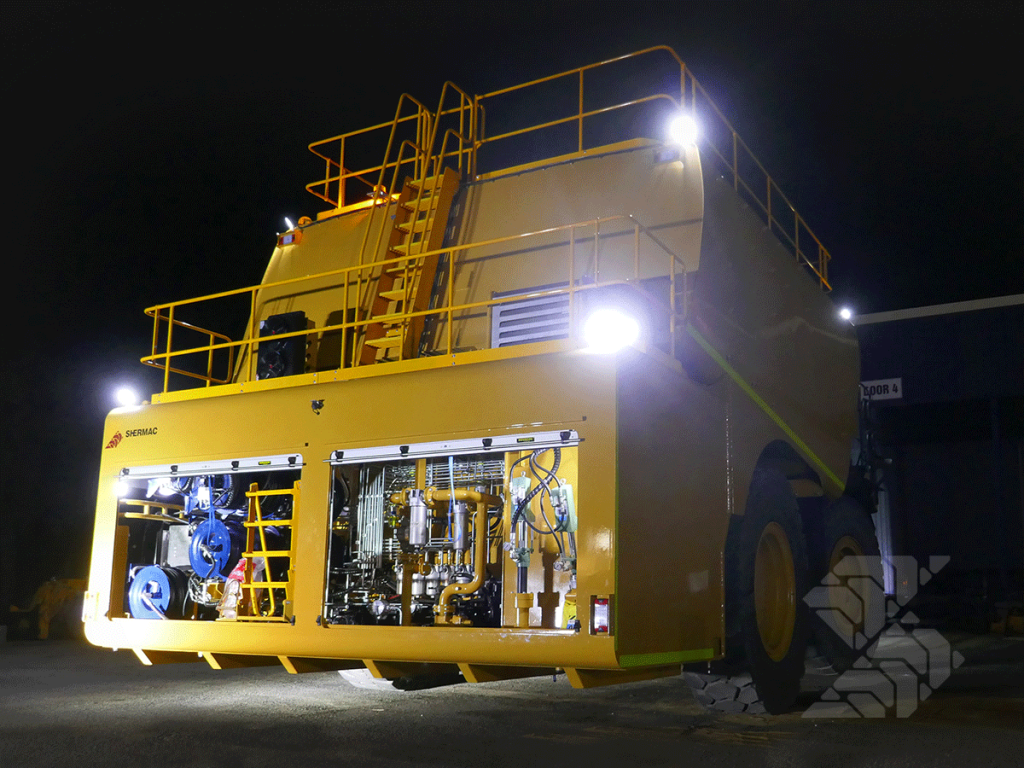
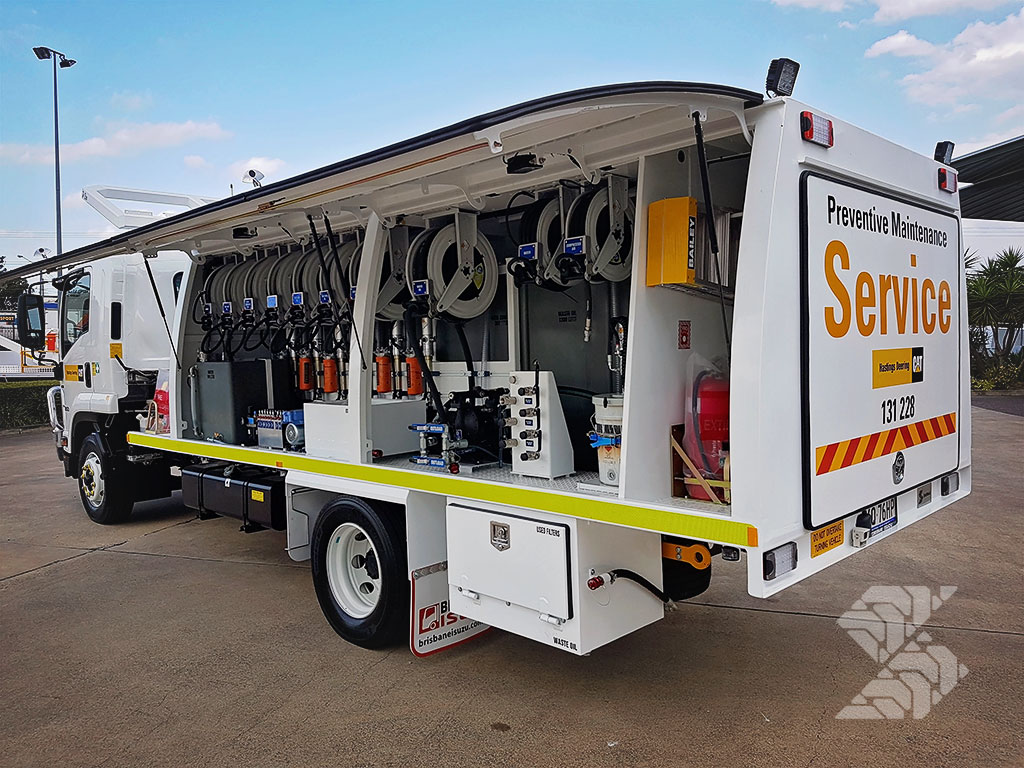
Shermac mine-spec service truck with high-flow systems and integrated layout enabling faster on-site servicing and improved fleet productivity at night.

Servicing speed has a direct impact on how much work your fleet gets through in a shift. When fuel, oils and maintenance tasks are handled quickly, equipment spends more time operating and less time waiting.

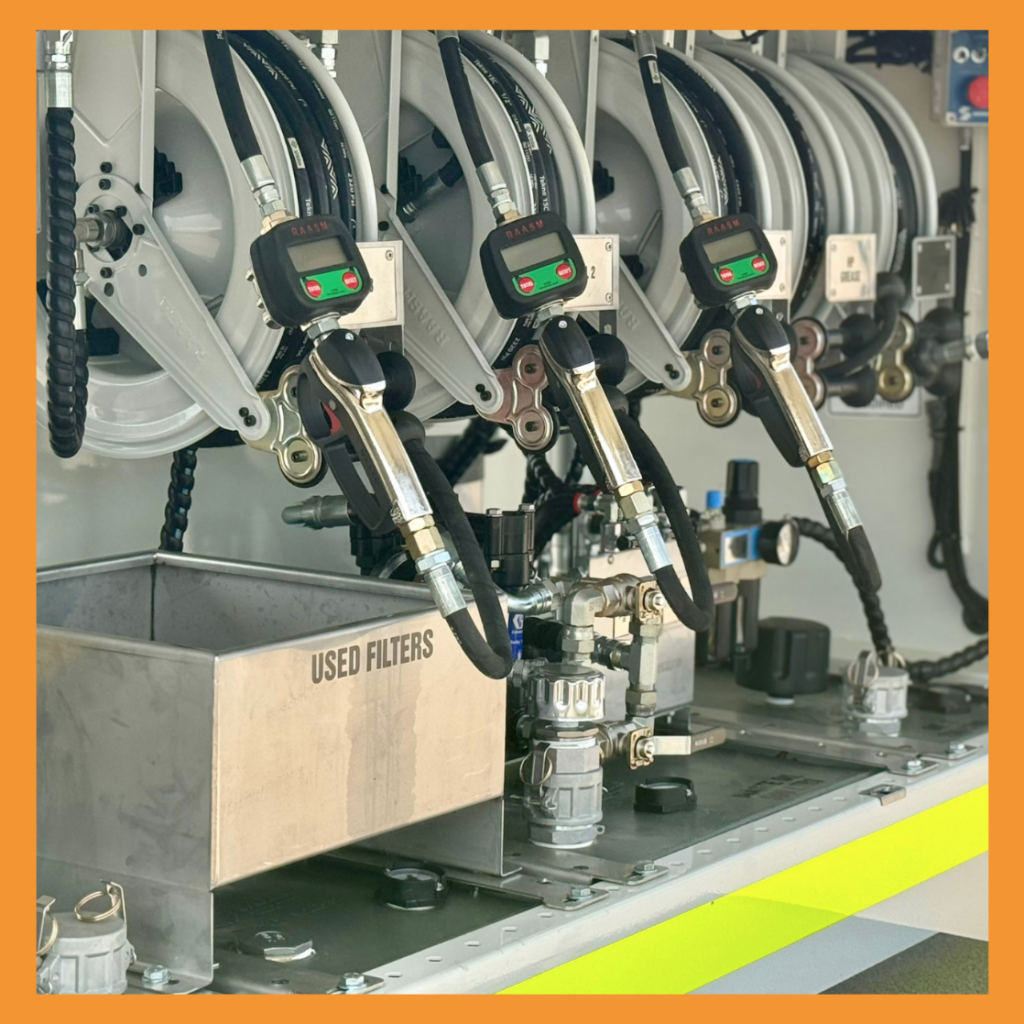
Shermac service trucks are designed to support that pace of work. High-flow diesel systems reduce refuelling time, while integrated tanks and dispensing setups allow multiple servicing tasks to be completed in one stop. Hose reels, controls and storage are positioned for efficient access, so operators can move through jobs without unnecessary handling or repositioning.

On site, that translates to shorter service intervals, faster turnaround between machines and more productive hours across the fleet.

3. Built for lifecycle value

Lower operating costs come from equipment that holds up over time and requires less intervention to keep running. When your service truck is built for longevity, maintenance becomes more predictable and easier to manage.

Shermac service trucks are manufactured under ISO9001:2015 quality processes, using durable materials and proven components suited to high-demand environments. Systems are designed for consistent performance, with layouts that support straightforward servicing and reduce wear on key components. Each build is backed by warranty and ongoing parts support, so issues can be resolved quickly without extended downtime.

Across the lifecycle, that results in fewer repairs, longer service intervals and a more reliable cost profile for your fleet.

4. Custom-built trucks eliminate operational inefficiencies

Efficiency improves when your service truck matches the way your mine site operates. Layout, tank capacity and system configuration all play a role in how quickly and effectively servicing gets done.

Shermac service trucks are engineered around your specific requirements. Tank configurations for diesel, oils, coolant and waste are sized and positioned to suit your fleet. Storage, hose reels and access systems are laid out to support real servicing workflows, so operators can move through tasks without unnecessary handling or repositioning.

That alignment removes friction from day-to-day servicing. Tasks get completed faster, operators work more efficiently, and the truck delivers consistent value across every shift.

5. Safety and compliance are built in
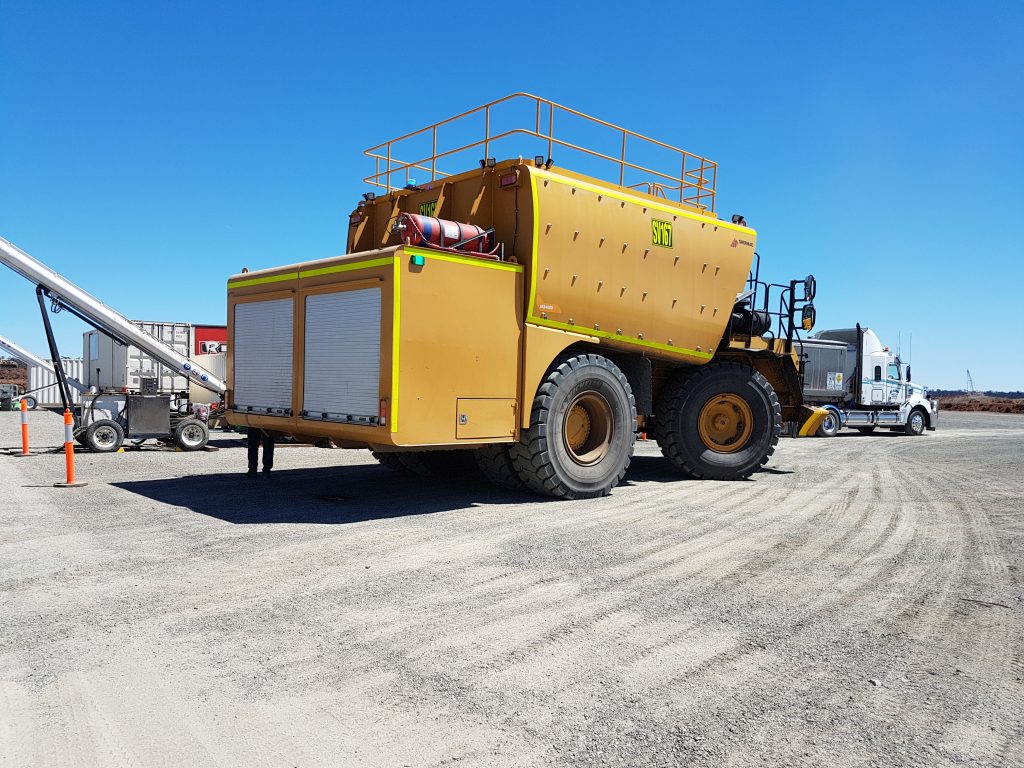
Safe servicing depends on having the right systems in place every time the truck is used. Clear access, controlled handling of fluids and strong visibility all contribute to how safely work gets done on site.

Shermac service trucks are built with mine-spec safety as standard. ROPS, safety rails, high-vis markings, strobes and spill control systems are integrated into the vehicle, supporting safe operation across day and night conditions. Access platforms and layouts are designed to give operators stable footing and clear reach when working around the truck.

On site, that leads to safer servicing practices, easier compliance with site requirements and greater confidence for both operators and supervisors.

6. Australian-made support reduced operational risk

Support becomes critical once the truck is in operation. Access to parts, service and technical guidance all affect how quickly issues are resolved and how long equipment stays in use.

Shermac service trucks are designed, built and supported in Australia, with local parts availability and dedicated aftercare built into every delivery. Components are sourced through trusted suppliers, and support teams understand the conditions the trucks are working in.

That proximity and experience reduce delays across the board. Parts arrive faster, servicing is handled sooner, and your team spends less time waiting on external support. It gives you more control over your fleet and keeps operations running without unnecessary interruptions.

Why mine-spec service trucks deliver long-term ROI

Across the life of the asset, the value of a mine spec service truck shows up in how consistently your operation runs. When servicing is built into the workflow and supported by the right equipment, delays reduce, maintenance becomes predictable, and your fleet performs the way it is expected to.

That carries through in a few key areas:

  • Higher uptime: equipment stays fuelled, maintained and ready to work
  • Faster servicing: reduced delays between jobs and across crews
  • Lower operating costs: fewer breakdowns and less reactive maintenance
  • Improved safety and compliance: systems aligned with site requirements
  • Stronger lifecycle value: longer service life with predictable maintenance
  • Greater operational control: less reliance on external support

Over time, these gains compound across every shift, every crew and every asset on site.

Talk to Shermac about your service truck requirements

Every operation runs differently. Getting the right service truck comes down to understanding how your site runs day to day.

Have a chat with the Shermac team about your setup and what you’re trying to improve. We’ll work through it with you and design something that fits properly, so your servicing runs smoother and your site keeps moving the way it should.
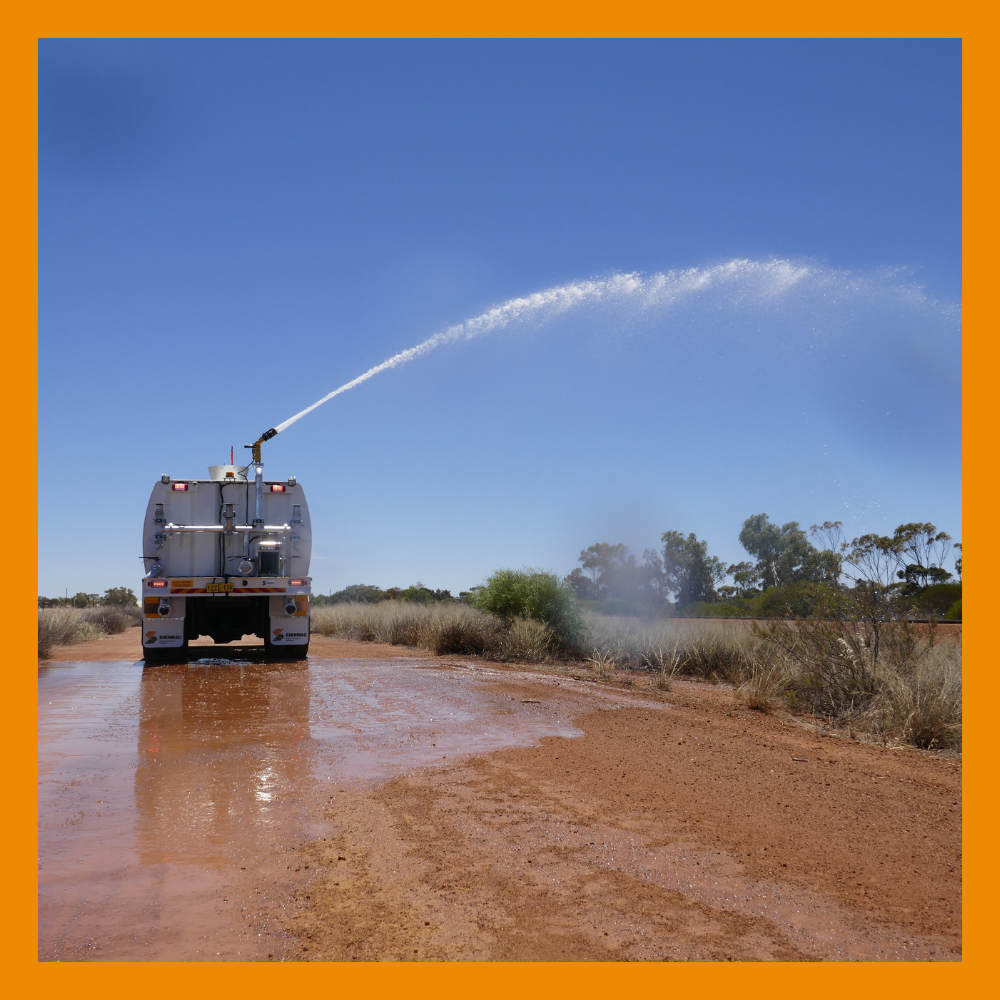
In Western Australia, where rugged terrain and remote locations are part of everyday life, having a reliable and efficient service truck is essential for businesses across various industries. Whether it’s mining, agriculture, or construction, the harsh conditions demand vehicles that are built to withstand the challenges of the Outback. Here’s a brief guide on how to spec out a service truck tailored to meet Western Australian standards, with a nod to Shermac’s ISO9001:2015 quality assurance:
 

1. Identify Your Requirements: Start by assessing the specific needs of your operation. Consider factors such as terrain, climate, payload capacity, and required functionalities. Determine the tasks your service truck will be expected to perform, whether it’s fuel and lubricant delivery, maintenance support, or emergency response.

2. Choose the Right Components: Select components and features that are well-suited to the demands of Western Australia’s environment. Opt for heavy-duty chassis and suspension systems capable of handling rough terrain. Consider weather-resistant materials and coatings to protect against corrosion and wear. Ensure that the vehicle is equipped with advanced safety features to enhance driver and operator protection.

3. Customize to Your Specifications: Work with a reputable manufacturer like Shermac to customize your service truck to your exact specifications. From tank capacities and compartment configurations to specialized equipment and accessories, tailor the vehicle to meet the unique requirements of your operation. Ensure that the design complies with relevant Australian standards and regulations.

4. Prioritize Reliability and Durability: In Western Australia’s remote and challenging conditions, reliability is paramount. Choose components and materials known for their durability and longevity. Ensure that the vehicle undergoes rigorous testing and quality assurance processes to guarantee its performance and resilience in the field.

5. Consider After-Sales Support: Look for a manufacturer that offers comprehensive after-sales support and service. Ensure that maintenance and spare parts are readily available to minimize downtime and keep your service truck operating at peak performance. Opt for a supplier with a reputation for excellence in customer service and support.

As you navigate the process of spec’ing out a service truck for Western Australian standards, it’s essential to partner with a trusted manufacturer like Shermac. With our ISO9001:2015 quality assurance certification, you can rest assured that our vehicles meet the highest standards of quality, reliability, and performance. From initial consultation to delivery and beyond, Shermac is committed to delivering service trucks that excel in even the most demanding environments of Western Australia.

Shermac is an Australian family-owned business that specialises in custom-built water cartage and support vehicles, including service trucks, for the mining, civil and commercial sectors

In addition to engineered-for-purpose equipment, Shermac customers can rely on a well-oiled spare parts and support capability that supports productivity, utilisation, and effectiveness, and minimises operational risk for customers.   

On handover to a customer, each Shermac vehicle or trailer is accompanied by comprehensive documentation that includes a parts list with descriptions, location diagrams and part numbers. 

Detailed documentation ensures that both the customer and Shermac are on the same page regarding components and their locations within the vehicle. Clear descriptions and part numbers means that the right parts can be easily identified and sourced when needed, which is crucial for keeping the truck in optimal operational condition. 

With proper documentation, technicians can quickly locate specific parts or components, reducing downtime and increasing efficiency. This is especially important in industries where downtime can result in significant financial losses. 

Shermac maintains a substantial parts inventory at its Dalwallinu head office and at its premises in the Perth suburb of Bayswater. 

This inventory comprises both serviceable items that require routine replacement such as filters, belts, and seals, and critical components essential for the operation of equipment. Shermac analyse usage patterns and historical data to predict the demand for spare parts, and automated minimum stock re-ordering ensures adequate inventory levels to meet customer needs. 

Shermac strive to ship customer orders same day, with a range of courier delivery options to ensure delivery to suit customer needs. 

Shermac have actively worked to de-risk its supply chain by preferencing reputable and proven Australian suppliers and maintaining safety stock levels for critical components ensures that there is a buffer in case of unexpected spikes in demand or supply chain disruptions. 

——— 

Shermac’s commitment extends beyond superb engineering and fabrication to encompass comprehensive support services. With a focus on efficient documentation, active spare parts inventory management, swift parts delivery, and supply chain resilience, Shermac stands as a reliable ally for industries demanding top-notch equipment and unwavering operational efficiency. 

If you’d like to discuss your next project, please call our team on 1300 799 943 or email [email protected] with your inquiry.    

In industries where cleanliness is paramount, such as construction, mining, agriculture, and manufacturing, maintaining equipment and machinery in pristine condition is not just a matter of aesthetics—it’s a critical component of operational efficiency and safety. This is where hot wash skids come into play, offering versatile and effective solutions for industrial cleaning tasks. Let’s explore what hot wash skids are and how they can be used across various applications:

What Are Hot Wash Skids?

Hot wash skids are portable cleaning systems designed to deliver high-pressure hot water for industrial cleaning purposes. These skids typically consist of a compact unit mounted on a skid base, housing components such as a diesel-fired burner, water tank, high-pressure pump, hoses, and spray gun. The burner heats water to elevated temperatures, which, when combined with high pressure, effectively removes stubborn dirt, grease, grime, and contaminants from surfaces.

Applications of Hot Wash Skids

1. Heavy Equipment Cleaning: Hot wash skids are indispensable for cleaning heavy machinery and equipment used in construction, mining, and agriculture. From excavators and bulldozers to tractors and harvesters, these machines are subjected to harsh operating conditions and accumulate dirt and debris over time. Hot wash skids provide a quick and efficient solution for removing mud, grease, oil, and other residues, helping to maintain equipment performance and prolong service life.

2. Vehicle Fleet Maintenance: Fleet managers rely on hot wash skids to keep trucks, trailers, and other vehicles clean and well-maintained. Whether it’s removing road grime from commercial trucks or sanitizing transport vehicles in the food industry, hot wash skids offer a versatile solution for maintaining a clean and professional fleet appearance.

3. Industrial Facility Cleaning: Manufacturing plants, warehouses, and processing facilities often require regular cleaning to comply with hygiene standards and ensure a safe working environment. Hot wash skids can be used to clean floors, walls, machinery, and other surfaces, removing grease, oil, chemicals, and contaminants with ease.

4. Oil and Gas Industry: In the oil and gas sector, hot wash skids play a crucial role in cleaning equipment and facilities in upstream, midstream, and downstream operations. From wellhead maintenance and pipeline cleaning to refinery equipment degreasing, hot wash skids offer efficient solutions for tackling tough cleaning challenges in hazardous environments.

5. Construction Site Cleanup: Construction sites are notorious for accumulating dirt, mud, and debris, posing safety hazards and environmental concerns. Hot wash skids are employed to clean construction equipment, tools, scaffolding, and work areas, helping contractors maintain a clean and organized job site.

Benefits of Hot Wash Skids

  • Efficient Cleaning: Hot water combined with high pressure provides superior cleaning power, reducing cleaning time and effort compared to traditional methods.
  • Versatility: Hot wash skids can be used for a wide range of cleaning applications across various industries, offering flexibility and versatility.
  • Portability: Compact and portable design allows hot wash skids to be easily transported and deployed wherever cleaning is needed, even in remote or inaccessible locations.
  • Cost Savings: By improving cleaning efficiency and reducing the need for manual labour and cleaning agents, hot wash skids help businesses save time and money in the long run.

In conclusion, hot wash skids are valuable tools for industrial cleaning, offering efficient, versatile, and cost-effective solutions for a wide range of applications. Whether you need to clean heavy equipment, maintain a vehicle fleet, or sanitize industrial facilities, hot wash skids provide the power and performance you need to get the job done right.

For top-quality hot wash skids, service trucks and wash-down trailers, trust the expertise and experience of Shermac. With a reputation for excellence and innovation, Shermac offers a range of hot wash skids & wash down trailers designed to meet the demanding needs of modern industries.

Contact Shermac today to learn more about how hot wash skids can enhance your cleaning operations.

Water carts play a crucial role in various industries, from construction and mining to agriculture and landscaping. Whether you’re using them for dust suppression, irrigation, or general fluid transport, selecting the appropriate capacity is essential to ensure efficient operation and productivity. Here’s a guide to help you decide on the water cart capacity that best suits your operations:

1. Evaluate Usage Requirements: Begin by assessing your specific application needs. Consider factors such as the size of the area to be covered, the frequency of use, and the duration of each task. Determine the volume of water required to meet your operational demands effectively.

2. Account for Task Frequency: If you anticipate frequent or continuous water usage, opt for a water cart with a larger capacity to minimize downtime for refilling. Conversely, if your tasks are intermittent or less demanding, a smaller capacity may suffice without sacrificing efficiency.

3. Consider Transport Efficiency: Balance the desired water volume with practical considerations related to transportation and manoeuvrability. Ensure that the chosen capacity can be transported safely and legally within your operational area, taking into account factors such as road regulations and vehicle compatibility.

4. Factor in Site Conditions: Assess the terrain and environmental conditions where the water cart will be used. Rough terrain or remote locations may require larger capacities to accommodate longer distances between refill points. Similarly, areas prone to high dust levels or frequent watering may benefit from larger volumes to minimize interruptions.

5. Anticipate Growth and Flexibility: Plan for future expansion or changes in operational requirements. Choose a water cart capacity that allows for scalability and flexibility to adapt to evolving needs over time. Investing in a slightly larger capacity upfront can provide peace of mind and accommodate potential growth without the need for immediate upgrades.

6. Consult Industry Experts: Seek guidance from industry experts or suppliers with experience in water cart solutions. They can offer valuable insights and recommendations based on your unique circumstances and help you make an informed decision.

When it comes to reliable water cart solutions, Shermac stands out as a trusted partner for all your fluid management needs. With a reputation for quality craftsmanship, durability, and customization options, Shermac offers a range of water carts designed to excel in diverse applications. Whether you need a compact unit for smaller tasks or a high-capacity model for demanding operations, Shermac has you covered.

For personalized assistance in selecting the ideal water cart capacity for your operations, don’t hesitate to get in touch with Shermac’s team of experts. With their industry knowledge and commitment to customer satisfaction, they’ll help you find the perfect solution to meet your needs.

Make the right choice for your operations by choosing the right water cart capacity, and trust Shermac to deliver excellence in fluid management solutions.

Contact Shermac today and experience the difference firsthand.

Congratulations on your new water cart! Whether you’ve purchased it for dust suppression, irrigation, or general fluid management, proper care and maintenance are essential to ensure its longevity and optimal performance. Here are some key maintenance tips to help you take care of your new water cart:

1. Read the Manual: Familiarize yourself with the manufacturer’s instructions and recommendations outlined in the user manual. It provides valuable information on operation, maintenance schedules, and troubleshooting procedures specific to your water cart model.

2. Regular Inspections: Schedule routine inspections to check for any signs of wear, damage, or leaks. Pay close attention to critical components such as hoses, fittings, valves, and the tank itself. Promptly address any issues to prevent further damage and maintain reliability.

3. Cleanliness is Key: Keep your water cart clean both inside and out. Thoroughly rinse the tank and spray system after each use to remove any debris, sediment, or chemical residues that could cause contamination or clog the equipment. Regular cleaning also prevents corrosion and extends the lifespan of the components.

4. Proper Storage: When not in use, store your water cart in a clean, dry, and well-ventilated area away from direct sunlight and extreme temperatures. Proper storage helps prevent the degradation of materials, corrosion, and damage from environmental factors.

5. Fluid Management: Use clean water and appropriate additives or chemicals according to the manufacturer’s recommendations. Avoid using abrasive or corrosive substances that could damage the tank, pump, or spray system. Monitor fluid levels regularly and refill as needed to ensure uninterrupted operation.

6. Lubrication and Maintenance of Moving Parts: Lubricate moving parts such as hinges, valves, and pump components as per the manufacturer’s guidelines. Regular lubrication reduces friction, minimizes wear, and maintains smooth operation. Additionally, follow recommended maintenance procedures for the pump system to keep it running efficiently.

7. Inspect and Maintain tyres: Check the condition and pressure of tyres regularly to ensure proper inflation and prevent uneven wear. Replace worn or damaged tyres promptly to maintain stability and manoeuvrability, especially when operating on rough terrain.

8. Winterization (if applicable): If you live in a region with cold winters, take steps to winterize your water cart to prevent freezing and damage to components. Drain all water from the tank, hoses, and pump system, and store the unit in a climate-controlled environment if possible.

9. Follow Safety Guidelines: Prioritize safety when operating and maintaining your water cart. Adhere to safety protocols, wear appropriate personal protective equipment (PPE), and use caution when handling chemicals or operating machinery to prevent accidents and injuries.

By following these maintenance tips, you can prolong the life of your new water cart and ensure reliable performance for years to come. Remember, regular care and attention are key to maximizing the efficiency and effectiveness of your water management equipment.

If you have any questions or need assistance with maintenance procedures, don’t hesitate to talk to the friendly team at Shermac.

Your water cart is a valuable investment, and proper care will help you get the most out of it for your operations.

In industries ranging from construction to mining, and agriculture to landscaping, the efficient management of water is paramount. Whether it’s dust suppression, irrigation, or simply transporting water from one site to another, having the right water cart can make all the difference. However, with numerous options available on the market, choosing the ideal water cart requires careful consideration of various features. Here are some key factors to keep in mind when purchasing a new water cart:

1. Capacity: Determine the required volume of water based on the intended application. Consider factors such as the size of the area to be covered and the frequency of use to ensure the water cart meets your needs without being oversized or undersized.

2. Construction and Durability: Look for water carts built with robust materials that can withstand the rigours of demanding environments. Durability is essential to ensure longevity and minimize maintenance costs over time.

3. Pump System: The efficiency and reliability of the pump system are crucial for consistent water delivery. Opt for a water cart equipped with a high-quality pump that can handle various flow rates and pressures to accommodate different tasks.

4. Spray System: Evaluate the spray system configuration, including nozzle types, coverage area, and adjustability. A versatile spray system allows for precise control of water dispersion, ensuring effective dust suppression or irrigation without wastage.

5. Mobility and Manoeuvrability: Consider the terrain and site conditions where the water cart will be used. Choose a model with features such as robust tyres, suspension systems, and articulation options for easy manoeuvring across rough terrain and tight spaces.

6. Ease of Operation: An intuitive control interface and user-friendly design are essential for operators to efficiently utilize the water cart. Look for features such as ergonomic controls, clear instrumentation, and accessibility for maintenance tasks.

7. Safety Features: Prioritize safety by selecting a water cart equipped with appropriate safety features, such as emergency stop mechanisms, reflective markings for visibility, and spill containment systems to prevent environmental contamination.

8. Customization Options: Opt for a water cart manufacturer that offers customization options to tailor the unit to your specific requirements. Customization may include additional features, accessories, or modifications to meet unique operational needs.

9. After-Sales Support: Consider the level of after-sales support provided by the manufacturer or supplier. Choose a reputable company with a track record of excellent customer service, including technical assistance, spare parts availability, and warranty coverage.

When considering these essential features, Shermac water carts stand out as a reliable choice for dust suppression needs. With a focus on durability, efficiency, and customization, Shermac offers a range of water carts designed to excel in diverse applications. Backed by exceptional customer support, Shermac ensures peace of mind and maximum productivity for your operations. Upgrade to a Shermac water cart today and experience unparalleled quality and performance in water management solutions.

Choosing a mine-site water cart is one of those decisions that has a big impact on day-to-day operations. Get the specification right and dust control, road conditions, and site safety stay on track. Get it wrong and you’re dealing with frustrated operators, higher maintenance, and a cart that struggles to keep up with the site.

This guide keeps things simple and practical. It covers the main specs and design choices that genuinely matter on a mine site, and what to look for if you want a water cart that’s reliable, compliant, and built to handle tough conditions.

Why the right water cart specification matters on mine sites

Mine sites are tough on equipment, and water carts cop a lot of punishment. When the spec isn’t matched to the environment, it shows fast with poor dust control, stability issues, breakdowns, and operators who don’t want to drive the equipment.

The specifications matter because it directly affects:

  • Dust suppression performance – enough water, the right spray pattern, and proper pressure to actually hold the dust down.
  • Safety on haul roads – stability, traction, visibility, and controlled water output.
  • Compliance – meeting environmental and site safety requirements without cutting corners.
  • Uptime – a cart built for the terrain stays in service longer and doesn’t spend half its life in the workshop.
  • Lifecycle cost – the right tank, chassis, and components save money long-term, even if the upfront cost is higher.
  • Operator confidence – if the cart feels stable and the controls make sense, the job gets done properly.

Understanding the operating environment (operating ‘envelope’)

Before you can choose the right tank, pump, or spray setup, you need to understand the operating ‘envelope’ (basically the conditions the cart needs to work in and the limits it has to stay within to perform properly). When you know the terrain, the loads, the travel cycles, and the site conditions, you can spec a water cart that actually holds up in day-to-day use.

Once the key operating factors are clear, you can match the cart to the right chassis, tyres, and suspension. This part is easy to underestimate. Off-road chassis setups vary a lot, and two 8×4 trucks can have completely different carrying capacities. In some cases, the right choice can mean carrying 50% more water, cutting refill trips, and making a noticeable difference to uptime and productivity.

At Shermac, this is the first thing the engineering team looks at. We take the operating environment into account before recommending anything. It’s a simple step, but it’s the reason our carts hold up well in remote and high-demand sites.

Core specifications to consider for a mine-site water cart

Mine-spec water cart spraying water across an unsealed haul road for dust suppression on a mine site
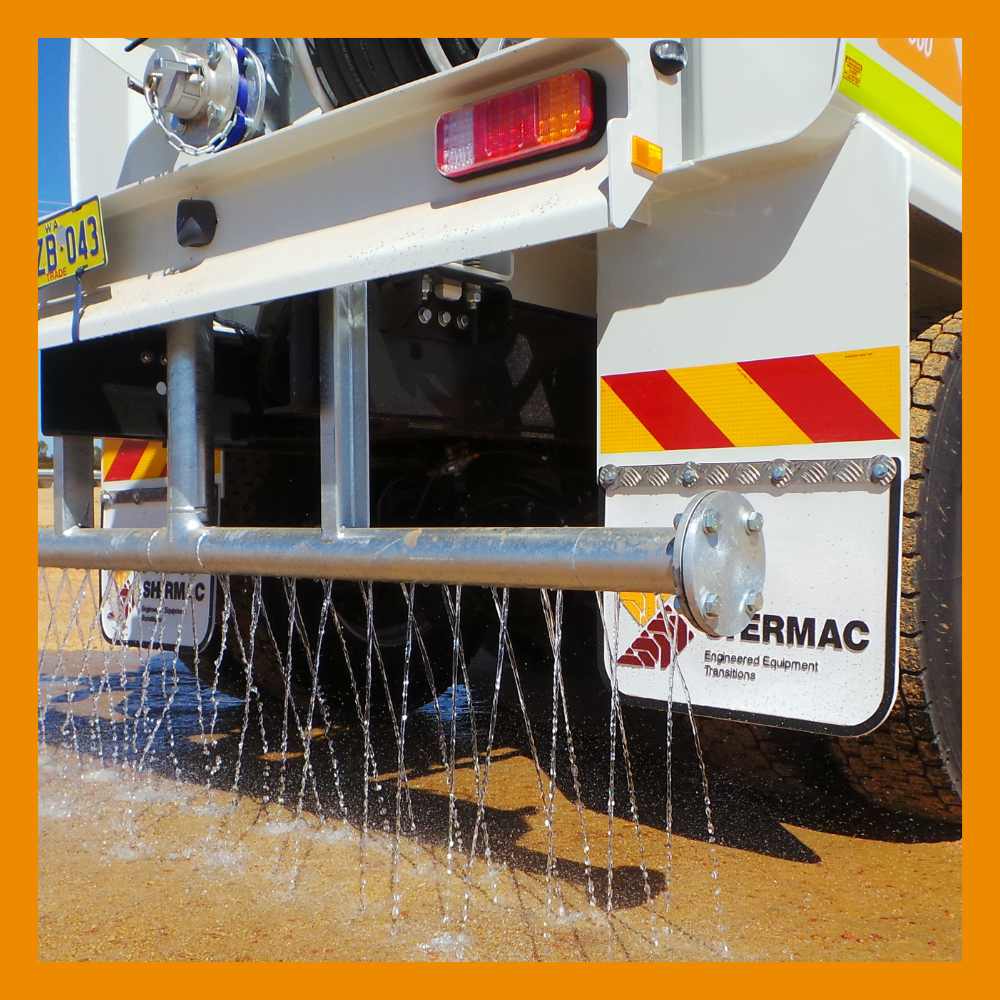
Close-up of Shermac water cart rear spray bar delivering controlled dust suppression on a mining road.
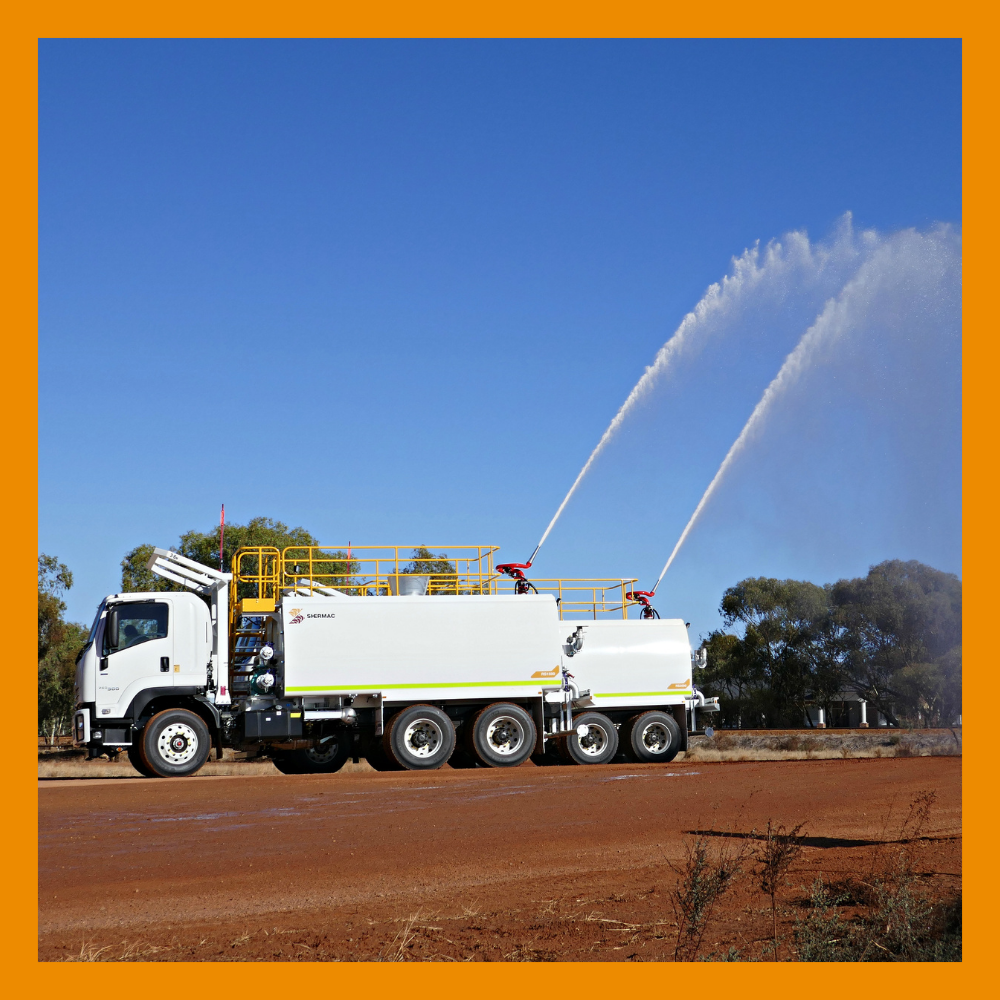
Shermac mine-site water cart using dual water cannons for long-range dust control in mining operations.

Once the operating environment is understood, the next step is getting the technical specifications right. These are the parts of a water cart that influence how well it performs on a mine site.

Water tank capacity

The tank needs to suit the size of the haul roads, the distances covered, and how often the cart can realistically refill. Too small, and you waste time cycling to water points. Too large, and you overload the chassis. Matching the tank to the workload is what keeps dust suppression consistent throughout a shift.

Chassis selection

Not all 8×4 or heavy-duty chassis are equal. Payload, suspension, wheelbase, and off-road capability vary massively between models. The right chassis determines how much water you can carry safely, how stable the vehicle feels, and how well it handles rough sections, climbs, or long haul routes.

Weight distribution and tank design

A low centre of gravity is essential on mine roads. Shermac’s curved tank design improves stability and removes stress points that cause cracks in flat-walled tanks. Better distribution means safer handling, less chassis strain, and fewer structural failures over the cart’s life.

Pump system

A reliable pump with the right flow rate and pressure ensures the cart can maintain proper coverage across different road surfaces. Variable flow or speed control is a bonus, letting operators adjust output based on dust conditions.

Spray system layout

Mine sites need flexibility. This could mean:

  • rear spray bars
  • dribble bar for slower work or tighter control
  • water cannon for long-reach applications
  • removable fin-style nozzles for easier cleaning

The design should deliver even, predictable coverage without wasting water.

Control system

Operators should be able to control spray zones from inside the cab. Being able to turn individual sprayers on and off saves water, improves accuracy, and avoids constant stopping and starting.

Water filtration

Dirty or sediment-heavy water is common on mine sites. Good filtration protects pumps and nozzles, reduces blockages, and keeps spray patterns consistent.

Safety and compliance features

Depending on the site, this may include mine-spec lighting, access systems, handrails, emergency stops, spill control, and fire response features. These are critical for site compliance and operator safety.

Maintenance accessibility

Daily checks and routine servicing should be simple. If key components are easy to reach and nozzles can be cleaned quickly, the cart spends more time working and less time parked up waiting for maintenance.

Lifecycle cost, reliability, and ROI considerations

The upfront price does matter, but it’s often the long-term costs that separate a good water cart from one that becomes a headache. The way the tank is built, how the chassis handles the load, and how easy the system is to service all play a part in the true cost of ownership.

Things that influence lifecycle cost and overall ROI include:

  • Build quality – stronger tanks, proper weight distribution, and mine-spec components reduce failures over time.
  • Tank integrity – designs that avoid stress points (like Shermac’s curved tanks) prevent cracking and the downtime that comes with it.
  • Serviceability – easy access to pumps, filters, and nozzles means quicker maintenance and fewer delays.
  • Parts availability – local support and fast parts supply keep the cart working rather than waiting in the workshop.
  • Fuel and water efficiency – good spray layout and in-cab control reduce unnecessary water use and repeat passes.
  • Operator confidence – reliable, predictable handling reduces incidents and keeps productivity steady.

Why Shermac is a trusted choice for mine-spec water carts

Shermac has been building purpose-built mine-site water carts since 2002. We’re an Australian, family-owned business, and everything we build is designed for the kind of harsh, remote conditions most fleets deal with every day. That focus comes from years of working closely with mining and civil teams across the country and understanding what actually holds up on site.

Over the years, we’ve designed and engineered equipment for some of the biggest names in the industry, including BHP, Rio Tinto, Fortescue, Thiess, Komatsu, and Alcoa. A lot of that work has involved solving tough problems or building highly specialised units that need to perform in environments most gear simply doesn’t survive.

Setting your fleet up for long-term success

Getting the specification right is the difference between a water cart that works hard every day and one that constantly holds your site up. When the tank design, chassis, spray system, and controls all line up with the conditions you’re running, you end up with a safer, more reliable operation.

If you’re looking at mine-spec water carts and want some practical advice on what will suit your site, the Shermac team is always happy to have a chat.

Reach out on 1300 799 943 or [email protected], or get in touch through the website. We’re here to help you get the right setup from day one.

Choosing the right service vehicle supplier is a decision that directly impacts your operations. In mining, civil, and construction environments, service vehicles are long-term assets that play a critical role in keeping equipment running, crews productive, and sites compliant.

This guide outlines the key factors to consider when selecting a service vehicle supplier, so you can reduce operational risk and invest in equipment that performs reliably in real-world conditions.

Why supplier choice matters more than the vehicle itself

A service vehicle is only as reliable as the supplier behind it. Build quality, engineering discipline, and ongoing support all sit with the manufacturer, not the asset itself.

Choosing the right supplier directly affects:

  • Uptime across your fleet: fewer breakdowns, faster servicing, less disruption
  • Operational safety: compliant builds that reduce risk on site
  • Maintenance efficiency: easier access, better layouts, less time off the tools
  • Procurement risk: clear documentation, predictable delivery, fewer surprises
  • Lifecycle cost: lower maintenance spend and longer asset lifespan

When these factors are aligned, service vehicles become a stable, high-performing part of your operation. When they’re not, they introduce ongoing cost, delays, and risk.

Engineering capability and build quality

Engineering capability determines how well a service vehicle performs under real operating conditions. A capable supplier will design the vehicle around its intended application, site conditions, and duty cycle.

Key areas to assess include:

  • Chassis selection: The right chassis must suit terrain, load requirements, and operating conditions. This defines the vehicle’s performance and durability envelope.
  • Weight distribution: With constantly changing fluid levels, correct weight distribution is critical for safe handling, especially in truck and trailer combinations.
  • Component quality: Industrial-grade pumps, tanks, and systems with proven performance reduce failure rates and extend service intervals.
  • Structural design: Tanks, frames, and mounting systems must be engineered to handle vibration, heat, and long-term stress in harsh environments.

Mine-spec compliance and safety standards

In mining and civil environments, compliance is never optional. A service vehicle must meet strict site requirements before it can operate, and gaps in compliance can delay deployment or introduce safety risks.

When assessing a supplier, look for:

  • Mine-spec compliance builds: Safety systems, guarding, access platforms, and lighting designed to meet site requirements
  • Integrated safety features: Stability control, safe access points, and systems that support safe operation in remote conditions
  • Spill control and fluid safety: Bunded tanks and controlled dispensing to minimise environmental risk
  • Clear documentation: Build specs and compliance records that support faster site onboarding

A supplier with strong compliance capability reduces approval delays, supports safer operations, and ensures your vehicle is ready to perform from day one.

Customisation and operational fit

No two sites operate the same way, so a service vehicle should be built to match your workflows. Suppliers that rely on fixed or off-the-shelf designs often create inefficiencies that impact servicing speed and overall productivity.

Key considerations include:

  • Fluid capacity and configuration: Tank sizes and fluid types should align with your duty cycle to avoid under- or over-servicing
  • Dispensing systems: Pumps and flow rates must deliver reliable, controlled output to suit your equipment and site demands
  • Storage and layout design: Tools, reels, and access points positioned for fast, safe operation in the field
  • Bunded and compliant systems: Fluid storage designed to minimise spill risk and support environmental compliance

A well-configured vehicle improves servicing efficiency, reduces operator fatigue, and ensures your fleet can be maintained consistently across every shift.

Reliability and proven track record

A supplier’s track record is one of the strongest indicators of how their vehicles will perform in the field.

When evaluating suppliers, consider:

  • Experience in mining and civil environments: Builds that have performed in harsh, remote conditions over time
  • Tier 1 project exposure: Demonstrated capability to meet the standards of major operators
  • Consistency across fleets: Standardised designs that simplify maintenance and reduce variability
  • Reputation for reliability: Fewer failures, longer service life, and dependable performance under load

A supplier with a proven track record reduces uncertainty and gives you confidence that the vehicle will deliver consistent performance across its lifecycle.

Lifecycle support and after-sales service

A service vehicle supplier should support your operation well beyond delivery. Ongoing access to parts, servicing, and technical expertise is critical to keeping your fleet running efficiently.

Key factors to assess include:

  • Spare parts availability: Ready access to critical components to minimise downtime
  • Technical support: Responsive assistance for troubleshooting and maintenance queries
  • Ease of operator maintenance: Layouts designed for quick servicing and routine checks in the field
  • Field service capability: Support teams that can assist on-site when required

Strong after-sales support reduces downtime, simplifies maintenance, and ensures your vehicle continues to perform as expected throughout its lifecycle.

Manufacturing quality and processes

Consistent build quality comes down to the processes behind the vehicle. A supplier with strong manufacturing discipline will deliver reliable, repeatable outcomes across every unit.

When reviewing a supplier, look for:

  • ISO9001:2015 certification: Structured quality control across design, fabrication, and assembly
  • Documented processes: Clear build records, traceability, and consistent specifications
  • In-house manufacturing capability: Greater control over quality, timelines, and component integration
  • Quality assurance checkpoints: Testing and inspections throughout production, not just at delivery

Strong manufacturing processes reduce defects, improve reliability, and give you confidence that every vehicle will perform as expected.

Delivery timelines and supplier reliability

Delays in vehicle delivery can impact project schedules, increase costs, and create unnecessary pressure across operations. A reliable supplier should provide clear timelines and consistently meet them.

Key considerations include:

  • Predictable lead times: Realistic delivery schedules based on proven production capacity
  • Clear communication: Regular updates throughout the build process to avoid uncertainty
  • Production capability: Systems and resources in place to deliver consistently, even at scale
  • Track record of delivery: Evidence of meeting deadlines across previous projects

Reliable delivery reduces procurement risk, supports project planning, and ensures your fleet is ready when you need it.

Total cost of ownership vs upfront cost

Focusing on upfront price alone often leads to higher costs over time. A well-engineered service vehicle will deliver lower maintenance requirements, fewer breakdowns, and a longer service life, all of which contribute to better overall value.

Factors such as ease of servicing, component quality, and reliability in harsh conditions directly impact operating costs across the lifecycle of the asset. Choosing a supplier that prioritises engineering, durability, and support helps reduce total cost of ownership and protects your investment over the long term.

The advantage of choosing an Australian-made supplier

Working with an Australian-based manufacturer provides practical advantages that directly support reliability and operational performance:

  • Built for local conditions: Designed for Australia’s heat, dust, and remote operating environments
  • Faster access to support: Local parts supply and technical assistance when issues arise
  • Greater accountability: Direct communication with the team responsible for design and build
  • Stronger quality control: Local manufacturing with consistent standards and oversight
  • Aligned with compliance requirements: Better understanding of Australian regulations and site expectations

Choosing an Australian-made supplier improves response times, reduces risk, and ensures your equipment is built for the conditions it will face.

Why Shermac

Choosing the right supplier comes down to confidence in performance, delivery, and long-term support. Shermac is built around these fundamentals.

Australian-made, engineered-for-purpose

Every Shermac vehicle is designed, fabricated and assembled in WA, ensuring it is built for Australian conditions and operational demands.

Mine-spec compliance as standard

All builds are engineered to meet strict mine-site safety and compliance requirements, reducing onboarding delays and operational risk.

Proven performance in harsh environments

Shermac vehicles are trusted across mining and civil operations, with proven reliability in remote, high-heat and dust-heavy conditions.

Custom-built to your operation

Each vehicle is configured to suit your site workflows, servicing requirements and environmental conditions for better efficiency and usability.

ISO9001:2015 quality assurance

Structured manufacturing processes ensure consistent build quality, full traceability and reliable performance across every unit.

Complete lifecycle support

From initial consultation through to parts, servicing and technical support, Shermac provides ongoing support to keep your fleet operating.

Make your next service truck investment count

If you’re planning your next service truck or reviewing your current supplier, speak with the Shermac team.

Book a consultation or contact us on 1300 799 943 to discuss your operational requirements.

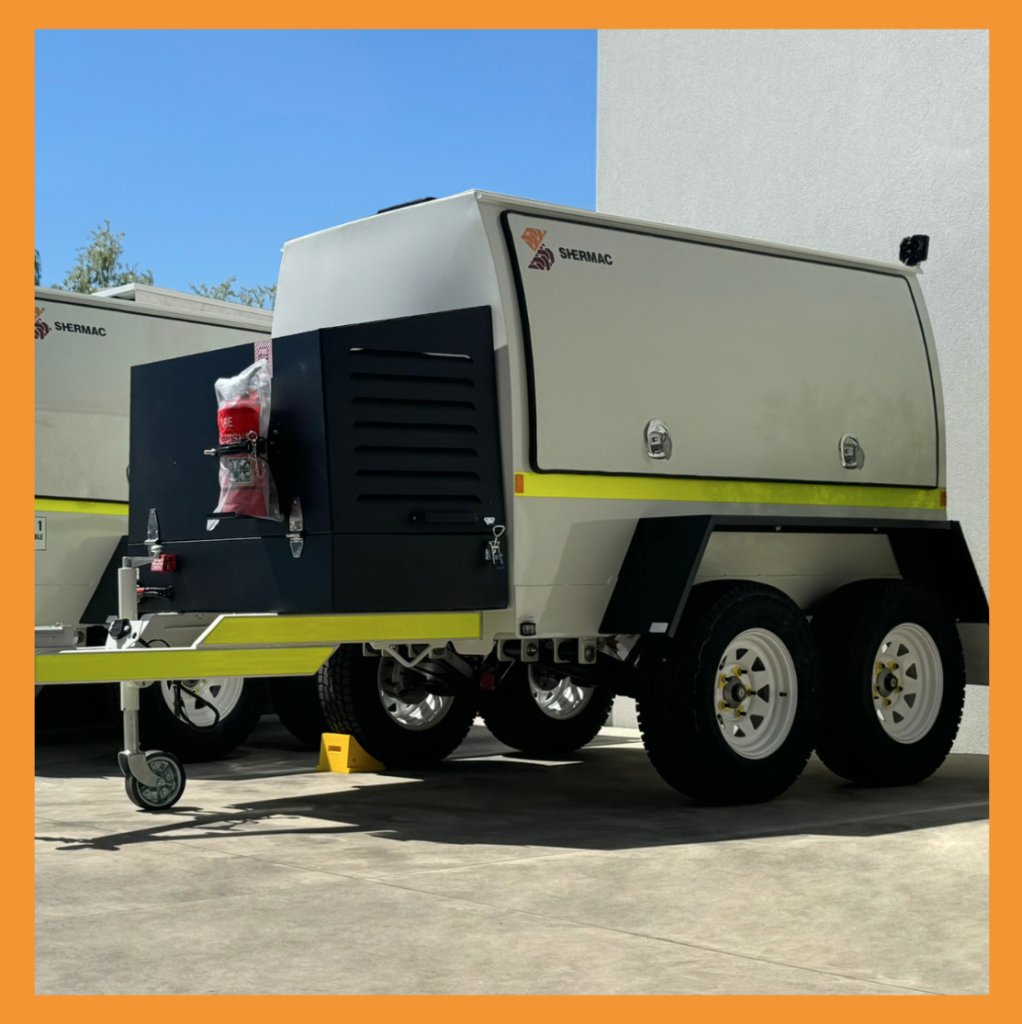
Shermac have been designing and building service trailers for mining, civil, and commercial operators across Australia since 2002. The latest range of service trailers from Shermac are a culmination of two decades of experience and continuous improvement.

Standard models include the smaller MTS1500 that is typically less than 2,000kgs when full, with an aggregate fluid carrying capacity of approximately 1,000L, and the larger MTS2000 which can be up to 3,500kgs, with a fluid carrying capacity of approximately 1,750L.

So why are Shermac service trailers the ultimate on-site service solution for small or large operations?

Tailored configurations for unmatched versatility

Service trailers can be configured to suit the specific needs of customers. At the heart of this adaptability are custom-size self-bunded tanks for diesel, oil, grease, coolant, and water. Roto-moulded polyethylene tanks are stronger, more robust, and lighter than steel tanks and, available in a range of sizes, they can be configured, with appropriate dispensing equipment, to support any application or need.

Built tough to go anywhere

Engineered to ‘mine-spec’ standards, Shermac Service Trailers are primed to tackle the harshest environments. All equipment is mounted on a heavy-duty trailer with a unique Shermac chassis design and equipped with over specified, locally sourced suspension, axles, wheels and brakes. All dispensing equipment is securely enclosed in lockable compartments, ensuring durability and protection.

Operator-centric ergonomics

Shermac prioritises operator safety and comfort. Conveniently located hose reels and operating equipment at waist height, along with spring rewind hose reels, provide ease of use. Lightweight one-piece swing-up aluminium doors with gas stay supports ensure security and provide weather protection for the operator. Our trailers are well equipped with work lights and courtesy lights illuminate the interior of the canopy.

Lower weight increases versatility

Combat weight restrictions with Shermac’s innovative use of roto-moulded poly tanks. Not only are they extremely durable, but they also contribute to weight savings of up to 600kg per trailer. This weight efficiency allows for additional tools, parts, and fluids, enhancing operational capabilities.

Power supply options

Shermac service trailers offer several power supply options including an air connection at the front of the trailer to utilise the compressor on the towing vehicle or on-board diesel-powered compressors or generators.

Fully featured for maximum efficiency

Benefit from a comprehensive set of standard features unique to Shermac service trailers. Options abound, including metered control nozzles, product filtration, spare wheels, and a high-pressure washer, providing a fully equipped solution.

Waste oil management made easy

Trailers are equipped with a waste fluid system that is configured with a diaphragm pump for evacuating and out-loading waste fluids direct from the machine. Standard configurations also include a draining station for filters that drains waste oil directly into the waste oil tank.

Availability and short lead times

In a world of supply chain uncertainty, the use of smart forecasting, a focus on locally made components and long-term supply relationships significantly reduces lead times. Customers benefit from short lead times and can still configure trailers to best suit their requirements.

Unlocking value with lowest cost of ownership

Shermac service trailers offer not just the right price but the lowest lifetime cost. Tailored configurations optimise performance, selected equipment ensures reliability, and design facilitates quick and easy operator maintenance.

End-to end support

Shermac service trailers are manufactured in Western Australia and delivered to clients anywhere across Australia and New Zealand. With on-demand technical support, substantial parts inventory, and a national support network, you can rely on Shermac to help you optimise productivity and utilisation.

Enhance your brand

Shermac service trailers are a serious workhorse for professional operators and say a lot about your approach to support and service. With large single-piece doors providing ample space for promotional material, these trailers become an ideal mobile signboard for your business.

Experience you can rely on

The Shermac team has a deep understanding of operating in remote areas of Australia, so we can relate to the tough conditions that customers deal with every day. Shermac products reflect the sum of our experience and a passionate desire to push boundaries and provide our customers with unmatched peace-of-mind.

Australian-made

Shermac have been manufacturing superb quality service trailers in regional Western Australia for over 20 years. When you select Shermac products, you are supporting a family-owned business, a regional employer, and a passionate supporter of the communities in which they live and work.

—–

If you’d like to learn more about Australia’s best and most versatile service trailer, please call our team on 1300 799 943 or email [email protected] with your inquiry.  

Stay Updated