1300 799 943 Enquire Now

What is vehicle weight distribution and why is it important?

Vehicle weight distribution has a direct impact on how heavy vehicles behave under load. In mining and civil operations, poor balance can reduce stability, accelerate component wear and expose fleets to unnecessary compliance risk.

For fuel trucks, service trucks and other support vehicles operating in harsh Australian conditions, axle loading and overall load balance must be engineered correctly. Vehicle weight distribution considers axle loads, centre of gravity and how mass is positioned across the chassis.

At Shermac, weight distribution is assessed early in the engineering process of every mine-spec build, supporting safe operation, regulatory compliance and long-term fleet reliability in the field.

What is vehicle weight distribution?

Vehicle weight distribution refers to how a vehicle’s total mass is shared across its axles and wheels. In heavy vehicles, this includes the cab and chassis, tanks, mounted equipment, stored fluids, tools and payload.

Axle loads and GVM

Every truck has manufacturer-specified axle ratings and a Gross Vehicle Mass limit. Axle capacity is restricted by either the manufacturer’s rating or legal load limits, whichever is lower.

Weight must be distributed so each axle carries its permitted share of the load. A vehicle can remain within its total GVM while still overloading a single axle if components are positioned incorrectly along the chassis.

The example below illustrates how axle capacities vary across different chassis configurations.
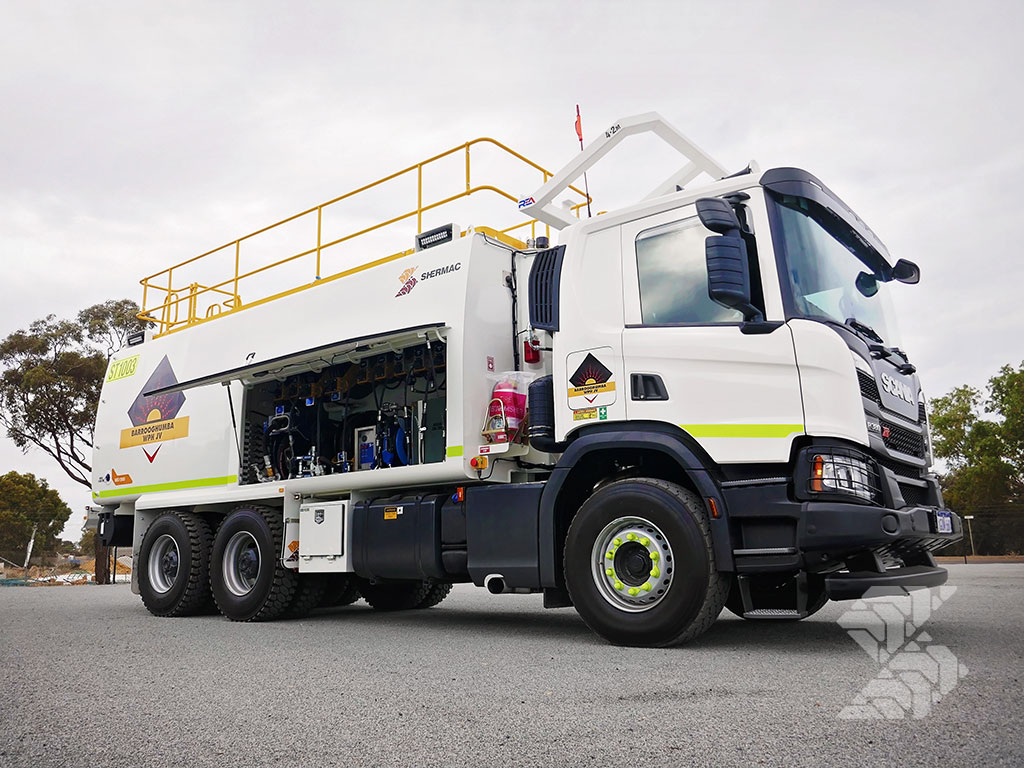
Service Truck Service truck
Vehicle Isuzu FSR 140-260FXZ 240-350
Front Axle5,000 Kgs6,600 Kgs
Rear Axle(s)9,000 Kgs18,100 Kgs
GVM14,000 Kgs24,000 Kgs

Source:Isuzu Truck Service: Weight distribution concepts.

These figures highlight an important point. Total GVM does not determine compliance on its own. Each axle group must remain within its specified rating.

In practical terms, mounting a fuel tank, service module or storage system too far rearward on a higher-capacity chassis can overload the rear axle group while the vehicle still appears compliant overall. This is where proper vehicle weight distribution becomes critical.

Centre of gravity and load position

Centre of gravity (CG) influences how a vehicle handles under braking, cornering and uneven terrain. Loads positioned too high or too far rearward can reduce stability and steering control.

In fuel trucks and service vehicles, fluid movement inside tanks also affects weight transfer during operation. Baffling, tank placement and chassis integration all influence stability.

Understanding “moments”

In engineering terms, a “moment” is the force created by weight acting at a distance. The further a component sits from a reference point, the greater its effect on axle loading.

This is why moving a tank or storage module even a small distance forward or rearward, can materially change weight distribution. By calculating these moments during design, engineers can predict how much load will sit on each axle before the vehicle is built.

Why vehicle weight distribution matters for safety and compliance

In mining and civil operations, incorrect vehicle weight distribution creates immediate safety risks and long-term compliance exposure. Heavy vehicles operate on uneven terrain, remote haul roads and high-temperature sites where stability cannot be compromised.

Poor weight distribution can result in:

  • Reduced braking performance due to overloaded rear axles or insufficient front axle load
  • Compromised steering control when front axle weight is too light
  • Increased rollover risk from a high or poorly positioned centre of gravity
  • Unstable handling on uneven ground, particularly when fluid loads shift in tanks
  • Excessive stress on suspension, chassis and mounting points

Compliance risks are equally serious. Axle groups must remain within manufacturer ratings and legal load limits. Even if a vehicle sits within its total Gross Vehicle Mass, a single overloaded axle can result in:

  • Defect notices
  • Site non-conformance reports
  • Regulatory penalties
  • Vehicle shutdown until rectified

Accurate vehicle weight distribution ensures each axle carries its intended load, supports compliance with legal limits and delivers predictable performance in demanding mining and civil conditions.

The impact on uptime, maintenance and operating costs

When weight is unevenly distributed across the chassis, components wear faster and failures occur sooner than expected. Common impacts include:

  • Premature tyre wear due to overloaded axle groups
  • Suspension fatigue and cracked mounting points under constant imbalance
  • Chassis stress and structural fatigue over rough terrain
  • Increased strain on braking systems
  • Higher fuel consumption caused by inefficient rolling resistance

In fuel trucks and service vehicles, poorly positioned tanks or equipment can amplify vibration and load transfer, accelerating wear on pumps, reels and structural components. Over time, this results in more frequent repairs, unplanned downtime and higher maintenance labour costs.

Underloading can also create inefficiencies. If a vehicle consistently carries less than its engineered capacity due to poor weight planning, you are not maximising asset value or return on investment.

How engineered design improves vehicle weight distribution and protects your fleet
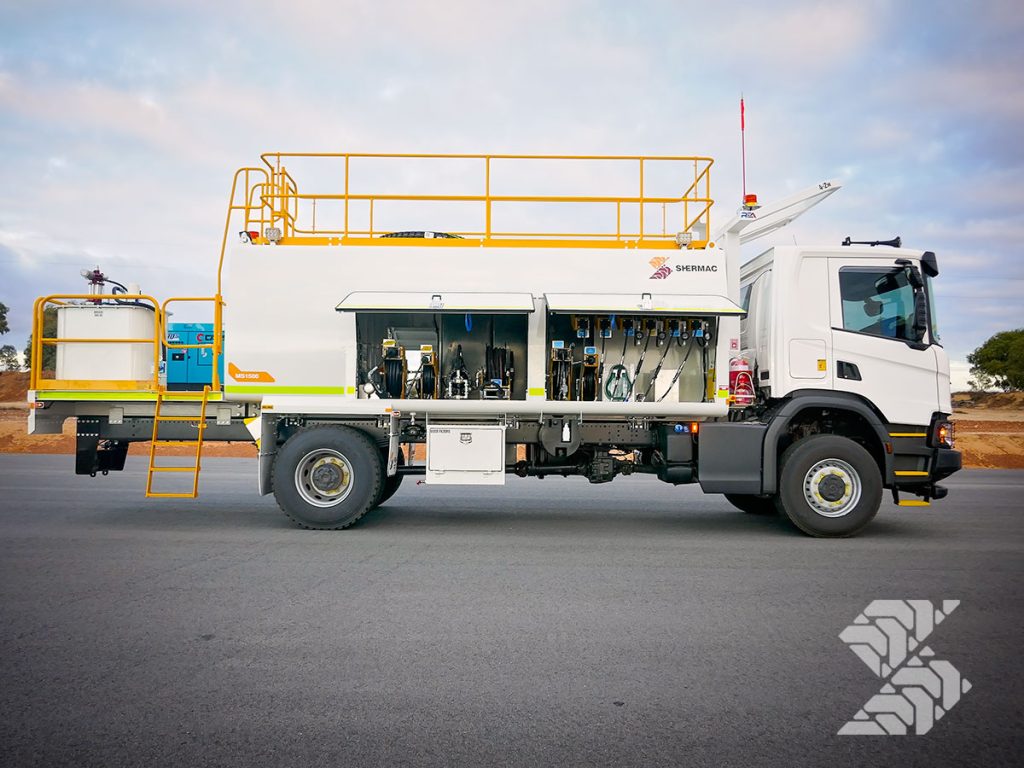
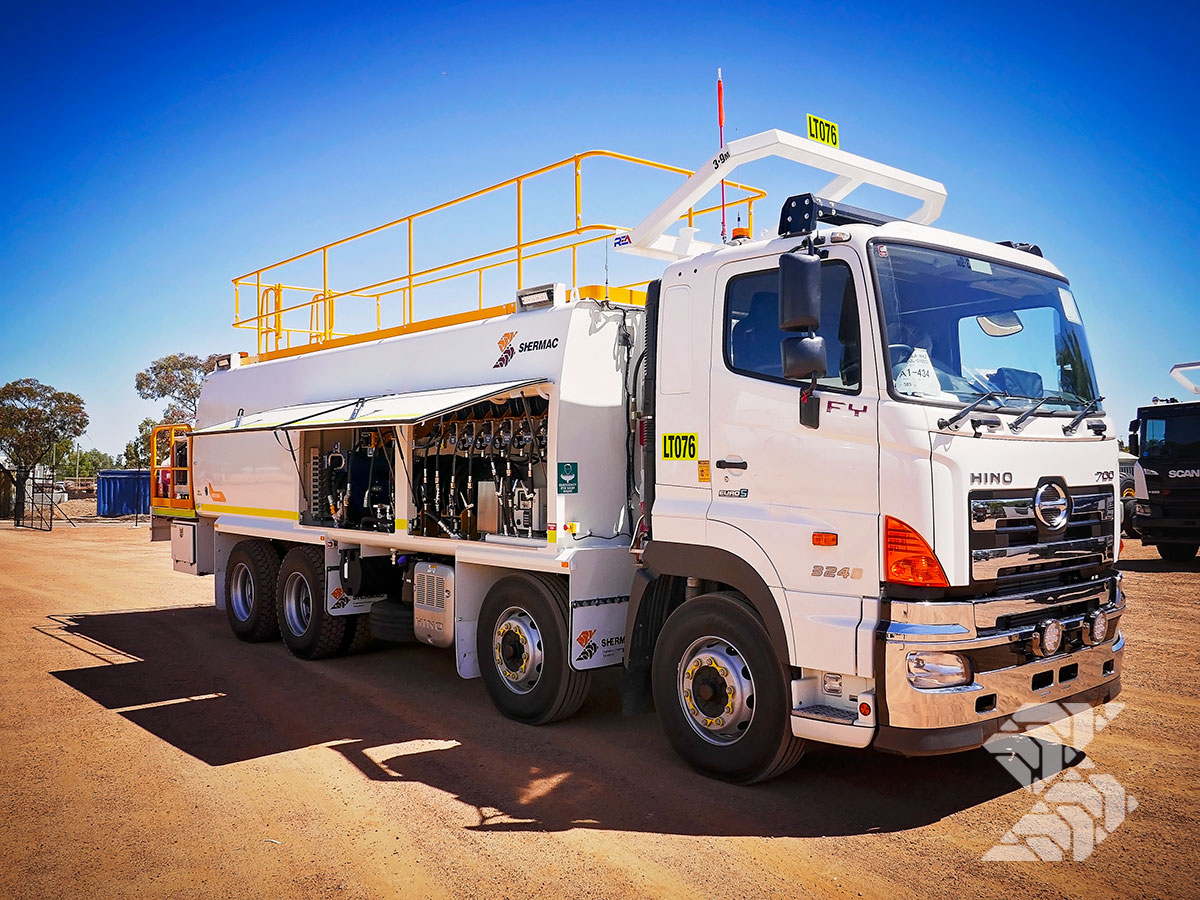
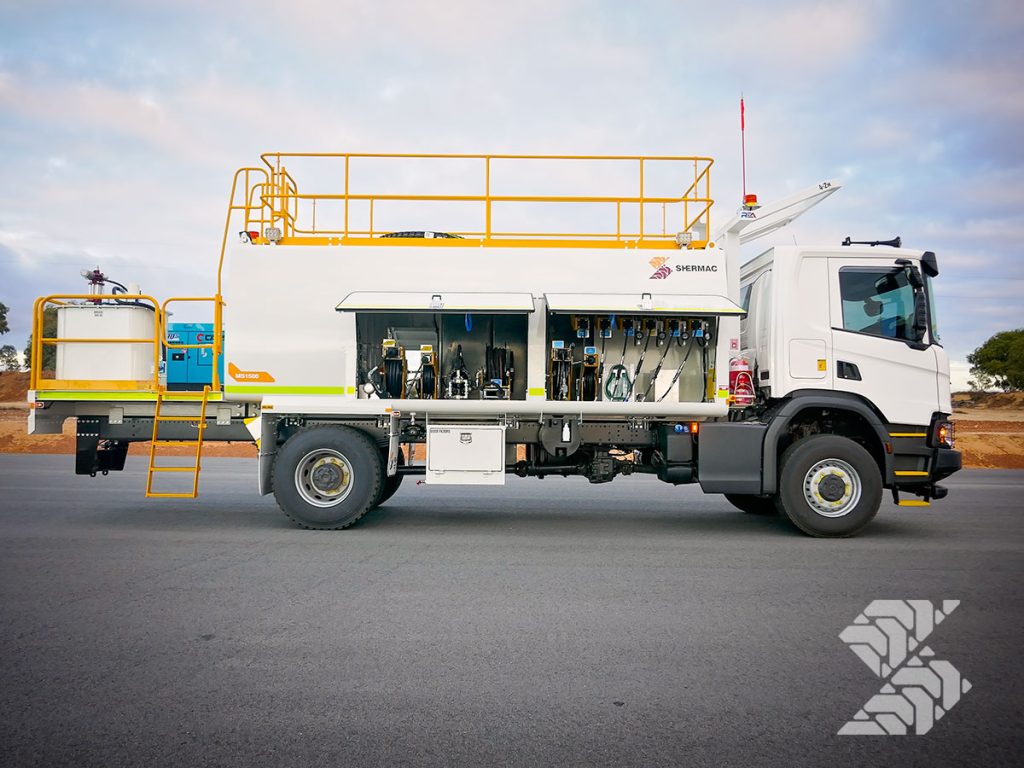
SShermac mine-spec service truck showing engineered tank placement and chassis layout for optimal vehicle weight distribution.

Vehicle weight distribution must be engineered into the vehicle from the beginning. In heavy-duty applications, layout decisions directly affect axle loading, stability and long-term durability.

Strategic component placement

At Shermac, weight distribution is assessed during the early design phase of every mine-spec build. This includes:

  • Tank positioning along the chassis
  • Storage and tool cabinet placement
  • Pump and reel configuration
  • Mounting of ancillary systems

Even minor adjustments in layout can significantly alter front and rear axle loads, particularly in high-capacity fuel trucks.

Chassis integration and structural control

Balanced weight distribution depends on how tanks and modules integrate with the chassis.

  • Mounting systems are engineered to manage vibration
  • Load transfer is controlled across uneven terrain
  • Stress concentrations are reduced at key structural points

This protects the chassis, reduces fatigue and supports long-term reliability.

Managing fluid movement in tank builds

For fuel and service vehicles, liquid movement affects stability.

  • Internal baffling reduces surge
  • Tank geometry influences centre of gravity
  • Controlled load shift improves braking and handling response

These engineering considerations help maintain predictable performance in demanding site conditions.

When weight distribution is designed correctly from the outset, your fleet will experience fewer compliance issues, a more balanced wear and stronger overall lifecycle outcomes.

Getting vehicle weight distribution right from the start

Vehicle weight distribution is a foundational part of heavy vehicle performance. When axle loads, centre of gravity and component placement are engineered correctly, fleets operate more safely, remain compliant and experience fewer avoidable failures.

Shermac engineers mine-spec fuel trucks and service trucks with weight distribution assessed at the design stage, ensuring each build performs reliably in demanding Australian conditions.

If you are planning your next build, explore our range of mine-spec service trucks or speak with our engineering team on 1300 799 943 or email [email protected] with your inquiry about a configuration tailored to your operation.
Every operation feels the cost of maintenance decisions.

Push equipment too hard, and you risk failures that stall production and stretch crews. Service too often, and you lose availability to planned downtime that may not have been necessary. Either way, the impact shows up in uptime, budget and pressure on your team.

Maintenance will always be a given. However, the real decision is how you manage it without compromising reliability or overspending.

That is where the conversation around preventive vs predictive maintenance becomes important.

What’s the difference between preventive and predictive maintenance?

At a glance, both strategies aim to prevent breakdowns. The difference lies in how maintenance timing is determined and how machine downtime is controlled.

Preventive maintenance: Time or usage-based

Preventive maintenance follows a fixed schedule.

Servicing is triggered by:

  • Kilometres travelled
  • Engine hours
  • Calendar intervals
  • Manufacturer recommendations

Downtime is planned in advance. Assets are removed from service at set intervals, regardless of their current condition.

This approach is structured and predictable. It works on the assumption that components wear at a consistent rate and should be replaced before failure occurs

Predictive maintenance: Condition-based

Predictive maintenance is driven by asset condition rather than a fixed schedule.

Intervention is triggered by:

  • Vibration trends
  • Temperature changes
  • Fluid analysis results
  • Performance data anomalies

The asset remains in operation until measurable indicators suggest deterioration. Downtime is scheduled based on early warning signs, not the calendar.

This shifts maintenance decisions from estimated wear patterns to actual performance data.

Practical example: Light vehicle timing belt on site

Consider a light vehicle operating across a remote mine site.

Under a preventive maintenance strategy, the timing belt is replaced at 100,000 km as specified by the manufacturer. The vehicle is booked in, taken offline, and the component is replaced regardless of visible wear.

Under a predictive maintenance approach, belt condition may be monitored through inspection data or related engine performance indicators. Replacement is scheduled when measurable degradation appears, potentially extending usable life while still avoiding failure.

In both cases, the goal is to prevent a breakdown. The difference lies in whether the decision is driven by interval or evidence.

The real cost difference between planned and unplanned downtime

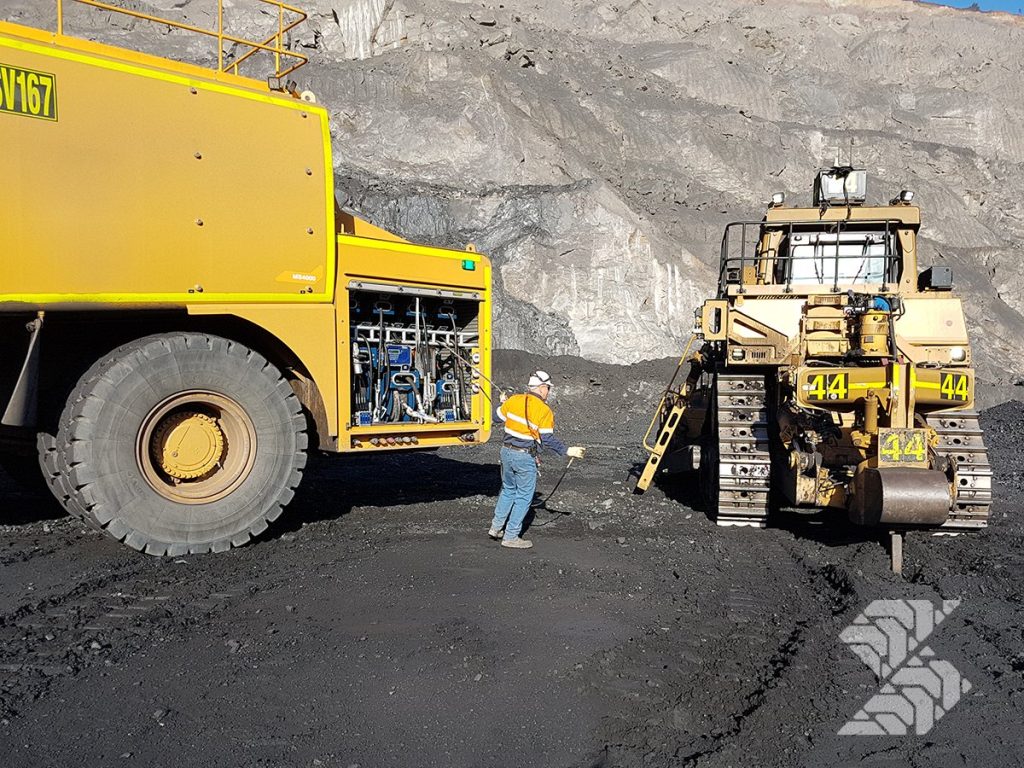
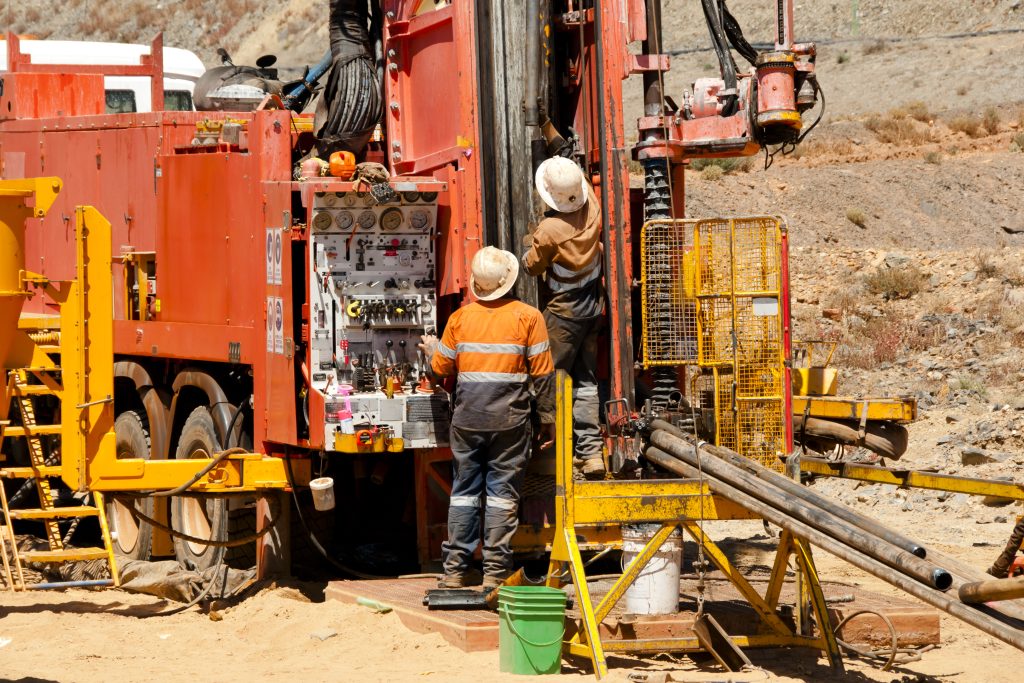
Preventive vs Predictive maintenance On-site maintenance being performed on heavy equipment to minimise downtime.

The real financial difference between maintenance strategies isn’t the ‘service’ itself. But more so, what happens when the timing is wrong?

What planned downtime looks like

  • Asset is booked into a scheduled window
  • Technicians are prepared
  • Correct parts are available
  • Production impact is limited and forecasted

Even if the component still had usable life, the cost exposure is contained.

What unplanned downtime looks like

  • Equipment stops mid-shift
  • Diagnosis takes time
  • Parts may need to be freighted to the site
  • Crews wait or are reassigned
  • Secondary damage is possible under load

In mining and civil environments, the delay often exceeds the repair time itself.

A practical comparison

Consider a service vehicle or LV component:

  • Preventive approach: 3-hour scheduled stop at service interval.
  • Predictive approach: Targeted intervention once deterioration is confirmed.
  • Breakdown scenario: 12 hours offline, including fault finding, parts mobilisation and repair, with flow-on disruption to production.

The gap between three hours and twelve hours is lost output, contractor rescheduling and pressure on the entire fleet.

Preventive and predictive strategies both aim to reduce the likelihood of unplanned failure. The difference is how precisely you control the timing.

Impact on equipment lifespan, safety and productivity

The maintenance strategy you adopt influences how assets perform across their full operating life.

Equipment lifespan

Preventive maintenance supports lifespan by:

  • Replacing components at defined wear intervals
  • Reducing fatigue-related failures
  • Aligning with manufacturer specifications
  • Supporting documented service history for asset value

Predictive maintenance supports lifespan by:

  • Extending usable component life based on condition
  • Reducing premature replacement
  • Identifying early-stage degradation patterns
  • Supporting data-backed lifecycle planning

Safety exposure

Well-timed maintenance improves site safety outcomes.

  • Scheduled interventions reduce high-pressure repair work
  • Early detection limits failure under load
  • Structured servicing supports compliance requirements
  • Clear maintenance records strengthen audit confidence

Productivity and workforce stability

Maintenance discipline influences daily operational rhythm.

  • Predictable service windows improve production planning
  • Fewer reactive maintenance call-outs reduce technician fatigue
  • Targeted interventions improve labour allocation
  • Stable servicing routines increase operator confidence in equipment reliability

Over time, these factors contribute to stronger fleet performance and more consistent availability across site.

Where preventive maintenance still makes sense

Preventive maintenance remains practical and effective in many fleet environments.

Predictable wear components

Assets with known service intervals benefit from structured replacement cycles.

  • Filters
  • Belts
  • Hoses
  • Fluids
  • Brake components

When failure patterns are consistent, interval-based servicing supports reliability.

Safety and compliance systems

Certain systems require documented inspection regardless of condition data.

  • Braking systems
  • Steering components
  • Fire suppression systems
  • Safety-critical hydraulics

Structured servicing supports audit readiness and site compliance.

Standardised fleets

Large fleets of similar assets are easier to manage under repeatable service schedules.

  • Light vehicles
  • Support equipment
  • Hire fleet units

Consistent intervals simplify planning, parts staging and labour allocation.

Preventive maintenance provides structure. In the right applications, that structure delivers stable and predictable performance.

Where predictive maintenance delivers greater ROI

Predictive maintenance delivers a stronger return when asset failure carries high operational consequences.

High-value, critical assets

For equipment with significant capital value, extending component life while avoiding failure improves lifecycle efficiency.

  • Large service trucks
  • Fuel systems
  • High-capacity pumps
  • Major hydraulic systems

Condition monitoring supports targeted intervention and protects asset integrity.

Equipment on the critical path

Assets that directly influence production sequencing require tighter control.

  • Primary plant
  • Key support vehicles
  • Equipment servicing multiple crews

Reducing unexpected stoppages in these assets protects overall site availability.

Data quality and monitoring capability

Predictive maintenance is only as strong as the data behind it.

Effective condition monitoring depends on:

  • Correct sensor installation and positioning
  • Calibration discipline to maintain data accuracy
  • Equipment suited to harsh environmental conditions
  • Ongoing human inspection to verify trends and findings

Condition monitoring supports better decisions when data integrity and field execution are aligned.

How engineered service trucks support both approaches

At Shermac, we see firsthand how maintenance strategy plays out on site. Even the best preventive or predictive plan depends on how efficiently servicing can be executed in the field.

Designed around real maintenance workflows

Engineered-for-purpose service vehicles reduce time lost during intervention.

  • Logical tank and component placement
  • Clear hose routing and reel positioning
  • Integrated pumps and dispensing systems
  • Safe, compliant access platforms

When servicing is streamlined, downtime is shorter and more predictable.

Ergonomics drive inspection quality

Inspection accuracy improves when technicians can work safely and confidently.

  • Stable elevated work areas
  • Clear labelling and separation of systems
  • Organised storage that reduces search time
  • Layouts designed for practical field use

Good access supports better decisions, whether following fixed intervals or responding to condition data.

Clean, efficient systems protect assets

High-flow diesel systems reduce refuelling duration. Proper filtration and sealed storage reduce contamination risk. Over time, this supports longer component life and more reliable condition monitoring.

Reliable, mine-spec mobile support ensures both preventive and predictive strategies can be executed quickly and consistently. When servicing capability matches maintenance intent, uptime improves across the fleet lifecycle.

Back your maintenance strategy with the right support vehicles

Preventive and predictive maintenance both aim to protect uptime. The real advantage comes when your team can execute either approach efficiently and confidently on site.

Shermac’s engineered-for-purpose, mine-spec service trucks are built around real mining and civil maintenance demands. They support consistent execution, reduce intervention time and help protect fleet availability across the asset lifecycle.

Enquire now and take the next step toward more reliable fleet performance.

Stay Updated