1300 799 943 Enquire Now

Australian-Made Mine-Spec Equipment Built for Real Operating Conditions

Across the mining, civil construction, and infrastructure industries, reliable support equipment plays a critical role in keeping operations productive, safe, and efficient.

From dust suppression and fluid management through to on-site servicing and maintenance, businesses rely heavily on equipment that can consistently perform in some of Australia’s harshest operating environments. That is why the demand for high-quality, Australian-made mine-spec equipment continues to grow.

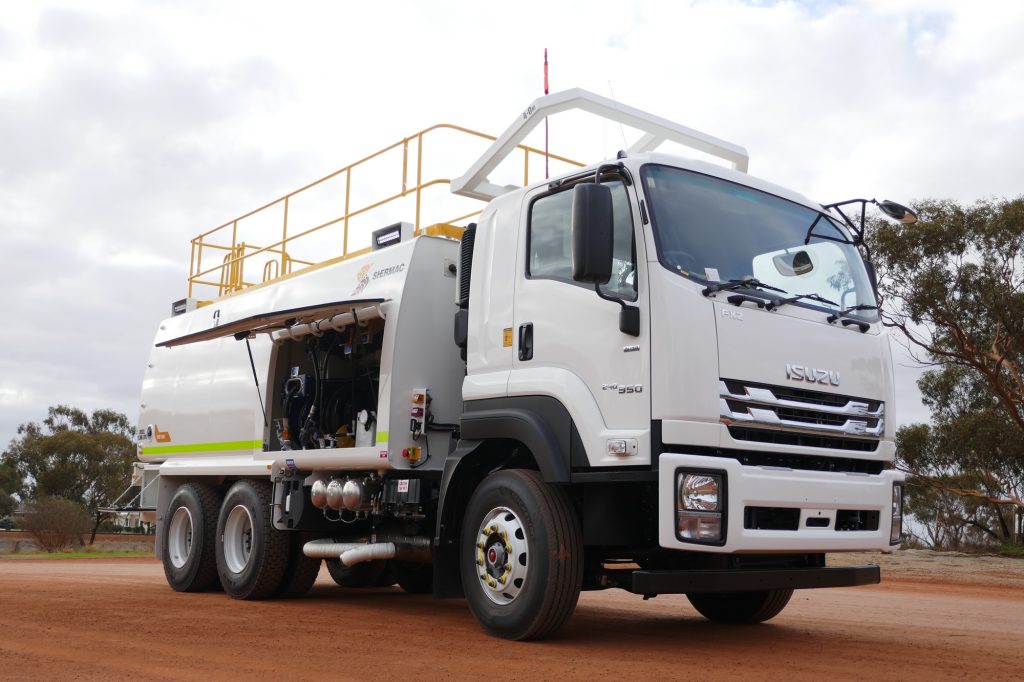
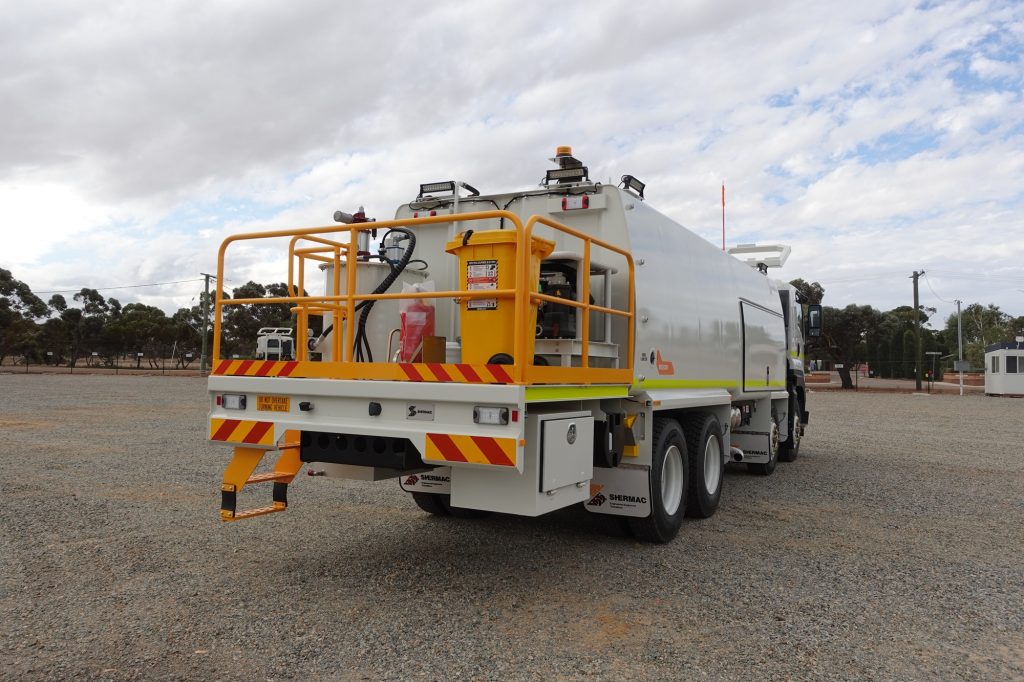
At Shermac, every water cart, service truck, service trailer, and diesel trailer is designed with real-world operating conditions in mind.

Practical Engineering for Mining and Civil Operations

In industries where downtime can impact productivity and operational costs, support equipment must be built for reliability, ease of use, and long-term durability.

Shermac equipment is engineered to support mining and civil operations with practical features that improve both performance and operator usability. From baffled tank designs and efficient spray systems through to mine-spec safety features and service-friendly layouts, every detail is developed to perform in demanding field conditions.

Whether operating on mine sites, infrastructure projects, haul roads, or civil construction environments, dependable support equipment is essential to maintaining safe and efficient day-to-day operations.

Australian-Made Water Carts and Service Equipment

Proudly Australian made, Shermac has built a strong reputation for manufacturing high-quality mine-spec support vehicles and trailers designed specifically for Australian conditions.

The Shermac range includes:

  • Mine-spec water carts
  • Service trucks
  • Service trailers
  • Diesel trailers
  • Semi water carts
  • Off-road water carts

Each build is designed to support industries requiring reliable heavy equipment capable of operating across remote and demanding environments.

With operations continuing to expand nationally, Shermac remains focused on delivering equipment that combines durability, functionality, safety, and long-term value.

Supporting Customers Beyond Delivery

Reliable equipment is only one part of the equation. Strong after-sales support and ongoing customer service also play a major role in helping businesses maintain productivity in the field.

Shermac continues to support customers across Australia with after-sales assistance, parts support, and industry knowledge developed through decades of experience working alongside mining and civil operations.

As operational demands continue to evolve, the importance of dependable, Australian-made support equipment remains stronger than ever.

Because in industries where uptime matters, equipment needs to be built for more than just appearance.

It needs to be built to perform.

At Shermac, we spend a lot of time on mine sites and civil projects talking with engineering managers, asset teams and field technicians about what keeps operations running smoothly. Service truck fleet management is always part of that conversation.

Well-managed fleets are built on clarity. When service trucks are designed around real site conditions and supported by disciplined planning, they become a stable foundation for maintenance operations.

Over the years, we’ve seen the same principles deliver consistent results across demanding Australian environments. The following best practices reflect what works in the field, not just in theory.

Quick framework for service truck fleet management

Effective service truck fleet management focuses on a few core operational principles:

  • Clear fleet strategy: Define how service trucks support equipment uptime across each site.
  • Standardised vehicle configurations: Consistent layouts simplify maintenance, training and parts management.
  • Data-driven maintenance planning: Use utilisation and service data to guide maintenance scheduling.
  • Strong safety and compliance processes: Ensure mine-spec safety systems and inspection frameworks are embedded across the fleet.
  • Reliable parts and lifecycle support: Maintain access to critical spares, servicing and technical support.

When these fundamentals are applied consistently, service truck fleets operate with greater reliability, lower downtime and stronger long-term lifecycle value.

1. Develop a clear fleet strategy

Service truck fleet management starts with a defined strategy.

We always encourage operators to step back and assess what their service trucks are required to support. Site conditions, terrain, haul distances, climate, equipment size and fluid demand all influence how a fleet should be configured.

A clear strategy aligns truck capacity with workload. It defines tank volumes, pump flow rates, storage requirements and access systems based on real servicing patterns. It also sets expectations for uptime targets, response times and maintenance intervals.

When planning is aligned across sites, the operational benefits are tangible:

  • Greater visibility for asset and engineering managers
  • Familiar layouts that improve field efficiency and reduce operator error
  • More predictable procurement and parts planning
  • Simplified maintenance scheduling across multiple sites
  • Stronger long-term control over uptime and lifecycle cost

2. Standardise equipment and modular layouts

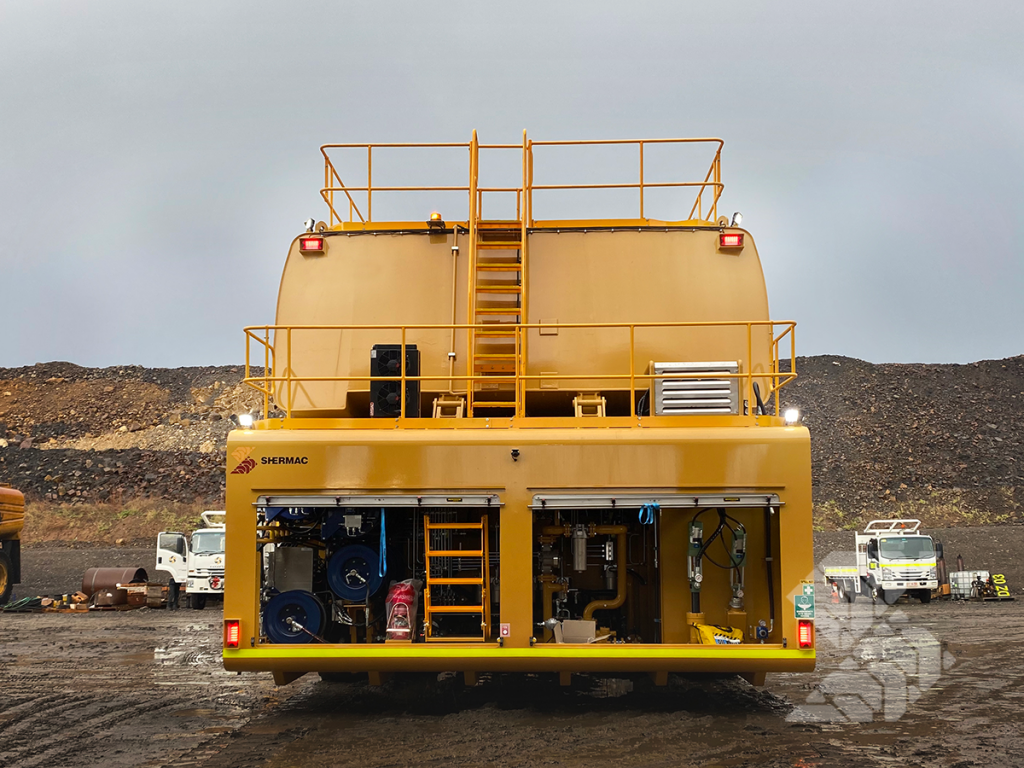
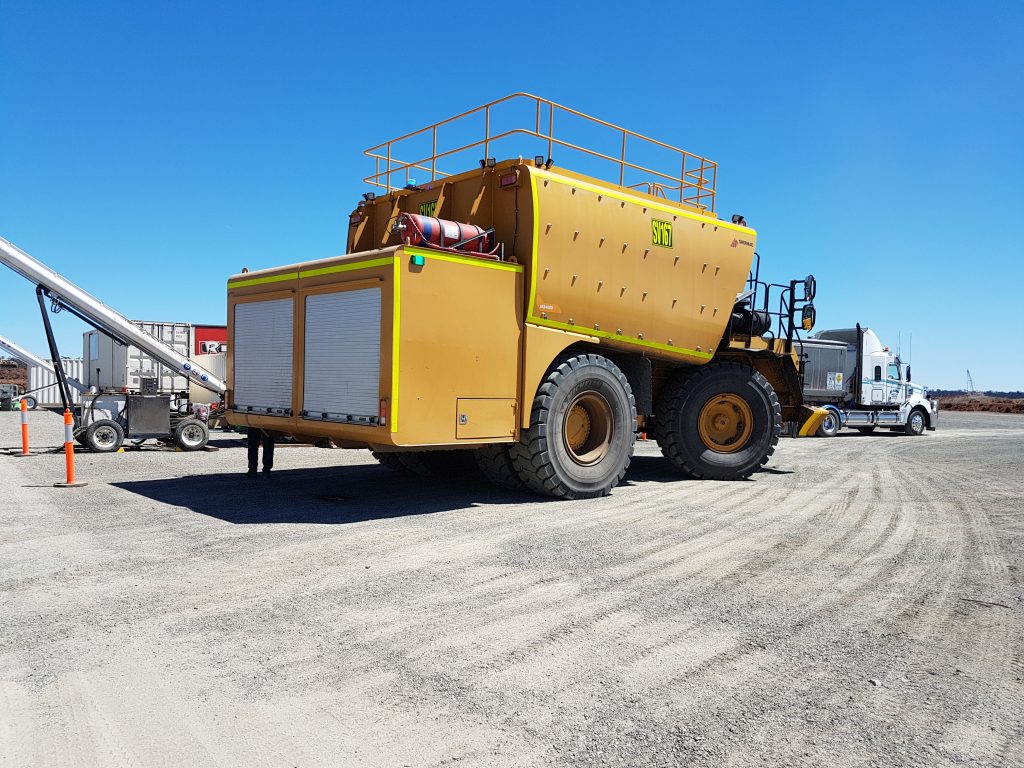
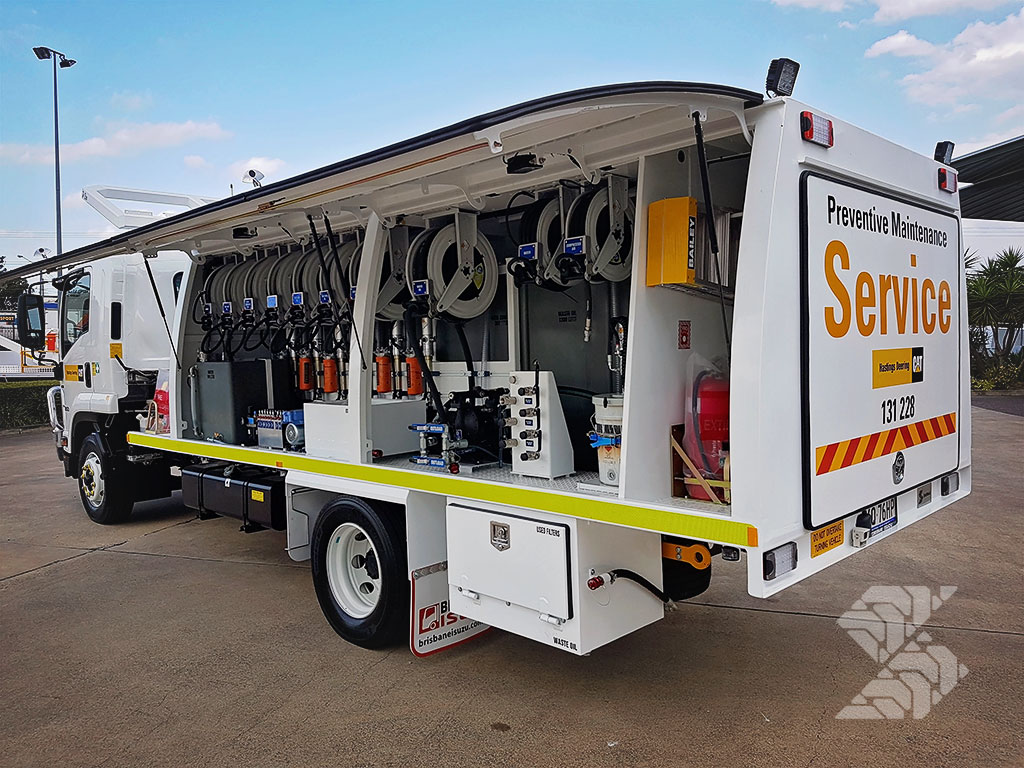
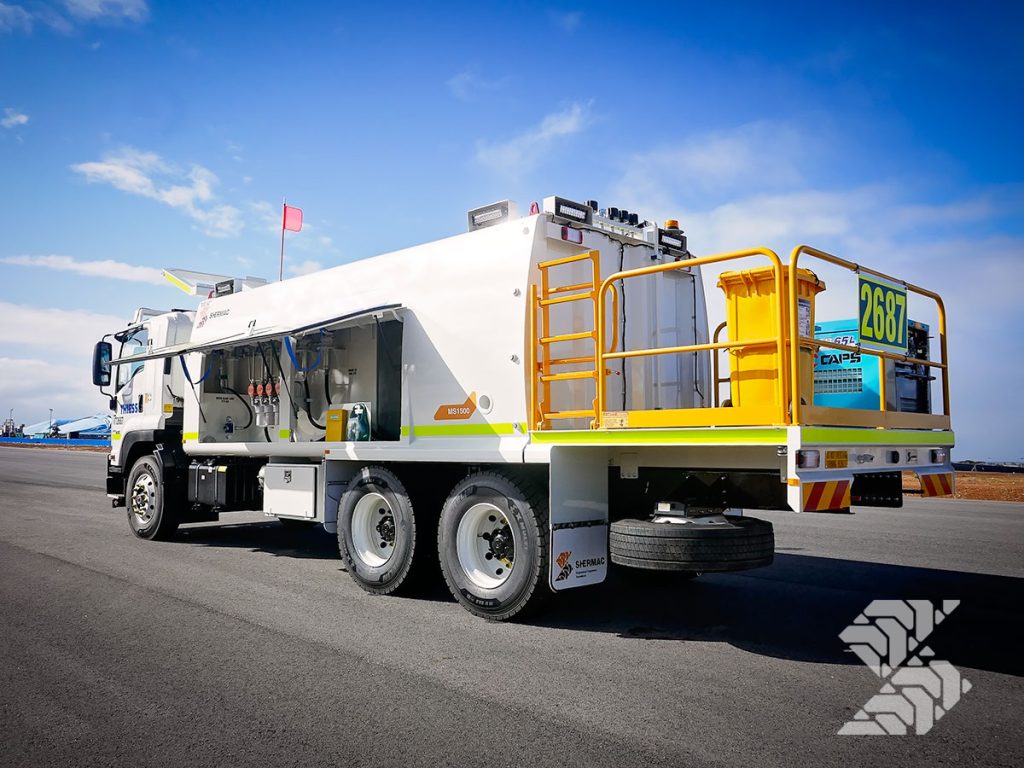
Rear view of Shermac mine-spec service truck with consistent tank configuration and modular equipment layout supporting fleet standardisation.

Standardisation is one of the most effective ways to strengthen service truck fleet management across multiple sites.

When service trucks share consistent layouts, tank configurations and core components, maintenance teams work with familiar systems every day. That familiarity improves servicing speed, reduces training time and lowers operator error.

Modular design also plays an important role here. Structured tank layouts, repeatable hose reel placement and consistent pump systems allow fleets to scale without adding unnecessary complexity.

Across growing operations, standardised service truck builds support:

  • Faster onboarding of operators and technicians
  • Reduced variation in parts and consumables
  • Streamlined maintenance planning
  • Simplified cross-site fleet integration
  • Stronger long-term lifecycle control

In practical terms, consistency across your fleet creates operational stability. And stability is what keeps uptime predictable.

3. Leverage data and condition-based maintenance

Strong service truck fleet management relies on measurable performance.

Telematics, utilisation data and maintenance records provide clear insight into how each truck is operating in the field. Fuel usage, idle time, service response times and repair frequency all highlight where adjustments are required.

Condition-based maintenance builds on that data. Instead of relying purely on fixed service intervals, maintenance planning reflects actual workload, environment and equipment stress.

Key metrics worth tracking include:

  • Vehicle uptime and downtime
  • Maintenance cost per unit
  • Fuel consumption and efficiency
  • Service response times

When data is reviewed consistently, fleet decisions become more precise and long-term reliability improves.

4. Prioritise safety and mine-spec compliance

In mining and civil operations, safety and compliance sit at the centre of effective service truck fleet management.

Every truck in the fleet should meet site-specific requirements as a baseline. ROPS, compliant lighting, spill control, guarding and documented inspections all need to be embedded into the fleet from day one.

At Shermac, we build mine-spec compliance into every service truck as standard. That approach simplifies fleet management for engineering and procurement teams because the safety framework is already engineered into the vehicle.

Fleet-wide compliance discipline should include:

  • Scheduled inspections with documented sign-off
  • Clear maintenance and service records
  • Alignment with site HSQE requirements
  • Consistent safety systems across all units

When compliance is engineered into the fleet and supported by disciplined processes, risk is reduced and operational confidence improves.

5. Optimise parts and inventory management

Parts availability directly affects uptime.

Service truck fleet management should include a clear strategy for critical spares, consumables and high-wear components. When fleets are standardised, parts forecasting becomes more accurate and stockholding is easier to control.

We encourage operators to review usage patterns and align inventory levels with actual servicing demand across sites.

A disciplined parts strategy supports:

  • Faster repair turnaround
  • Reduced idle time waiting on components
  • Lower emergency freight costs
  • More predictable maintenance budgets

When the right parts are available at the right time, service trucks stay productive and field teams stay on schedule.

6. Invest in training and field efficiency

Well-configured trucks still rely on capable operators.

Service truck fleet management should include structured training around safe operation, fault identification and correct servicing procedures. When crews understand the systems they’re working with, tasks are completed faster and with fewer errors.

We’ve seen consistent layouts and clear labelling make a measurable difference in the field. Familiar systems reduce hesitation and improve confidence.

7. Tailor fleets to the operating environment

No two sites operate under the same conditions. Terrain, climate, haul distances and equipment size all influence how service trucks should be specified.

Service truck fleet management needs to account for heat, dust, corrosion exposure and payload demands. Tank material selection, pump capacity, filtration systems and access design all affect long-term durability.

At Shermac, we design and build service trucks specifically for Australian mining and civil environments. That means aligning each configuration to the realities of the site it will support, not relying on a generic template.

When fleets are engineered for their operating conditions, reliability improves and lifecycle costs remain controlled.

8. Build a culture of continuous improvement

Strong service truck fleet management develops over time through review and refinement.

As your operation grows, servicing patterns shift. Reviewing how your service trucks are performing in the field helps you stay aligned with those changes.

That means looking at uptime trends, maintenance spend, response times and operator feedback together. If certain layouts slow tasks down, adjust them. If utilisation data shows consistent pressure on specific units, rebalance capacity.

Ongoing review keeps your fleet aligned with real site demands and protects long-term performance.

Why engineering-led fleet management delivers better outcomes

Service truck fleet management achieves stronger, more sustainable results when it is guided by engineering discipline and operational alignment from the outset.

At Shermac, our approach begins with a comprehensive understanding of your site environment, servicing requirements, equipment profile and compliance obligations. We assess how maintenance is performed in the field, how frequently assets require support, and where efficiency, safety and reliability matter most.

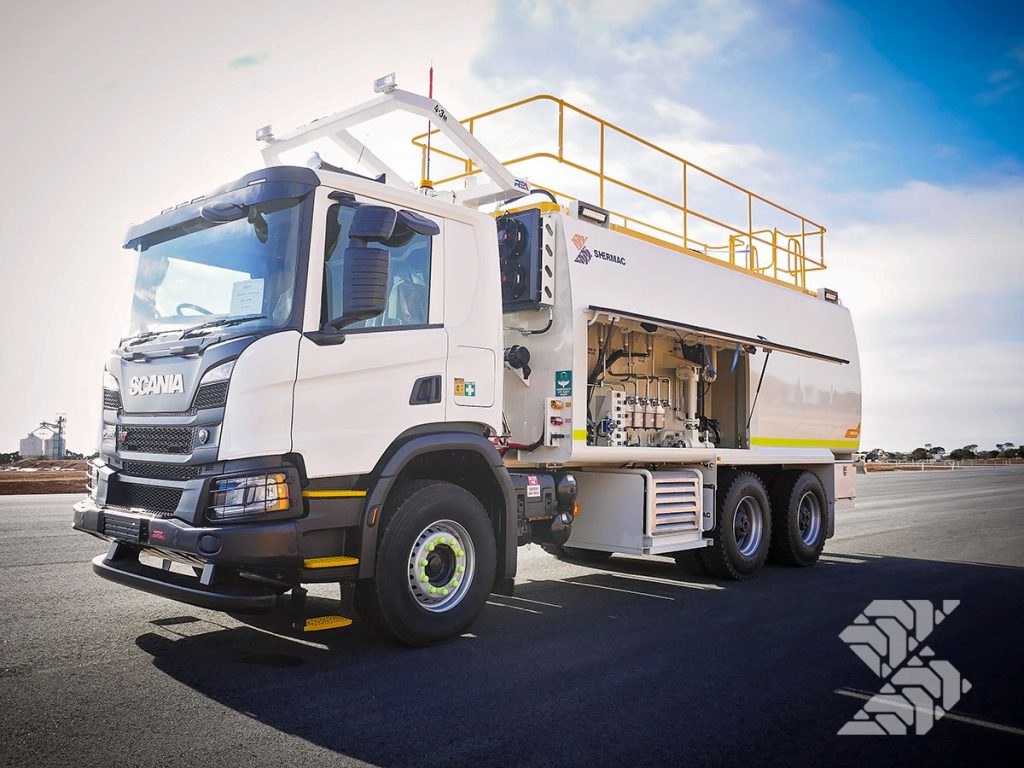
From this foundation, configuration decisions are made with intent. Tank capacities are aligned with actual fluid demand. Layouts are designed to support practical servicing workflows. Mine-spec compliance and safety systems are integrated as standard. Standardisation is considered early to ensure scalability across multiple sites without introducing unnecessary complexity.

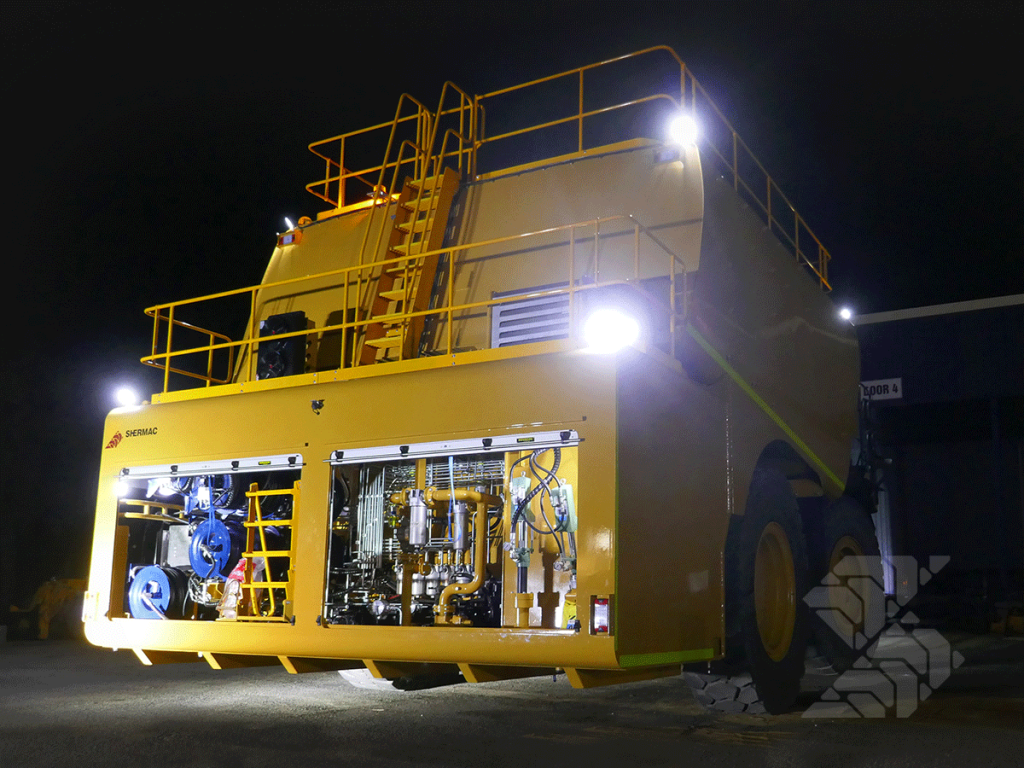
Shermac mine-spec service truck with integrated tank system and modular layout designed for engineered fleet management performance.

Our involvement doesn’t end at delivery. Shermac provides ongoing fleet support and maintenance, including spare parts supply, field servicing and technical assistance to keep your service trucks operating at peak performance. This lifecycle approach ensures your fleet remains compliant, reliable and aligned with evolving operational demands.

This collaborative process ensures that operational insights are translated into practical vehicle configurations that simplify fleet management, protect uptime, and deliver long-term lifecycle value.

Take control of your service truck fleet management

If your current fleet is due for review, or you’re planning to expand, now is the time to reassess how your service trucks are supporting your operation.

At Shermac, we design and manufacture Australian-made, mine-spec compliant service trucks engineered around your site requirements. From tank configuration and pump systems to safety integration and ergonomic layouts, every build is developed to strengthen reliability and simplify fleet management.

To bring greater structure and control to your service truck fleet, speak with our team.

The debate around service trucks vs service trailers usually starts with price. When in fact, it should start with the application.

Out on site, your servicing unit either keeps pace with the job or it holds it back. If it cannot access the work front easily, carry what is required, or operate within compliance limits, it slows everything around it. When the servicing unit is engineered for the task, it supports equipment uptime and keeps maintenance moving without delays.

So which platform actually fits your site, your terrain and your fleet structure? It comes down to how you use it.

Matching the platform to the job

There’s no universal winner in the service trucks vs service trailers discussion. There’s only the best fit for the application.

Where each platform typically fits

  1. If you’re running a remote mining operation with daily servicing demands across uneven haul roads, a dedicated service truck often makes more sense. It’s a single integrated unit, built to carry higher payloads and designed to move consistently across rough terrain without relying on another vehicle.
  2. If you’re a civil contractor working across multiple metro or regional projects, a service trailer can be a practical solution. When paired with a suitably rated tow vehicle already in your fleet, it delivers servicing capability without committing to a dedicated heavy vehicle asset.

For hire fleets, the decision often comes down to utilisation rates and standardisation. High utilisation sites may justify a truck. Intermittent or varied deployments may favour a trailer that can be detached and redeployed as needed.

Owner-operators and smaller contractors may prioritise capital exposure and flexibility. Larger operations may prioritise uptime and response speed.

Evaluating service trucks for your fleet

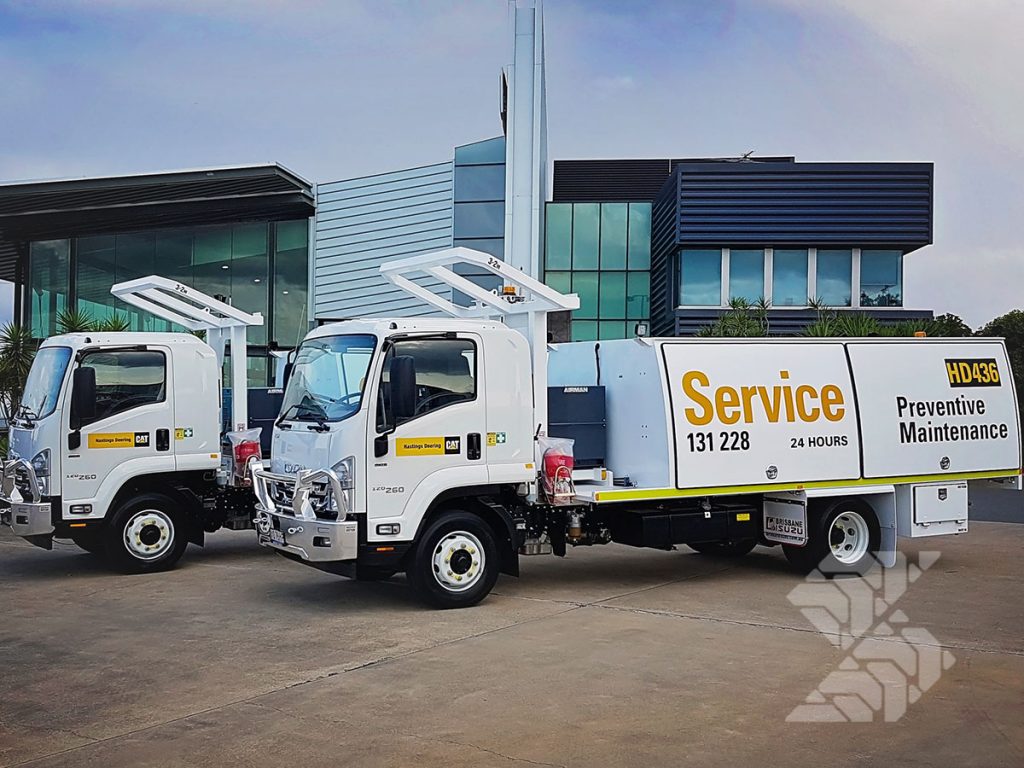
Shermac 4x2 and 4x4 service trucks with mine-spec service bodies for on-site maintenance and refuelling.

A service truck is a purpose-built service body integrated onto a dedicated truck chassis. Tanks, pumps, hose reels and storage are engineered as a single unit. It’s designed to operate as a standalone servicing platform. Shermac service trucks are engineered for Australian mining and civil environments, with configurable tank layouts for diesel, oils, coolant and waste, and mine-spec safety systems designed for compliant on-site servicing.

Best for

Service trucks are typically suited to:

  • High-frequency servicing across large sites
  • Remote mining operations with long internal haul roads
  • Rough or uneven terrain where stability and traction matter
  • Operations requiring higher fluid capacity and payload
  • Sites where fast response time directly affects uptime

If the unit supports critical equipment daily and moves constantly across site, a truck is often the most practical solution.

Advantages

  • Integrated mobility: It’s a single engineered asset. No coupling, uncoupling or reliance on a separate tow vehicle.
  • Stronger manoeuvrability: Generally easier to position in tight work areas compared to a trailer combination.
  • Higher payload potential: Greater GVM capacity allows for larger tanks and tooling. Shermac service trucks can be configured with diesel, oil, coolant and waste systems to match real servicing workflows.
  • Consistent deployment: The servicing capability is always attached to the vehicle. If it’s on site, it’s ready to work.

Limitations

  • Higher upfront capital cost compared to a trailer solution.
  • It can’t be detached and reassigned in the same way a trailer can.
  • If the truck requires mechanical repair, the entire servicing platform is offline.
  • Licensing, servicing schedules and compliance obligations may be more involved depending on the specification.

Evaluating service trailers for your fleet

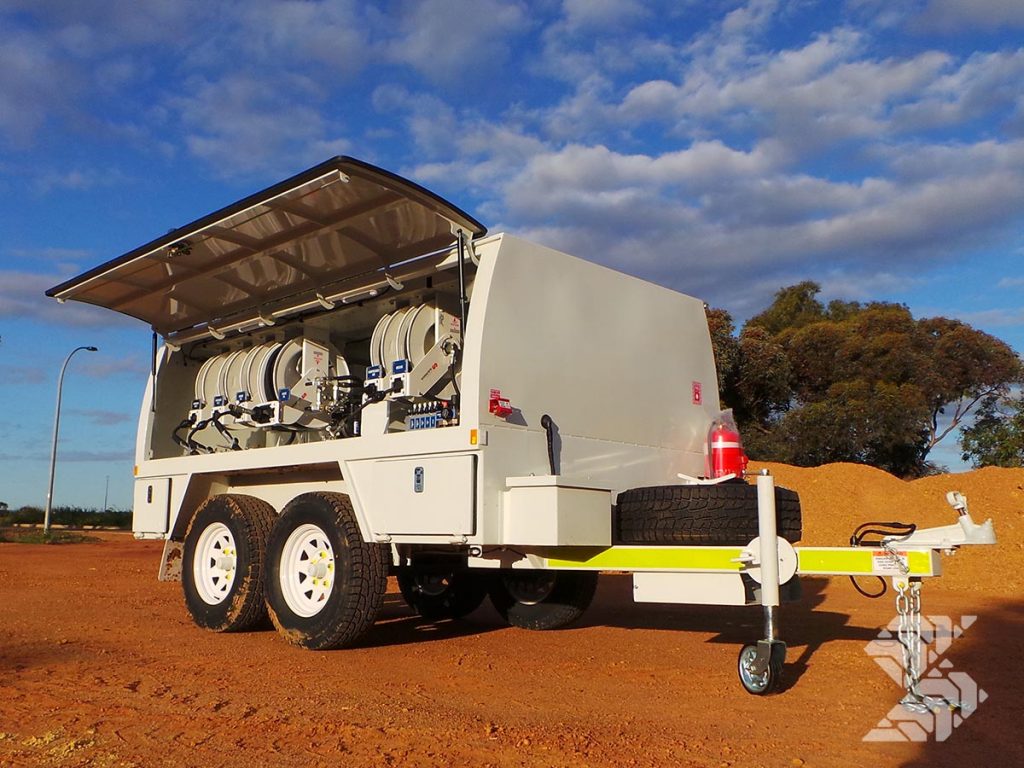
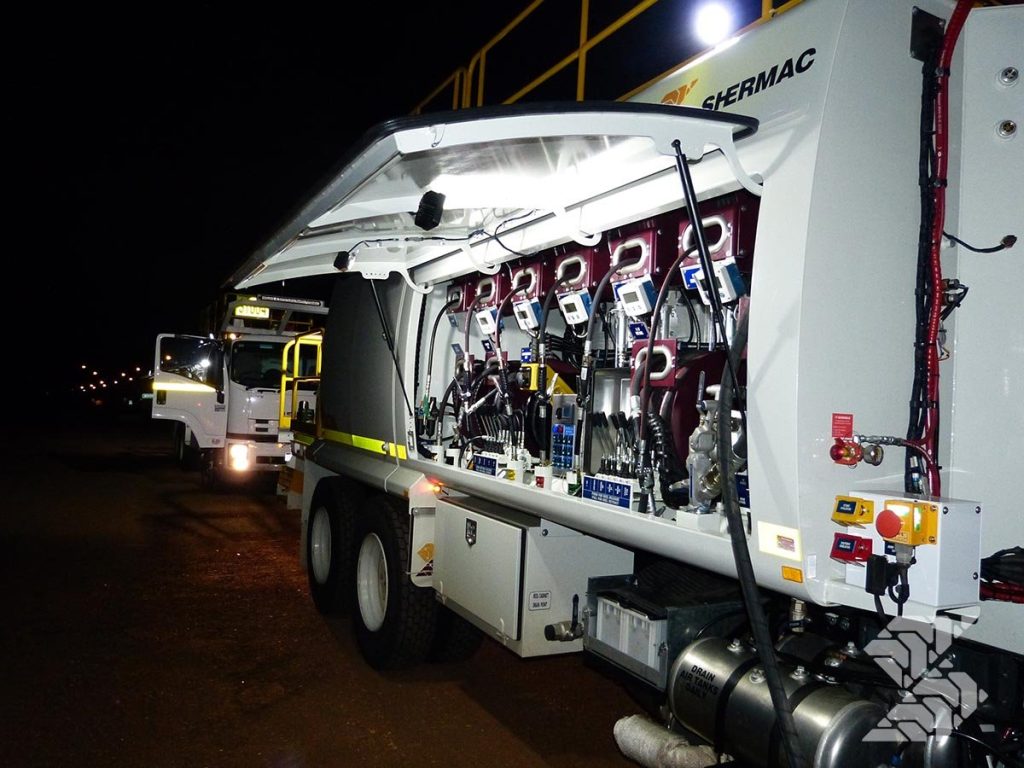
Shermac mine-spec service trailer with multi-tank lubrication system on Australian mining site.

A service trailer is a towable servicing unit fitted with tanks, pumps, reels and storage, designed to be paired with a suitably rated vehicle. Shermac service trailers are engineered with heavy-duty chassis designs and configurable tank layouts to support reliable field servicing across mining, civil and contractor environments. It delivers on-site refuelling and maintenance support without committing to a dedicated truck chassis.

Best for

Service trailers are typically well-suited to:

  • Civil and infrastructure projects across multiple locations
  • Lower or variable utilisation servicing
  • Fleets that already operate rated tow vehicles
  • Owner-operators managing capital exposure carefully
  • Applications where modular deployment is beneficial

If servicing demand shifts between sites or isn’t required daily, a trailer can provide capability without locking in a dedicated heavy vehicle.

Advantages

  • Lower upfront capital cost: Typically less initial investment than a dedicated service truck build.
  • Fleet flexibility: The tow vehicle can be reassigned when the trailer is not required.
  • Modular deployment: Attach when needed, detach when not.
  • Simplified asset structure: The servicing module is separate from the prime mover.
  • Scalable capability: A practical entry point for expanding field servicing capacity.

Limitations

  • The vehicle must meet towing, GVM and GCM requirements.
  • Braking systems, tow ratings and site regulations must be managed correctly.
  • Positioning and manoeuvrability can be more challenging in tight work zones.
  • Payload limits may be lower than larger truck configurations.

Comparison table: Service trucks vs service trailers

FactorService TruckService Trailer
Mobility on siteSingle integrated unit. Generally easier to manoeuvre and position.Dependent on tow vehicle. Reversing and tight access can be more complex.
Terrain capabilityStrong performance on rough or uneven ground when built for mine-spec conditions.Dependent on tow vehicle traction and towing stability.
Payload capacityTypically higher GVM allows for larger tanks and tooling configurations.Moderate capacity. Limited by trailer ratings and tow vehicle limits.
Set-up timeMinimal. Arrive and operate as one unit.Requires coupling to rated tow vehicle before deployment.
Fleet dependencyStandalone servicing asset. No reliance on another vehicle.Requires compliant tow vehicle with appropriate towing capacity and braking system.
Capital costHigher upfront investment.Lower initial purchase cost.
Lifecycle cost driversTruck servicing, heavy vehicle maintenance, downtime affects full unit.Trailer maintenance plus wear and load impact on tow vehicle.
Compliance considerationsHeavy vehicle compliance, licensing and site-specific requirements.Towing compliance, GVM, GCM, tow ratings, braking regulations.
Best suited forHigh utilisation, remote or large-scale operations.Flexible civil applications and lower utilisation servicing.

Key decision factors to evaluate

Mobility and terrain

Look at how the unit will move across your site.

Large mining operations with rough haul roads and constant relocation often favour a dedicated truck. Mine-spec service trucks are typically engineered with reinforced chassis integration, compliant safety systems and tank designs suited to harsh Australian operating conditions. It’s a single unit with consistent traction and stability. On compact civil sites with sealed access or short travel distances, a trailer may operate effectively when paired with the right tow vehicle.

If access is tight, congested or frequently changing, manoeuvrability becomes a deciding factor.

Utilisation rate

How often will the unit be used?

Daily, high-frequency servicing typically supports the investment in a service truck. The asset remains productive and justifies its dedicated role.

If servicing is periodic or project-based, a trailer can reduce capital exposure while still delivering the required capability.

Payload and service scope

Define exactly what the unit needs to carry.

Fuel volume. Oil capacity. Waste recovery. Tooling. Hose reel length. Pump configuration.

Higher payload demands may push the decision toward a truck with greater GVM capacity. Whereas moderate servicing requirements may sit comfortably within trailer limits.

Compliance and risk management

Compliance is often where the real difference appears.

Service trucks fall under heavy vehicle regulations and site-specific mine compliance standards.

Service trailers introduce towing compliance considerations, such as:

  • GVM
  • GCM
  • Tow ratings
  • Braking systems
  • Operator competence
  • Site rules

If towing capacity is marginal or documentation is unclear, risk increases quickly.

Capital cost vs lifecycle cost

Upfront price is only one part of the equation.

A service truck carries a higher initial investment, but may reduce your response time and improve uptime on high-demand sites. In comparison, service trailers have a lower purchase cost, but their lifecycle impact includes tow vehicle wear, compliance management and operational efficiency.

The right decision balances capital outlay with productivity, maintenance impact and long-term fleet performance. Lifecycle support, parts availability and servicing access also affect the total cost of ownership.

Speak to Shermac about the right fit

Choosing between service trucks vs service trailers comes down to terrain, utilisation rate, payload requirements and your compliance framework. The platform needs to match how your site operates and how your fleet is structured.

At Shermac, we assess your servicing scope, site conditions and operational demands, then engineer a solution that integrates seamlessly into your fleet. Our service trucks and service trailers are built for Australian mining and civil environments, with mine-spec compliance where required and ISO9001:2015 quality systems supporting every build. Each unit is designed for reliability, safe operation and long-term performance in the field.

If you’re evaluating options, speak with our team. We’ll help you assess your site requirements and determine the servicing platform that delivers the strongest outcome for your fleet management strategy.

Stay Updated