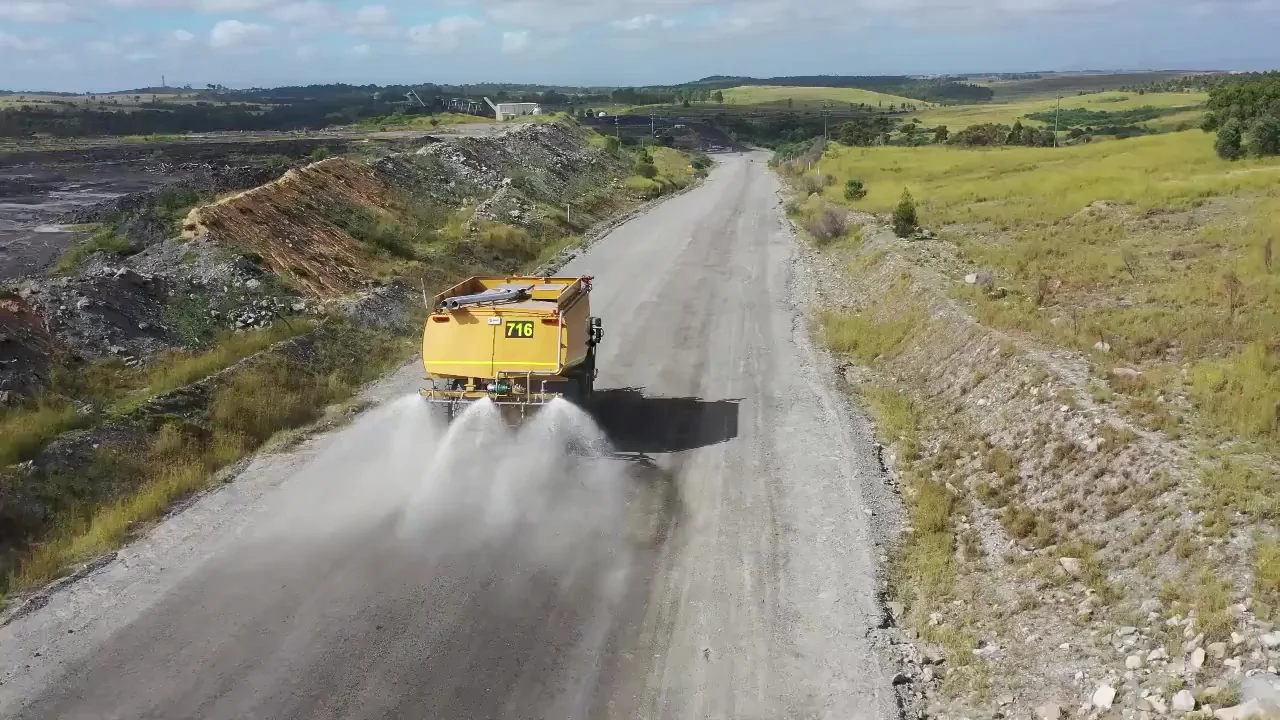
Choosing a mine-site water cart is one of those decisions that has a big impact on day-to-day operations. Get the specification right and dust control, road conditions, and site safety stay on track. Get it wrong and you’re dealing with frustrated operators, higher maintenance, and a cart that struggles to keep up with the site.
This guide keeps things simple and practical. It covers the main specs and design choices that genuinely matter on a mine site, and what to look for if you want a water cart that’s reliable, compliant, and built to handle tough conditions.
Mine sites are tough on equipment, and water carts cop a lot of punishment. When the spec isn’t matched to the environment, it shows fast with poor dust control, stability issues, breakdowns, and operators who don’t want to drive the equipment.
The specifications matter because it directly affects:
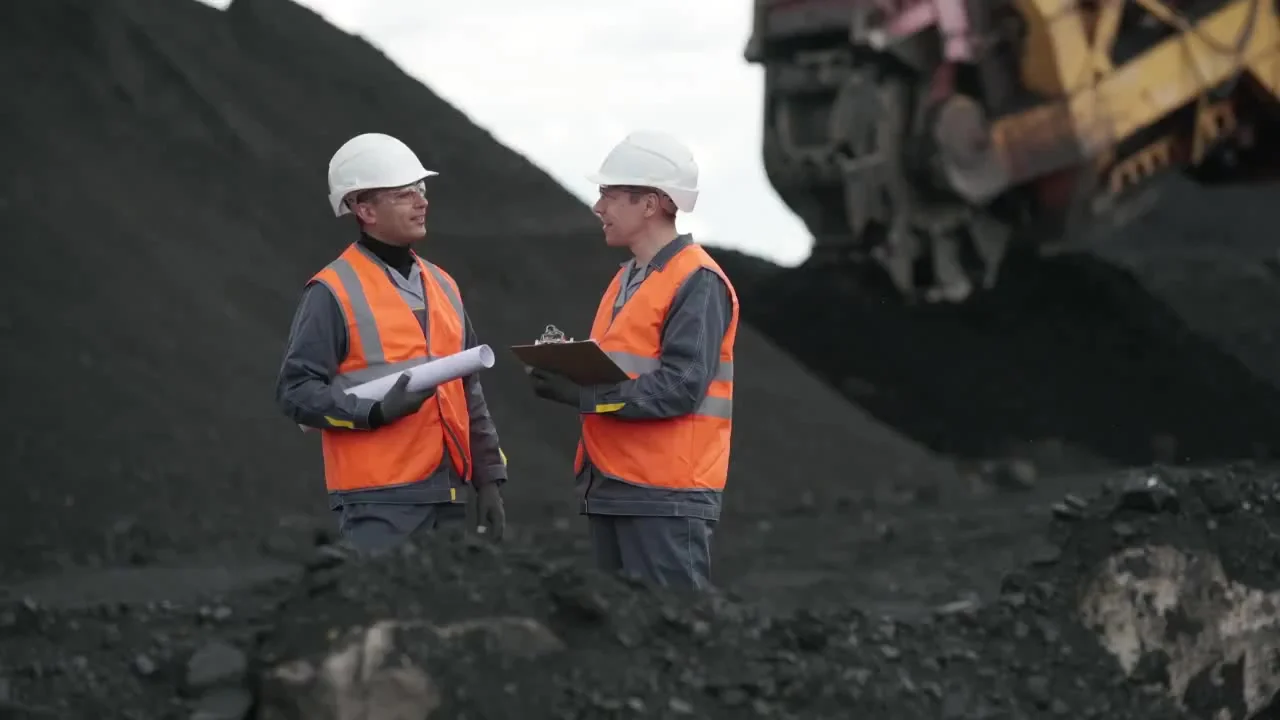
Before you can choose the right tank, pump, or spray setup, you need to understand the operating ‘envelope’ (basically the conditions the cart needs to work in and the limits it has to stay within to perform properly). When you know the terrain, the loads, the travel cycles, and the site conditions, you can spec a water cart that actually holds up in day-to-day use.
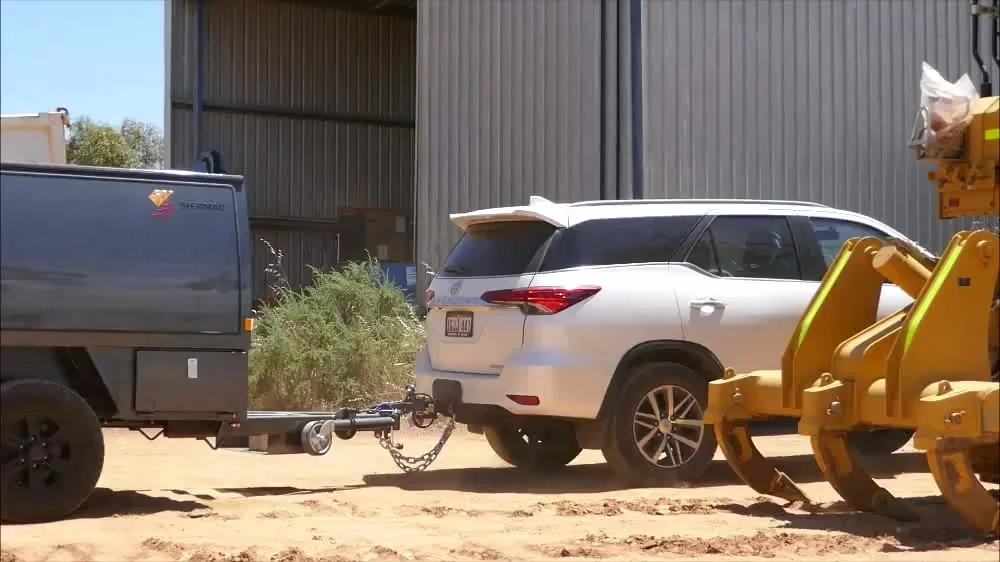
Once the key operating factors are clear, you can match the cart to the right chassis, tyres, and suspension. This part is easy to underestimate. Off-road chassis setups vary a lot, and two 8×4 trucks can have completely different carrying capacities. In some cases, the right choice can mean carrying 50% more water, cutting refill trips, and making a noticeable difference to uptime and productivity.
At Shermac, this is the first thing the engineering team looks at. We take the operating environment into account before recommending anything. It’s a simple step, but it’s the reason our carts hold up well in remote and high-demand sites.
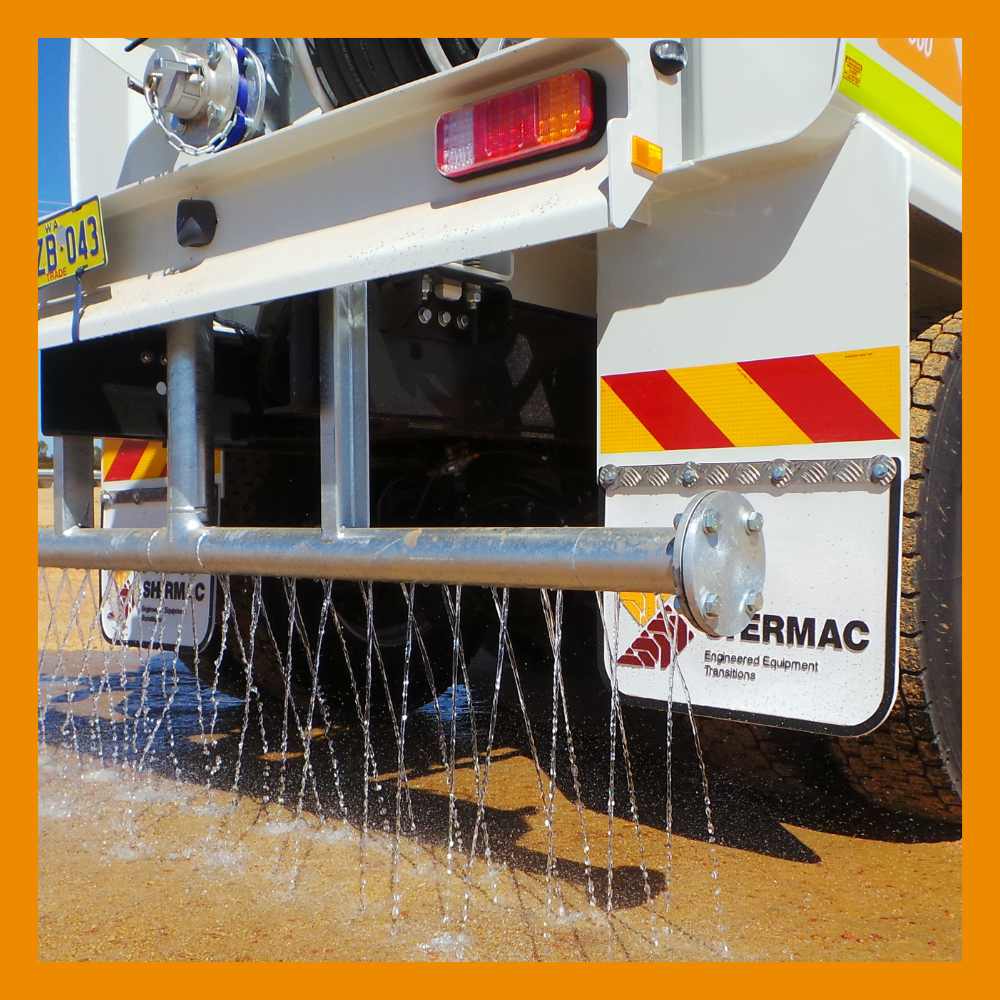
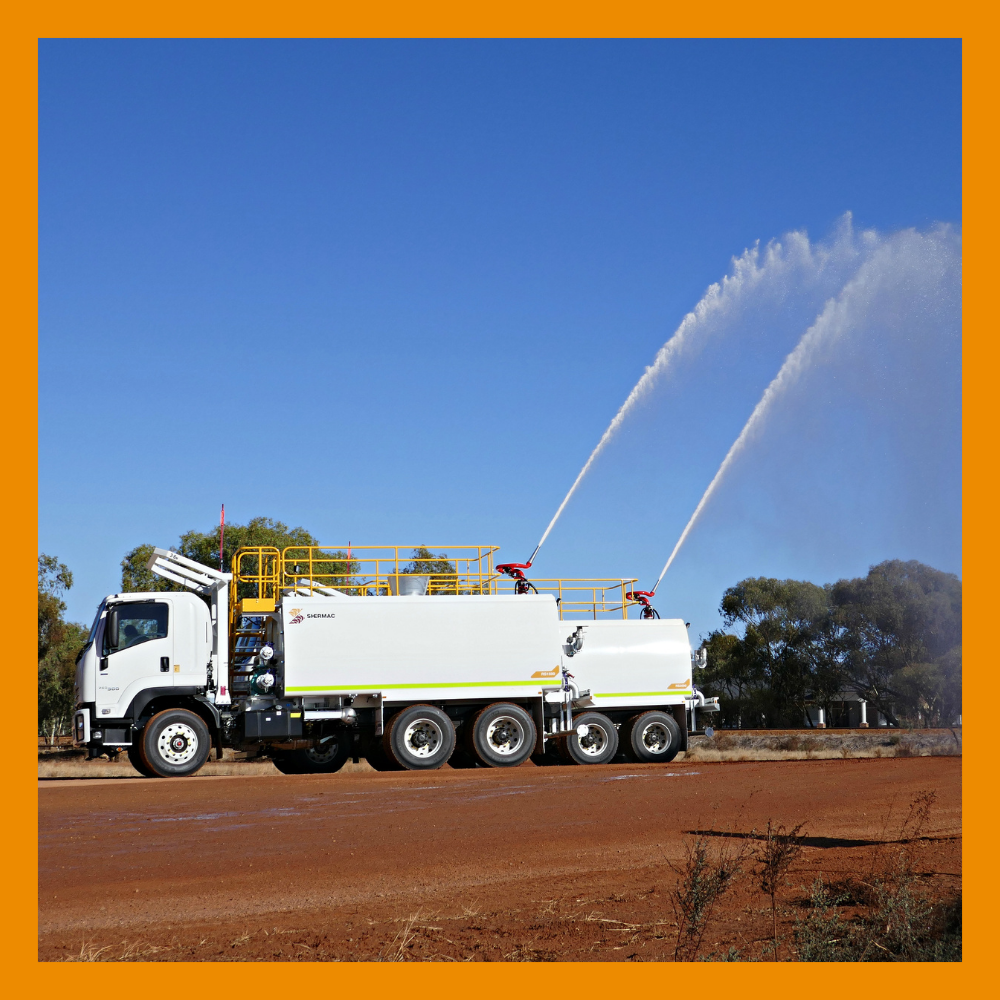
Once the operating environment is understood, the next step is getting the technical specifications right. These are the parts of a water cart that influence how well it performs on a mine site.
The tank needs to suit the size of the haul roads, the distances covered, and how often the cart can realistically refill. Too small, and you waste time cycling to water points. Too large, and you overload the chassis. Matching the tank to the workload is what keeps dust suppression consistent throughout a shift.
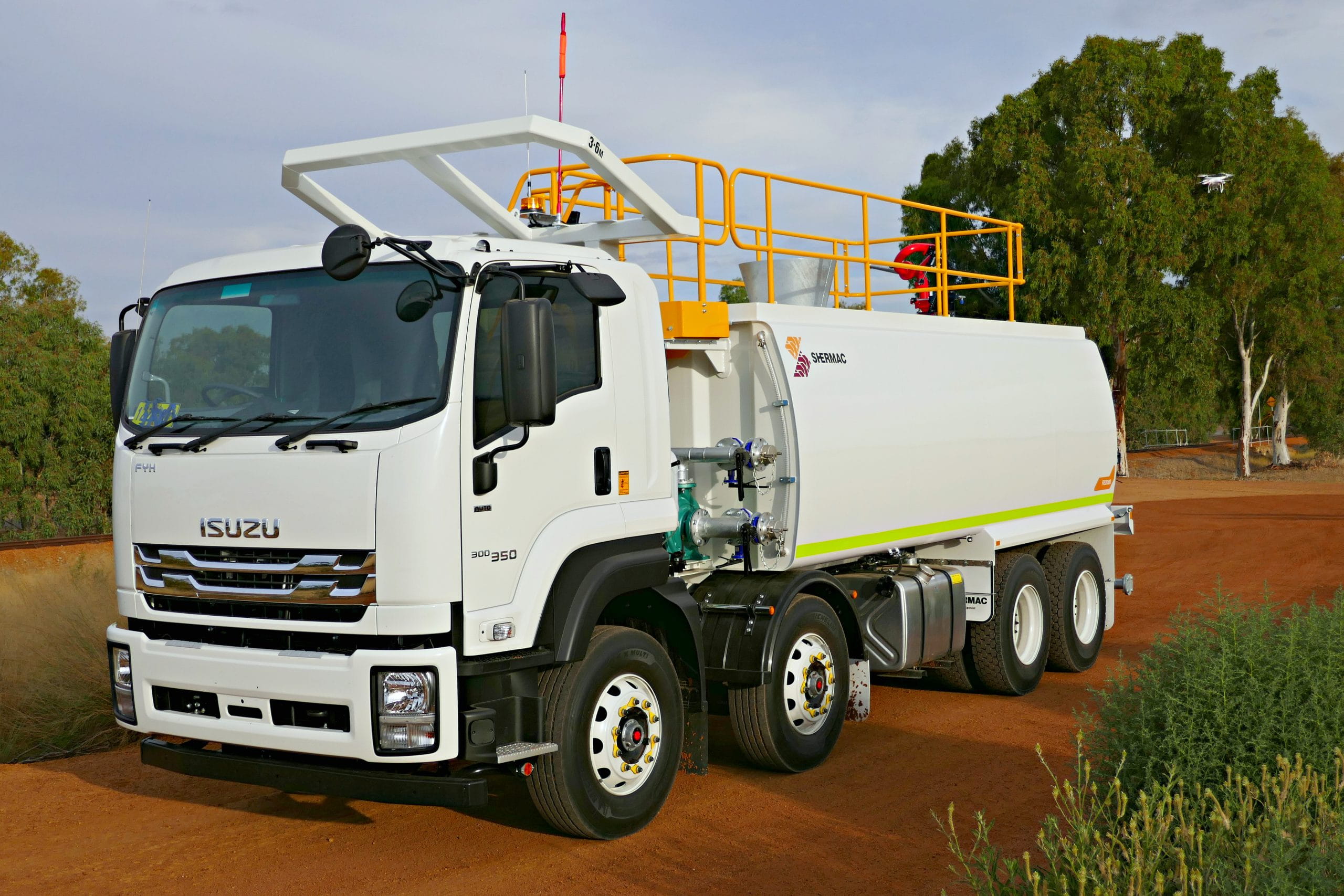
Not all 8×4 or heavy-duty chassis are equal. Payload, suspension, wheelbase, and off-road capability vary massively between models. The right chassis determines how much water you can carry safely, how stable the vehicle feels, and how well it handles rough sections, climbs, or long haul routes.
A low centre of gravity is essential on mine roads. Shermac’s curved tank design improves stability and removes stress points that cause cracks in flat-walled tanks. Better distribution means safer handling, less chassis strain, and fewer structural failures over the cart’s life.
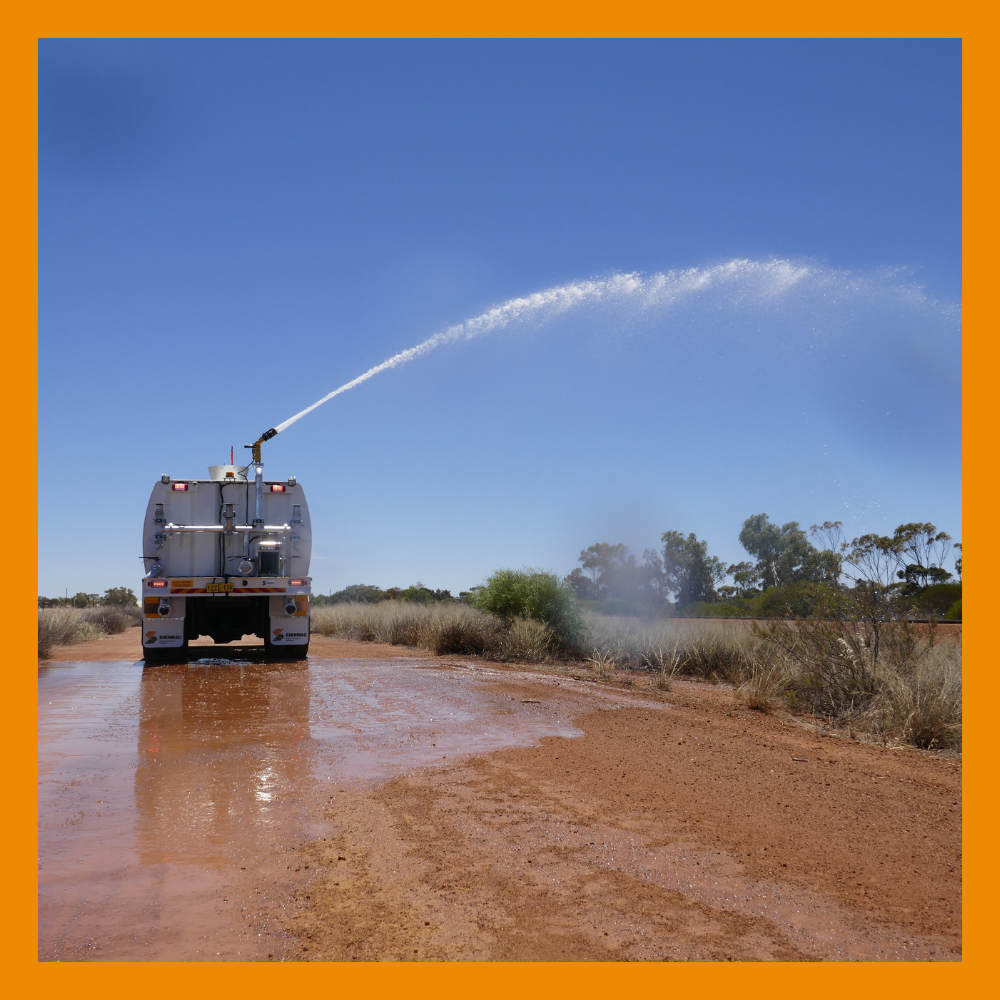
A reliable pump with the right flow rate and pressure ensures the cart can maintain proper coverage across different road surfaces. Variable flow or speed control is a bonus, letting operators adjust output based on dust conditions.
Mine sites need flexibility. This could mean:
The design should deliver even, predictable coverage without wasting water.
Operators should be able to control spray zones from inside the cab. Being able to turn individual sprayers on and off saves water, improves accuracy, and avoids constant stopping and starting.
Dirty or sediment-heavy water is common on mine sites. Good filtration protects pumps and nozzles, reduces blockages, and keeps spray patterns consistent.
Depending on the site, this may include mine-spec lighting, access systems, handrails, emergency stops, spill control, and fire response features. These are critical for site compliance and operator safety.
Daily checks and routine servicing should be simple. If key components are easy to reach and nozzles can be cleaned quickly, the cart spends more time working and less time parked up waiting for maintenance.
The upfront price does matter, but it’s often the long-term costs that separate a good water cart from one that becomes a headache. The way the tank is built, how the chassis handles the load, and how easy the system is to service all play a part in the true cost of ownership.
Things that influence lifecycle cost and overall ROI include:
Shermac has been building purpose-built mine-site water carts since 2002. We’re an Australian, family-owned business, and everything we build is designed for the kind of harsh, remote conditions most fleets deal with every day. That focus comes from years of working closely with mining and civil teams across the country and understanding what actually holds up on site.
Over the years, we’ve designed and engineered equipment for some of the biggest names in the industry, including BHP, Rio Tinto, Fortescue, Thiess, Komatsu, and Alcoa. A lot of that work has involved solving tough problems or building highly specialised units that need to perform in environments most gear simply doesn’t survive.
Getting the specification right is the difference between a water cart that works hard every day and one that constantly holds your site up. When the tank design, chassis, spray system, and controls all line up with the conditions you’re running, you end up with a safer, more reliable operation.
If you’re looking at mine-spec water carts and want some practical advice on what will suit your site, the Shermac team is always happy to have a chat.
Reach out on 1300 799 943 or [email protected], or get in touch through the website. We’re here to help you get the right setup from day one.
Talk to our well-trained and knowledgeable team to find out more about our customisation process and how we can help you.
Call our team on 1300 799 943 or email [email protected] with your inquiry.