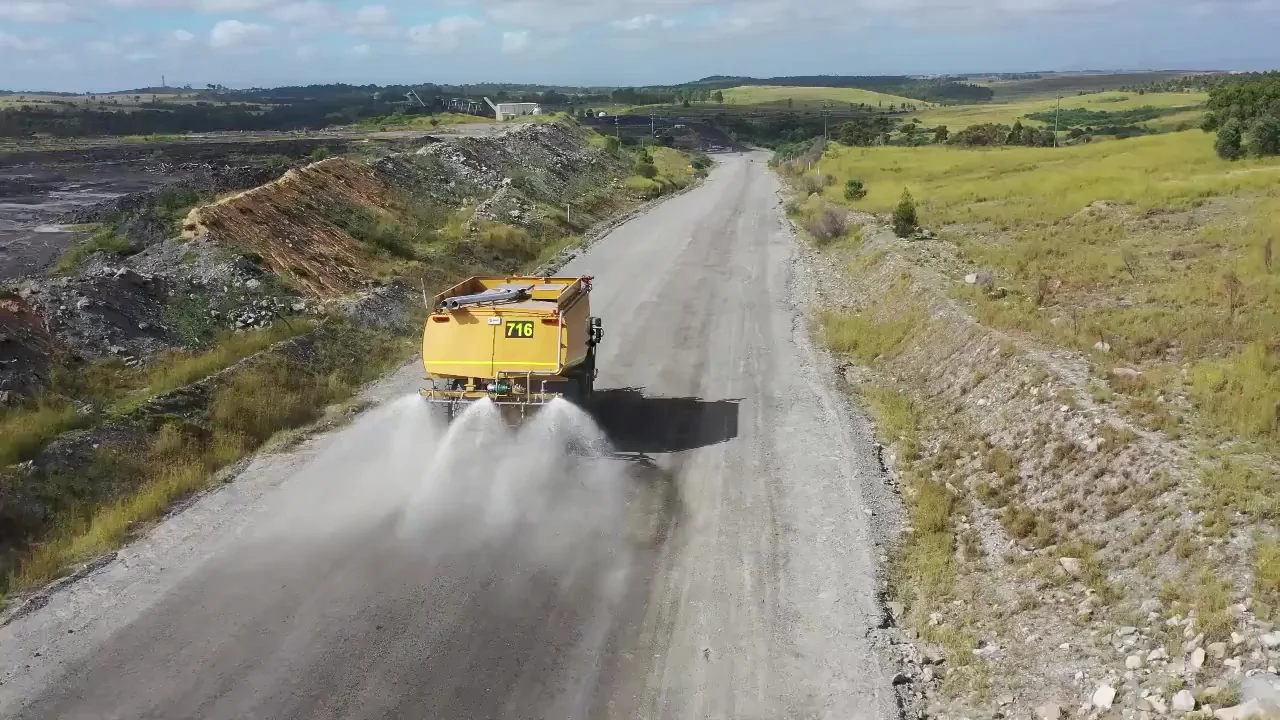
On any open-pit mine, haul roads carry the weight of the entire operation. Trucks never stop moving, dust is always a factor, and road conditions can shift quickly with weather and traffic. Watering helps keep those roads safe and workable, but it’s not as simple as putting more water on the ground.
The way water is applied has a direct impact on safety, traction and road longevity, which is why the performance and consistency of your water cart play such an important role in day-to-day operations.
The road network is critical to open-pit mining. To keep productivity at an optimum level, every haul road must be properly maintained and in good condition. These roads carry continuous heavy vehicle traffic and are typically unsealed, which makes them vulnerable to many factors, including dust, surface breakdown and changing weather conditions.
The New South Wales Environment Protection Authority (EPA) noted that “Dust generated from haul roads within the mines is the biggest source of fine dust particles on most mine sites, contributing about 40 per cent of total emissions”.
Effective watering is the primary method used to control dust, maintain visibility and support safe operating conditions.
Key reasons dust control matters:
When haul roads hold consistent moisture, the surface stays compacted and stable. This helps maintain road shape, reduces erosion and limits the maintenance required to keep roads serviceable.
Stable surface conditions support:
Watering is one of the most important routine tasks on any mine site because it shapes how reliable and safe the haul roads remain. A well-managed watering program keeps dust down, maintains surface integrity and supports efficient movement of heavy equipment across the site.
Under-watering leaves haul roads dry and dusty. When heavy vehicles move across uncompacted surfaces, fine particles lift easily and reduce visibility for operators. This affects safety across the entire work zone and can create air-quality issues that impact compliance.
Key concerns:
A dry wearing course breaks down more quickly under constant traffic. As fines and binding material lift from the road surface, the road becomes rougher and less predictable for operators.
Operational impacts include:
As the road becomes dusty and uneven, operators often reduce speed to maintain control. Graders may need to intervene more regularly, increasing maintenance effort and interrupting haul cycles. These compounding effects create avoidable inefficiencies across the fleet.
Over-watering washes away the fine surface layers of a haul road and reduces the friction needed for heavy vehicles to maintain traction. This creates low-friction conditions where operators have less control, especially when braking or cornering.
Key impacts:
Excess water weakens the wearing course and leads to rapid deterioration. Material can shift or pump under load, creating soft spots, ruts and uneven surfaces that require more frequent grading.
Common issues include:
A five-year review by the Queensland Department of Natural Resources and Mines recorded 477 High Potential Incidents involving vehicles losing control on mine road surfaces. The findings identified three main contributing factors:
Inappropriate watering accounted for 49 percent of these incidents, making it the single most common factor. The review also noted that moisture-sensitive road materials, such as clays, can lose up to half of their friction coefficient when watered. Weathered overburden clays can have significantly lower friction than siltstones or sandstones, increasing the likelihood of traction loss when wet.
Different road materials respond differently to moisture, which means a single watering approach cannot suit all areas of a haul network. When water is applied without considering material type, surface condition or vehicle speed, friction levels can vary sharply across the road. This creates inconsistent and unsafe driving conditions, even when the intention is simply to manage dust.
The Queensland Department of Natural Resources and Mines encourages operators to conduct friction coefficient testing across haul roads. Understanding how different surface materials respond to moisture gives engineering teams clearer insight into:
This testing has helped many Bowen Basin mines reassess their road materials, refine watering practices and invest in higher-performing wearing course materials where required.
DNRM’s investigation identified several common issues when testing water truck calibration. These inconsistencies often contribute to over-watering or uneven water distribution, increasing the risk of slides and road degradation.
Frequent calibration helps identify:
Regular checks ensure that watering rates match operational needs and that sprays deliver consistent, predictable coverage.
Different materials behave differently when wet, and moisture affects friction more severely on some surfaces than others. Clay-based wearing courses, for example, can lose up to half of their friction coefficient when watered. On steep ramps, friction reduces further due to geometry alone.
Operators improve safety by adjusting watering methods based on:
A single watering approach rarely suits all areas of a haul network. Tailored application helps maintain safer, more predictable surfaces.
The Mining Inspectorate strongly recommends using experienced water cart operators who understand how watering affects friction, braking and site traffic. Proper training covers:
Skilled operators play a direct role in maintaining safe haul road conditions.
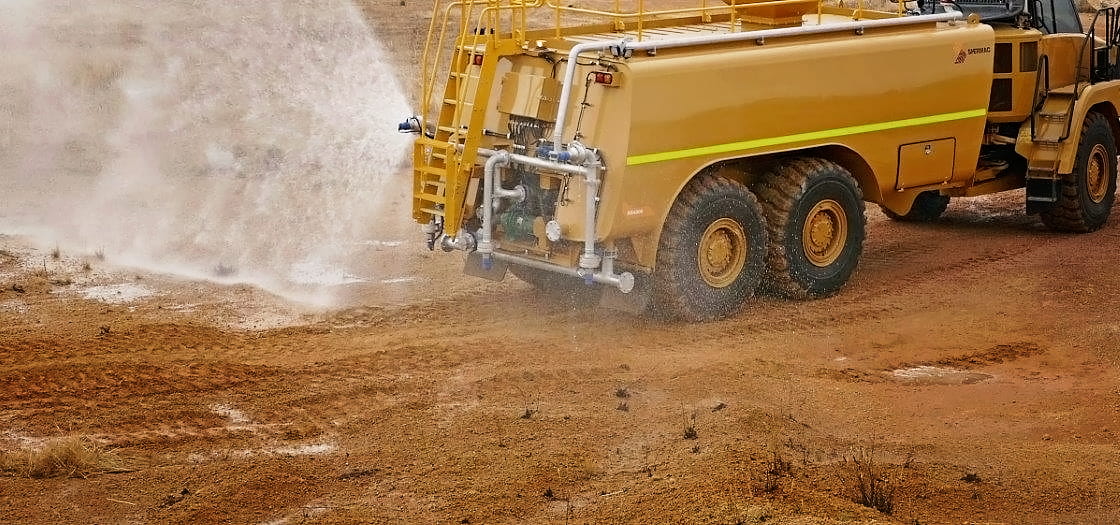
Maintaining safe and consistent haul road conditions depends on how accurately water is applied. Shermac water carts are engineered to deliver controlled, predictable coverage across varied road materials and gradients, helping operators avoid over-watering and low-friction surfaces.
Shermac’s engineered-for-purpose designs support better watering outcomes through:
With purpose-built water carts, mines can maintain safer surface conditions, reduce grader intervention and support more consistent haul cycles.
Keeping haul roads safe and reliable depends on how well moisture is managed.
Fit-for-purpose water carts make that work easier. With controlled spray delivery, predictable application rates and durable, mine-spec engineering, Shermac water carts help operators maintain safer surfaces and support efficient haul cycles across the site.
If you’re looking to improve watering accuracy or review your current setup, our team can walk you through the best configuration for your road conditions and fleet requirements.
Talk to our well-trained and knowledgeable team to find out more about our customisation process and how we can help you.
Call our team on 1300 799 943 or email [email protected] with your inquiry.