The debate around service trucks vs service trailers usually starts with price. When in fact, it should start with the application.
Out on site, your servicing unit either keeps pace with the job or it holds it back. If it cannot access the work front easily, carry what is required, or operate within compliance limits, it slows everything around it. When the servicing unit is engineered for the task, it supports equipment uptime and keeps maintenance moving without delays.
So which platform actually fits your site, your terrain and your fleet structure? It comes down to how you use it.
There’s no universal winner in the service trucks vs service trailers discussion. There’s only the best fit for the application.
For hire fleets, the decision often comes down to utilisation rates and standardisation. High utilisation sites may justify a truck. Intermittent or varied deployments may favour a trailer that can be detached and redeployed as needed.
Owner-operators and smaller contractors may prioritise capital exposure and flexibility. Larger operations may prioritise uptime and response speed.
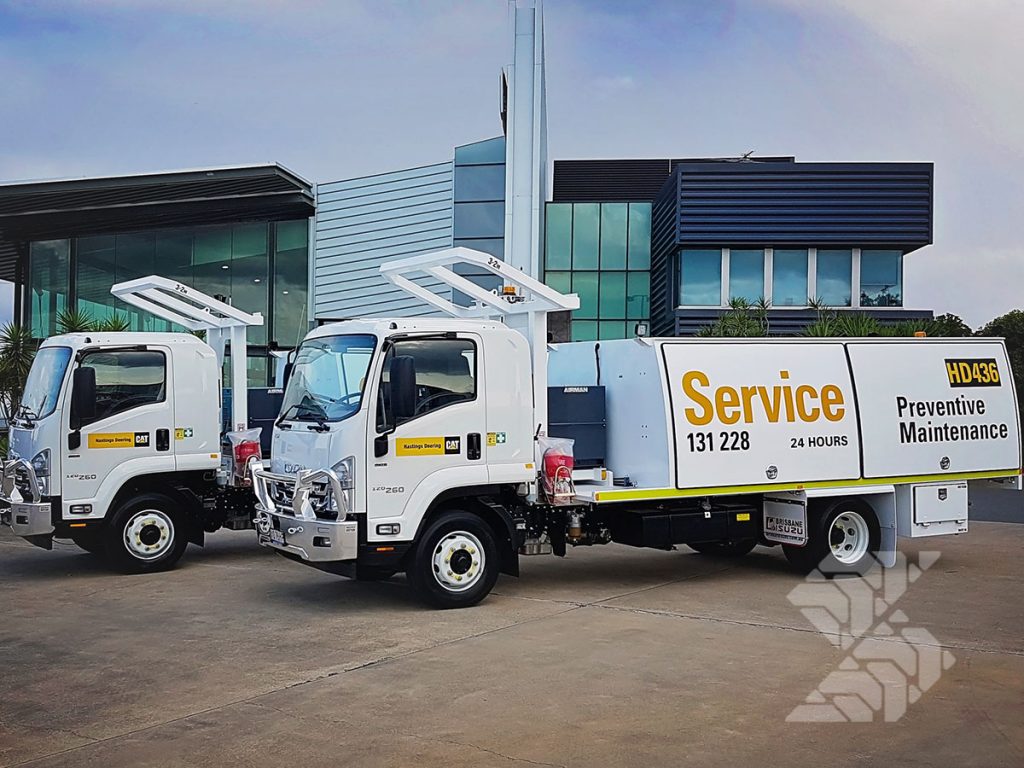
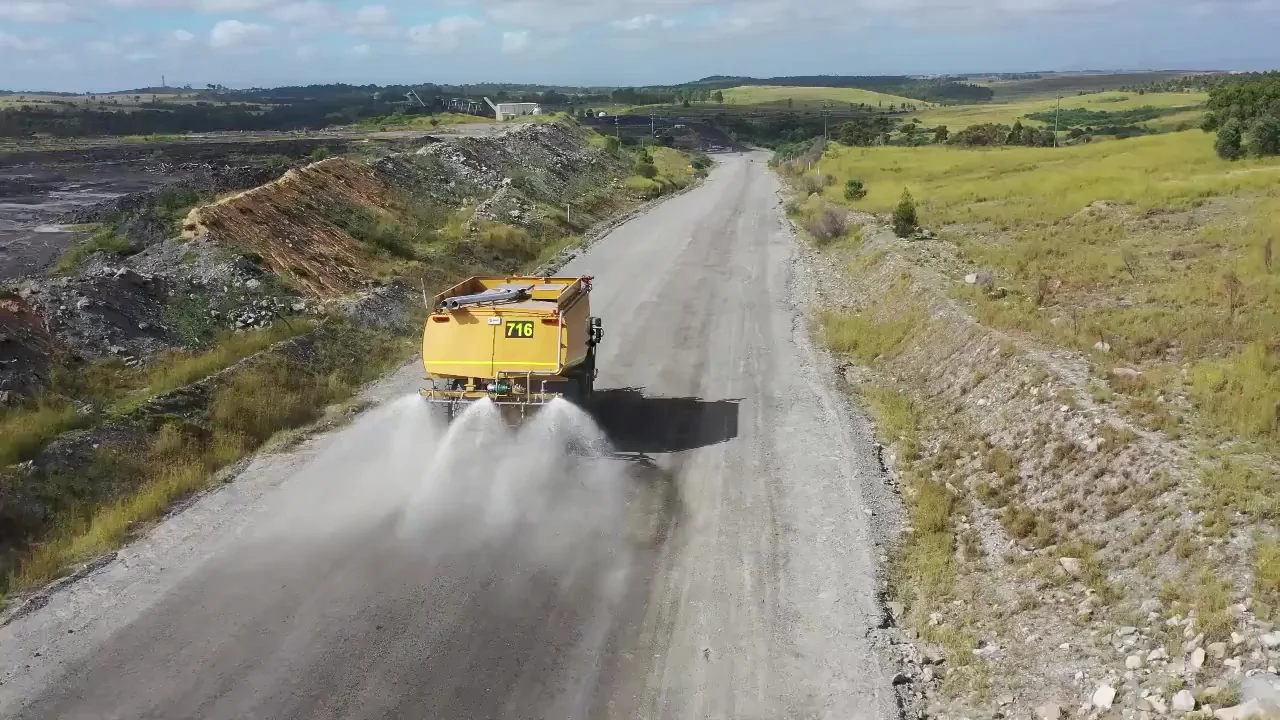
A service truck is a purpose-built service body integrated onto a dedicated truck chassis. Tanks, pumps, hose reels and storage are engineered as a single unit. It’s designed to operate as a standalone servicing platform. Shermac service trucks are engineered for Australian mining and civil environments, with configurable tank layouts for diesel, oils, coolant and waste, and mine-spec safety systems designed for compliant on-site servicing.
Service trucks are typically suited to:
If the unit supports critical equipment daily and moves constantly across site, a truck is often the most practical solution.
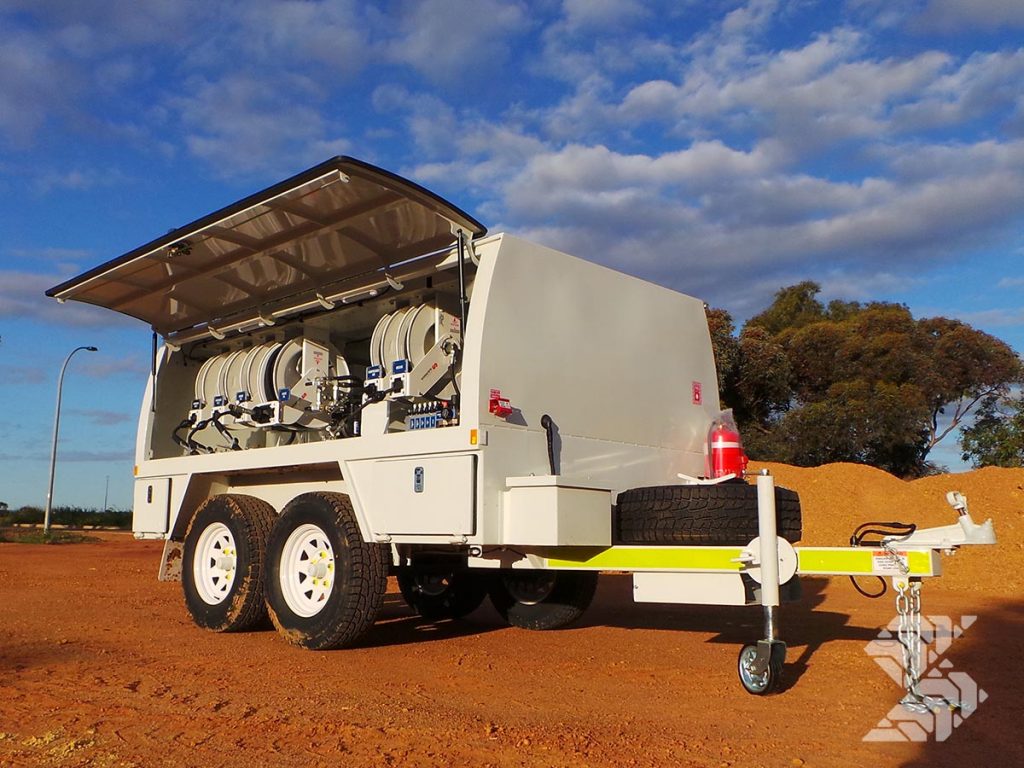
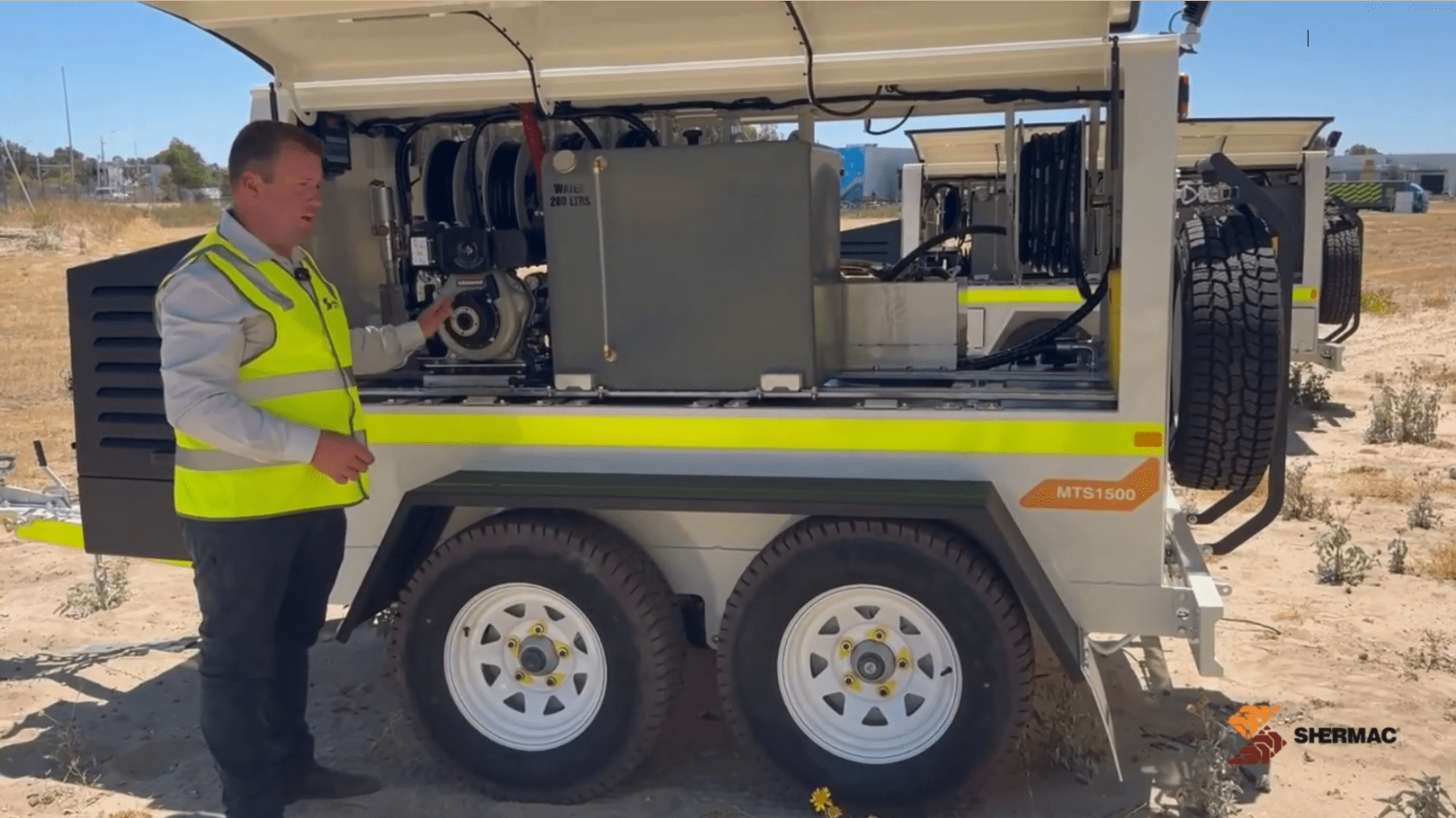
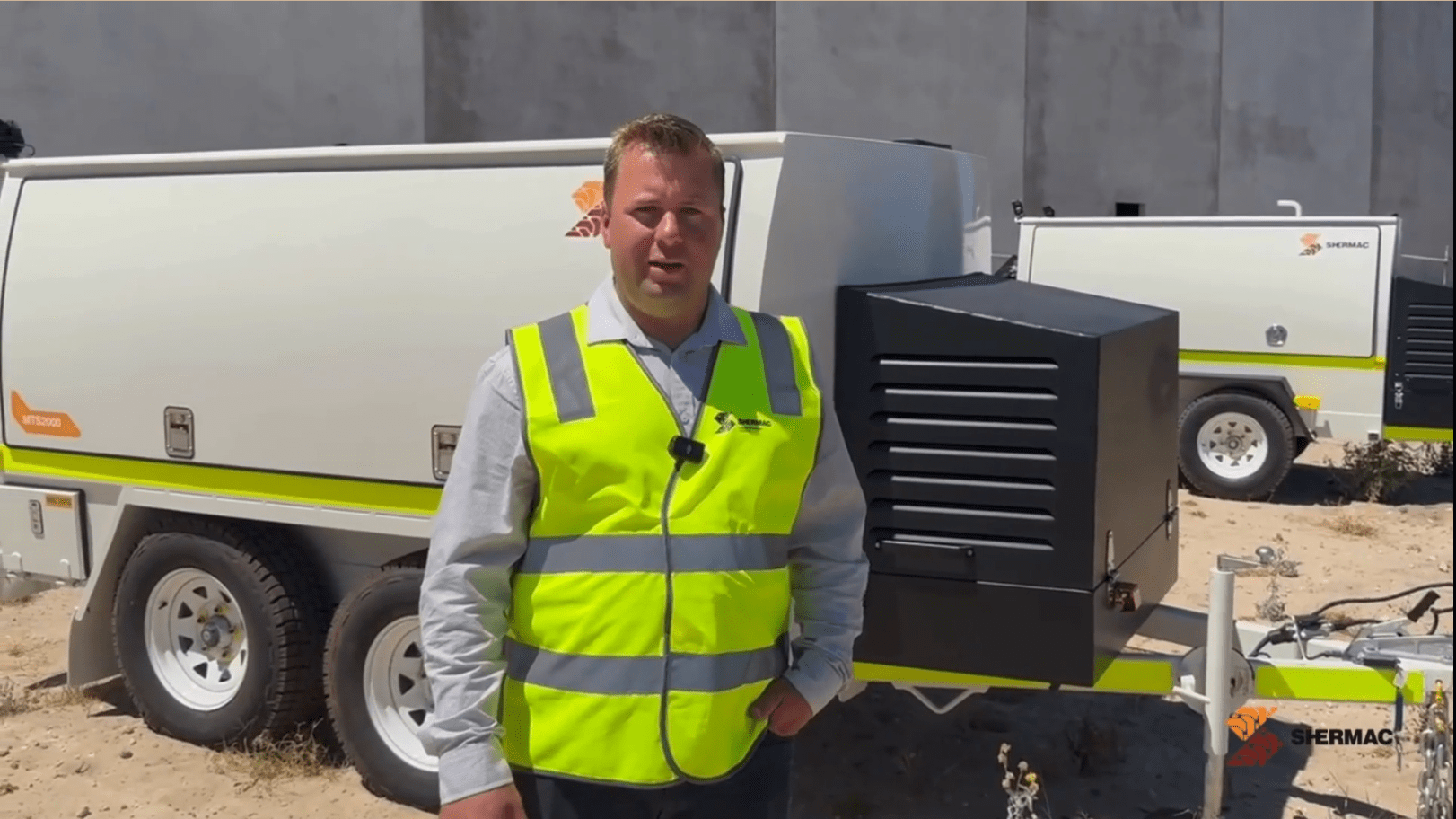
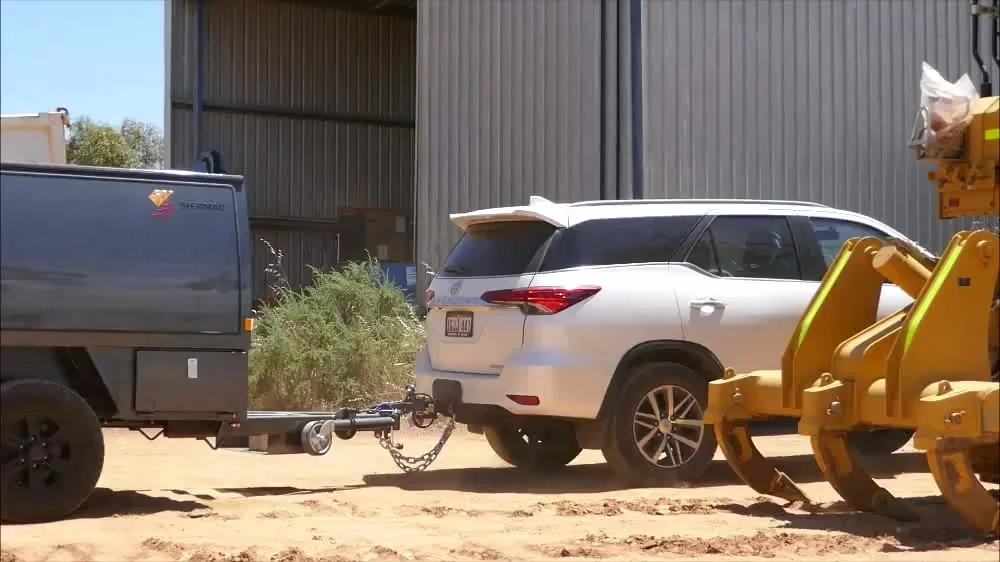
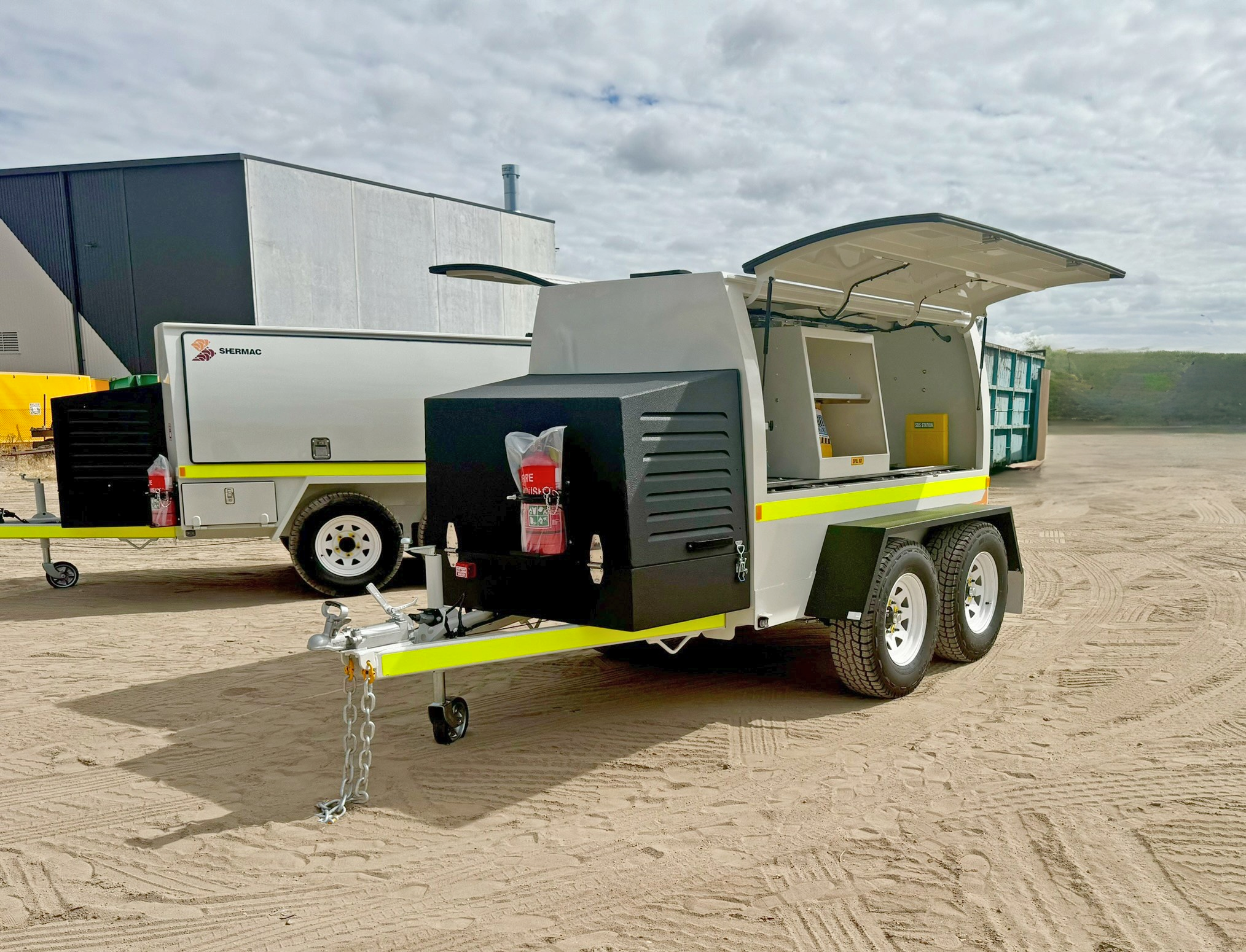
A service trailer is a towable servicing unit fitted with tanks, pumps, reels and storage, designed to be paired with a suitably rated vehicle. Shermac service trailers are engineered with heavy-duty chassis designs and configurable tank layouts to support reliable field servicing across mining, civil and contractor environments. It delivers on-site refuelling and maintenance support without committing to a dedicated truck chassis.
Service trailers are typically well-suited to:
If servicing demand shifts between sites or isn’t required daily, a trailer can provide capability without locking in a dedicated heavy vehicle.
| Factor | Service Truck | Service Trailer |
| Mobility on site | Single integrated unit. Generally easier to manoeuvre and position. | Dependent on tow vehicle. Reversing and tight access can be more complex. |
| Terrain capability | Strong performance on rough or uneven ground when built for mine-spec conditions. | Dependent on tow vehicle traction and towing stability. |
| Payload capacity | Typically higher GVM allows for larger tanks and tooling configurations. | Moderate capacity. Limited by trailer ratings and tow vehicle limits. |
| Set-up time | Minimal. Arrive and operate as one unit. | Requires coupling to rated tow vehicle before deployment. |
| Fleet dependency | Standalone servicing asset. No reliance on another vehicle. | Requires compliant tow vehicle with appropriate towing capacity and braking system. |
| Capital cost | Higher upfront investment. | Lower initial purchase cost. |
| Lifecycle cost drivers | Truck servicing, heavy vehicle maintenance, downtime affects full unit. | Trailer maintenance plus wear and load impact on tow vehicle. |
| Compliance considerations | Heavy vehicle compliance, licensing and site-specific requirements. | Towing compliance, GVM, GCM, tow ratings, braking regulations. |
| Best suited for | High utilisation, remote or large-scale operations. | Flexible civil applications and lower utilisation servicing. |
Look at how the unit will move across your site.
Large mining operations with rough haul roads and constant relocation often favour a dedicated truck. Mine-spec service trucks are typically engineered with reinforced chassis integration, compliant safety systems and tank designs suited to harsh Australian operating conditions. It’s a single unit with consistent traction and stability. On compact civil sites with sealed access or short travel distances, a trailer may operate effectively when paired with the right tow vehicle.
If access is tight, congested or frequently changing, manoeuvrability becomes a deciding factor.
How often will the unit be used?
Daily, high-frequency servicing typically supports the investment in a service truck. The asset remains productive and justifies its dedicated role.
If servicing is periodic or project-based, a trailer can reduce capital exposure while still delivering the required capability.
Define exactly what the unit needs to carry.
Fuel volume. Oil capacity. Waste recovery. Tooling. Hose reel length. Pump configuration.
Higher payload demands may push the decision toward a truck with greater GVM capacity. Whereas moderate servicing requirements may sit comfortably within trailer limits.
Compliance is often where the real difference appears.
Service trucks fall under heavy vehicle regulations and site-specific mine compliance standards.
Service trailers introduce towing compliance considerations, such as:
If towing capacity is marginal or documentation is unclear, risk increases quickly.
Upfront price is only one part of the equation.
A service truck carries a higher initial investment, but may reduce your response time and improve uptime on high-demand sites. In comparison, service trailers have a lower purchase cost, but their lifecycle impact includes tow vehicle wear, compliance management and operational efficiency.
The right decision balances capital outlay with productivity, maintenance impact and long-term fleet performance. Lifecycle support, parts availability and servicing access also affect the total cost of ownership.
Choosing between service trucks vs service trailers comes down to terrain, utilisation rate, payload requirements and your compliance framework. The platform needs to match how your site operates and how your fleet is structured.
At Shermac, we assess your servicing scope, site conditions and operational demands, then engineer a solution that integrates seamlessly into your fleet. Our service trucks and service trailers are built for Australian mining and civil environments, with mine-spec compliance where required and ISO9001:2015 quality systems supporting every build. Each unit is designed for reliability, safe operation and long-term performance in the field.
If you’re evaluating options, speak with our team. We’ll help you assess your site requirements and determine the servicing platform that delivers the strongest outcome for your fleet management strategy.
Talk to our well-trained and knowledgeable team to find out more about our customisation process and how we can help you.
Call our team on 1300 799 943 or email [email protected] with your inquiry.