When it comes to service vehicle design, chassis selection is one of the most important decisions in the entire build process.
Every service truck operates within an intended “operating envelope”. This refers to the conditions the vehicle is designed to work within, including terrain, payload, environmental conditions, road surfaces, and servicing requirements. In mining, civil, and construction environments, these conditions can vary significantly depending on the application.
Understanding these operating requirements is critical when selecting a chassis for any service vehicle. Below, we’ll cover the key factors that influence chassis selection.
The chassis provides the structural backbone of a service vehicle, supporting the body, tanks, pumps, tooling, suspension, and all mounted equipment. A well-engineered chassis design is critical for maintaining stability, durability, and safe operation across demanding mining, civil, and construction environments.
In harsh Australian conditions, service vehicles are exposed to constant vibration, heavy payloads, uneven terrain, heat, dust, and torsional stress loads that place significant strain on the vehicle over time. Selecting the wrong chassis can lead to premature wear, structural fatigue, reduced reliability, and costly downtime.
A properly specified chassis helps ensure the vehicle can operate safely within its intended operating envelope while maintaining long-term performance, productivity, and uptime in remote and high-pressure operating conditions.
Load capacity is one of the most important considerations in chassis selection in service vehicles. The chassis must be capable of safely supporting the vehicle’s Gross Vehicle Mass (GVM), including tanks, fuel, oils, tooling, pumps, hose reels, spare parts, and operators.
Proper payload planning is essential to ensure weight is distributed evenly across the vehicle. Poor weight distribution can negatively impact handling stability, braking performance, tyre wear, and overall vehicle safety, particularly when operating on uneven terrain or remote mine sites. Centre of gravity also plays a major role, especially on high-capacity service trucks carrying multiple fluid systems.
Selecting a chassis with insufficient load capacity can create overloading risks, increase maintenance costs, and compromise compliance requirements. A properly matched chassis improves operational safety, reliability, and long-term cost effectiveness.
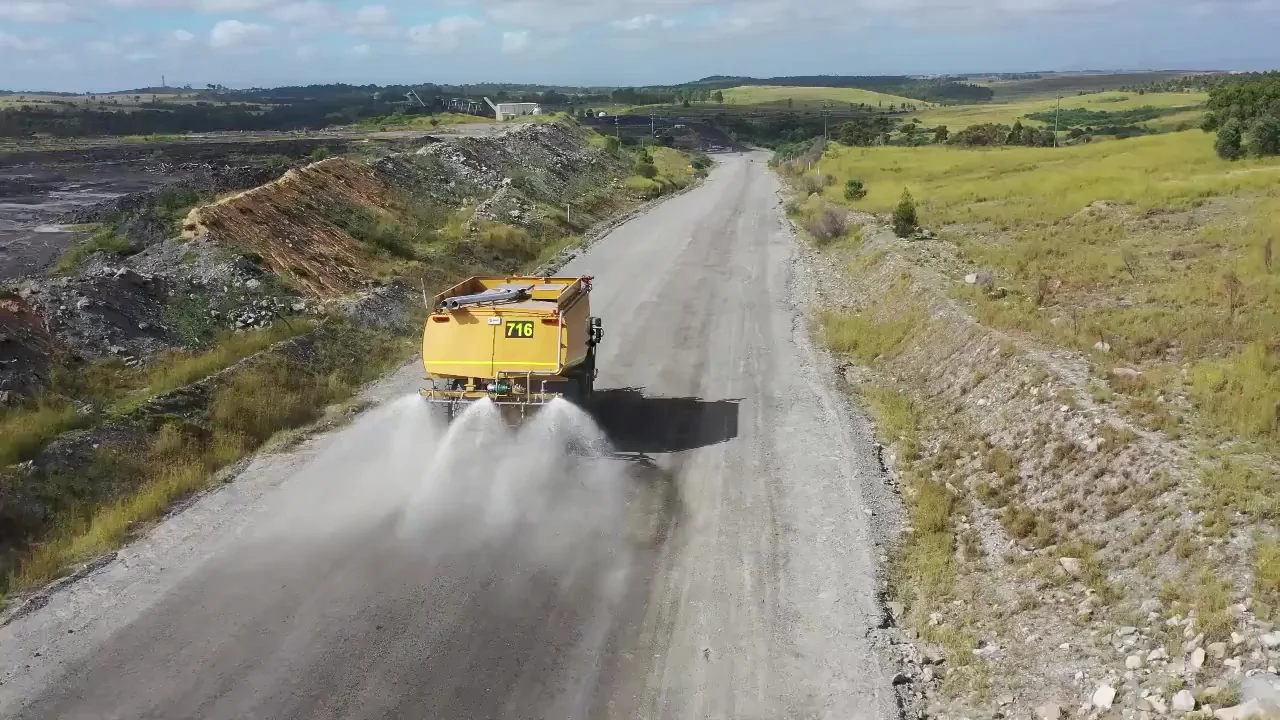
Service vehicle chassis requirements can vary significantly depending on the application and operating environment. A chassis designed for metro road servicing will have very different performance requirements compared to a mine-spec vehicle operating in remote off-road conditions.
Factors such as terrain, haul distances, site access, payload demands, and duty cycle all influence the ideal chassis selection. Mining operations often require heavy-duty chassis configurations capable of handling rough haul roads, steep gradients, continuous vibration, and extreme environmental conditions. In comparison, civil and construction applications may prioritise manoeuvrability, fuel efficiency, and easier access across mixed on-road and off-road environments.
Matching the chassis offering to the intended operating conditions helps improve reliability, reduce maintenance demands, and ensure the service vehicle performs safely and efficiently throughout its operational lifecycle.
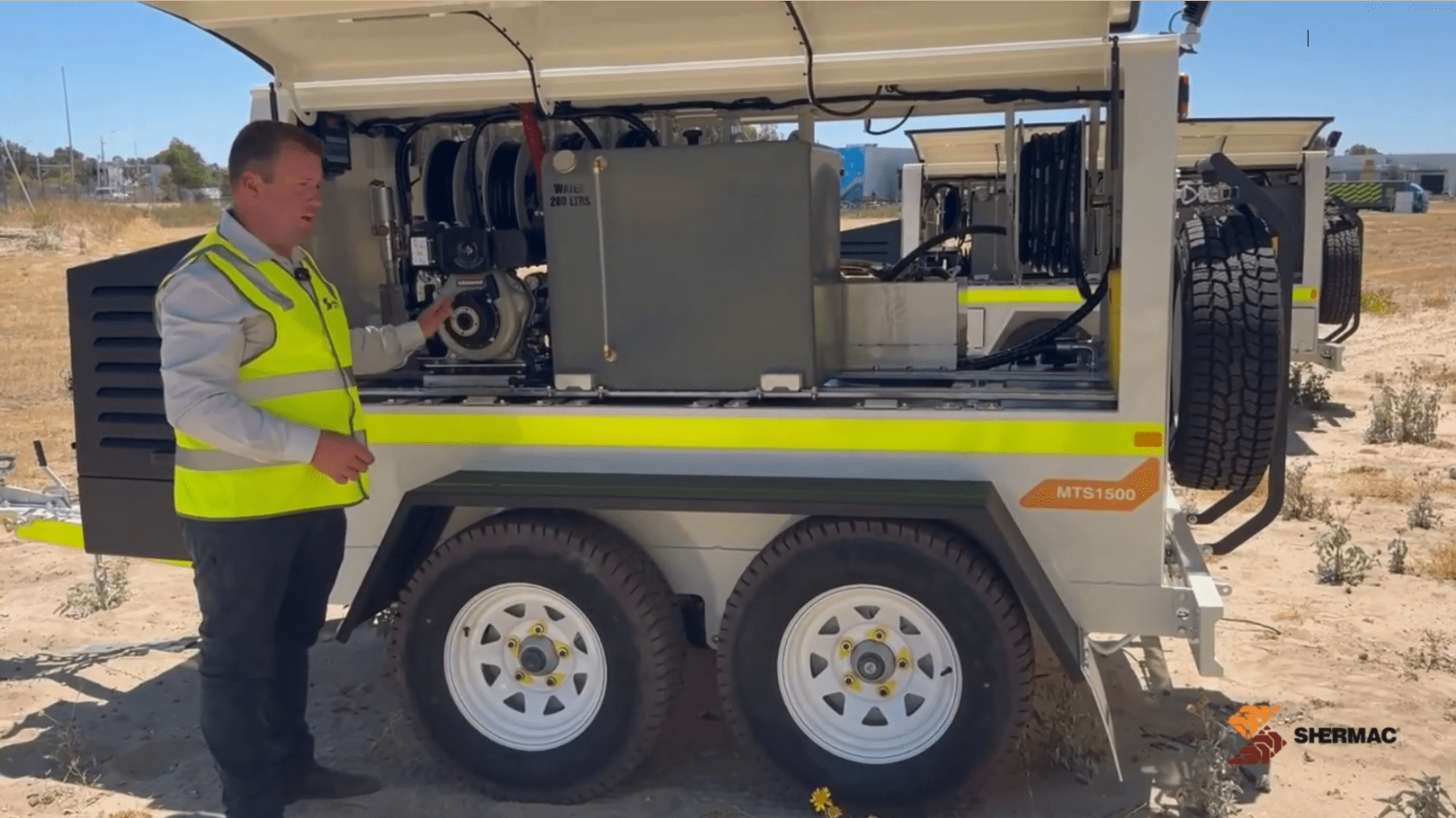
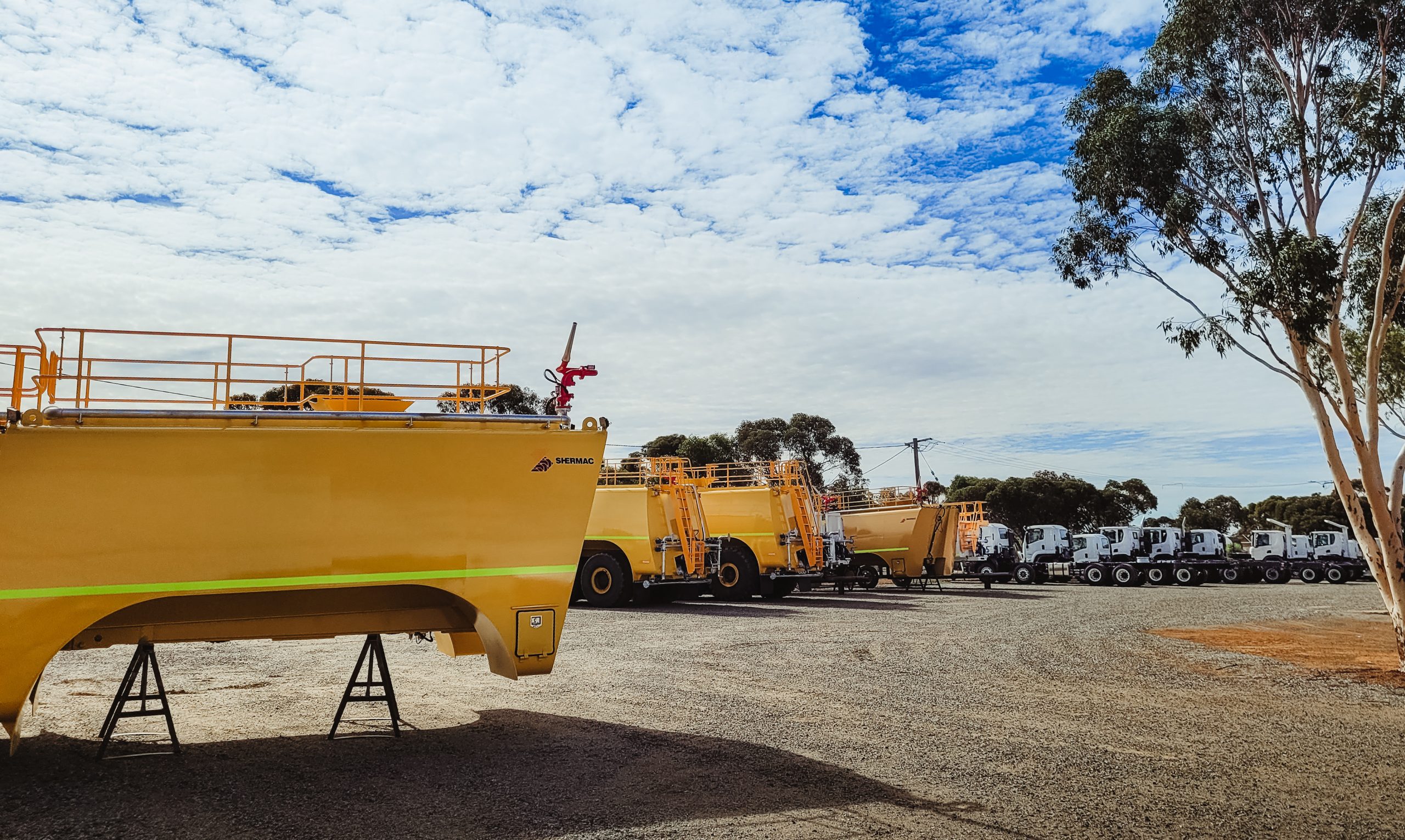
Selecting the right chassis configuration is critical for balancing payload capacity, manoeuvrability, traction, and operational efficiency. Different service vehicle applications require different chassis setups depending on terrain, site access, haul distances, and servicing requirements.
At Shermac, the chassis configurations we offer include:
Each chassis offering involves trade-offs between payload capacity, fuel efficiency, operating costs, and site accessibility. Selecting the right configuration helps ensure the service vehicle remains productive, compliant, and suited to its intended duty cycle.
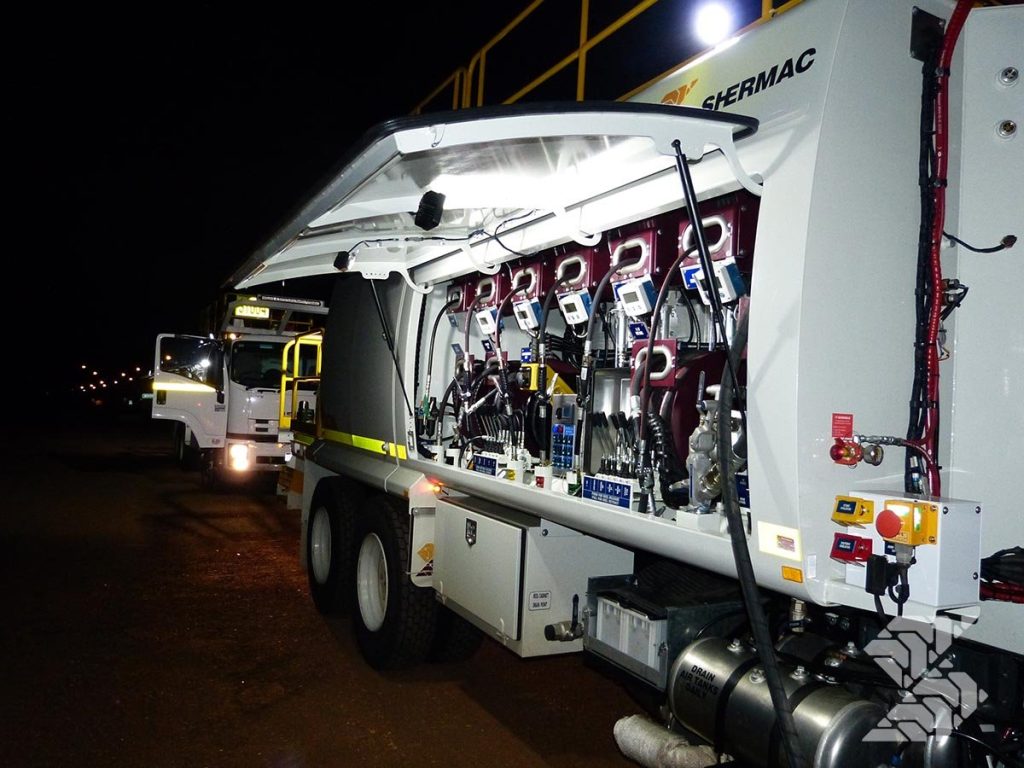
Effective chassis selection in service vehicles goes beyond payload capacity alone. The chassis must also integrate correctly with the service body, tank systems, dispensing equipment, storage layouts, and safety systems required for the vehicle’s intended application.
Proper integrated engineering ensures the chassis has the necessary mounting points, structural support, and load-bearing capability to safely accommodate specialised equipment without compromising stability or performance. Poorly matched chassis and service body combinations can create handling issues, uneven weight distribution, accelerated wear, and costly retrofit problems over time.
A well-designed chassis also provides future flexibility for additional systems or operational changes as site requirements evolve. Engineering the chassis and service body together helps improve reliability, safety, maintenance efficiency, and long-term operational performance.
Chassis selection also plays a major role in regulatory compliance, operator safety, and the long-term cost effectiveness of a service vehicle. The chassis must be capable of meeting mine-spec requirements, legal weight limits, braking performance standards, and site-specific safety regulations without compromising operational performance.
Correct chassis selection can also improve servicing access and maintenance efficiency throughout the vehicle’s lifecycle. Well-designed layouts make it easier to access pumps, tanks, hose reels, filters, and critical components, helping reduce downtime and ongoing labour costs.
A properly engineered chassis helps reduce:
For more than 20 years, Shermac has designed and manufactured engineered-for-purpose service trucks for Australia’s mining, civil, and construction industries. Our team works closely with you to select the right chassis configuration for your operational requirements, ensuring every vehicle is built for reliability, productivity, and performance in any conditions.
If you’d like to discuss your next service truck project, contact the Shermac team to explore a tailored solution built around your site and servicing requirements.
Talk to our well-trained and knowledgeable team to find out more about our customisation process and how we can help you.
Call our team on 1300 799 943 or email sales@shermac.com.au with your inquiry.