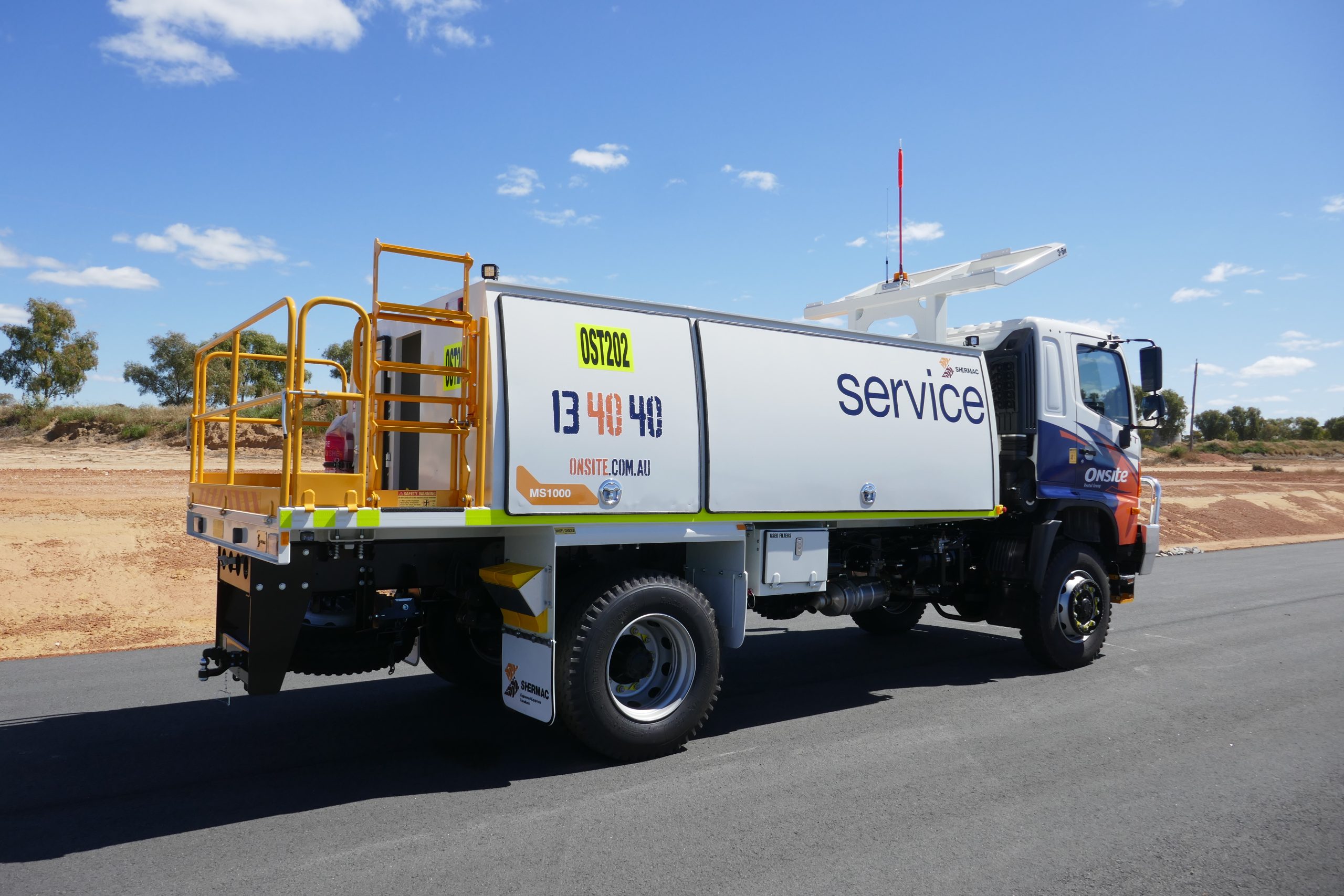
Vehicle weight distribution has a direct impact on how heavy vehicles behave under load. In mining and civil operations, poor balance can reduce stability, accelerate component wear and expose fleets to unnecessary compliance risk.
For fuel trucks, service trucks and other support vehicles operating in harsh Australian conditions, axle loading and overall load balance must be engineered correctly. Vehicle weight distribution considers axle loads, centre of gravity and how mass is positioned across the chassis.
At Shermac, weight distribution is assessed early in the engineering process of every mine-spec build, supporting safe operation, regulatory compliance and long-term fleet reliability in the field.
Vehicle weight distribution refers to how a vehicle’s total mass is shared across its axles and wheels. In heavy vehicles, this includes the cab and chassis, tanks, mounted equipment, stored fluids, tools and payload.
Every truck has manufacturer-specified axle ratings and a Gross Vehicle Mass limit. Axle capacity is restricted by either the manufacturer’s rating or legal load limits, whichever is lower.
Weight must be distributed so each axle carries its permitted share of the load. A vehicle can remain within its total GVM while still overloading a single axle if components are positioned incorrectly along the chassis.
The example below illustrates how axle capacities vary across different chassis configurations.
 |
 | |
| Vehicle | Isuzu FSR 140-260 | FXZ 240-350 |
| Front Axle | 5,000 Kgs | 6,600 Kgs |
| Rear Axle(s) | 9,000 Kgs | 18,100 Kgs |
| GVM | 14,000 Kgs | 24,000 Kgs |
Source:Isuzu Truck Service: Weight distribution concepts.
These figures highlight an important point. Total GVM does not determine compliance on its own. Each axle group must remain within its specified rating.
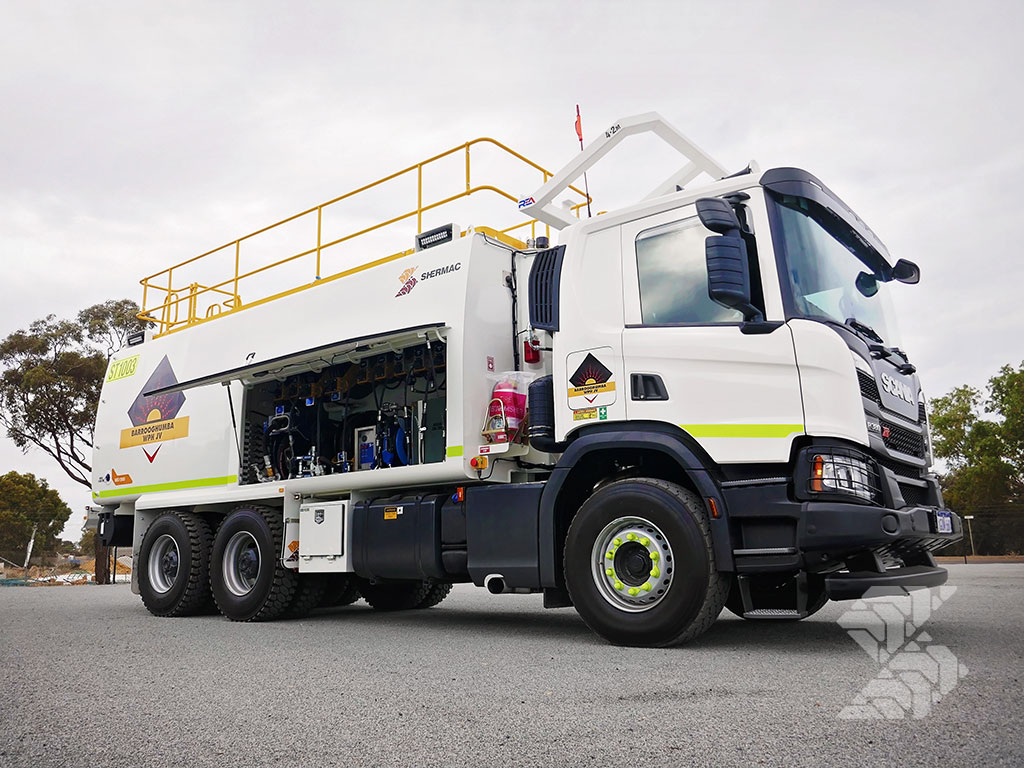
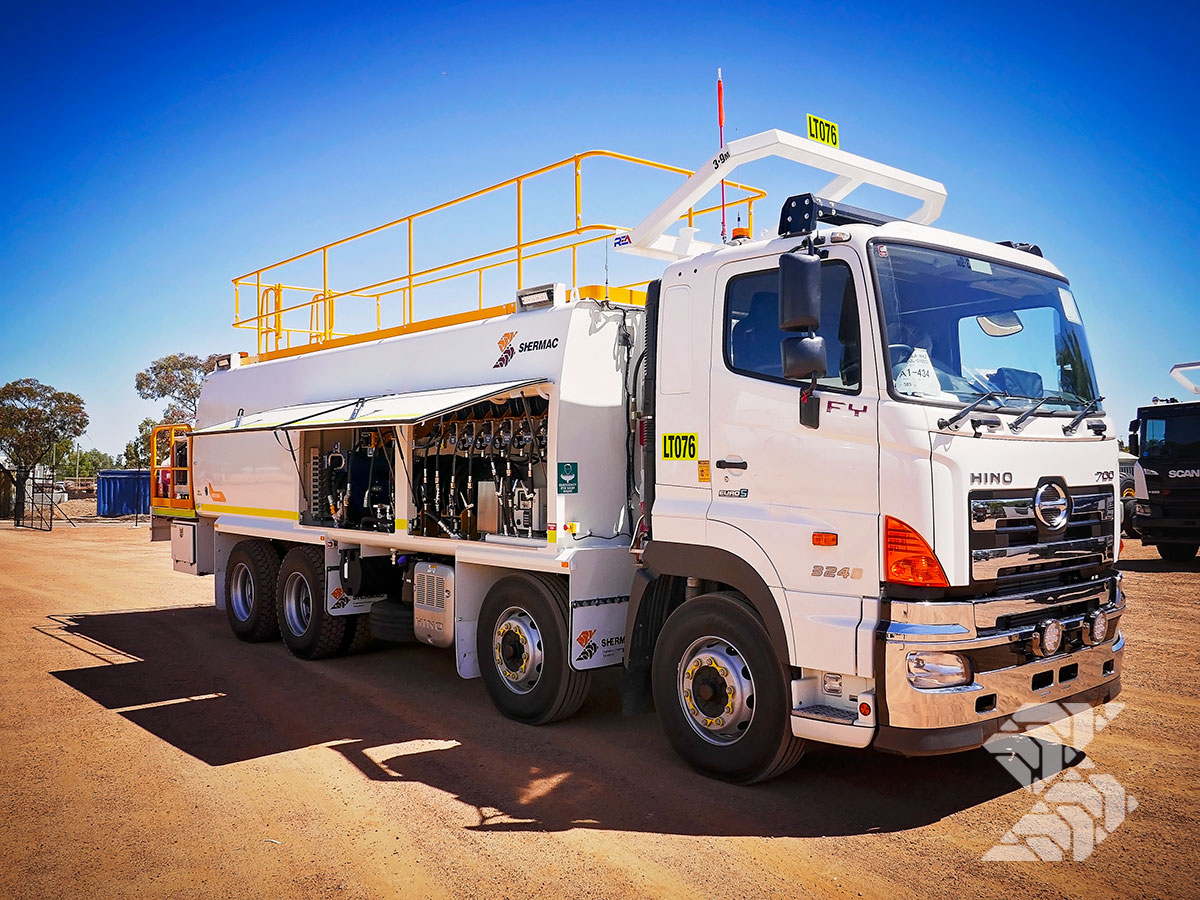
In practical terms, mounting a fuel tank, service module or storage system too far rearward on a higher-capacity chassis can overload the rear axle group while the vehicle still appears compliant overall. This is where proper vehicle weight distribution becomes critical.
Centre of gravity (CG) influences how a vehicle handles under braking, cornering and uneven terrain. Loads positioned too high or too far rearward can reduce stability and steering control.
In fuel trucks and service vehicles, fluid movement inside tanks also affects weight transfer during operation. Baffling, tank placement and chassis integration all influence stability.
In engineering terms, a “moment” is the force created by weight acting at a distance. The further a component sits from a reference point, the greater its effect on axle loading.
This is why moving a tank or storage module even a small distance forward or rearward, can materially change weight distribution. By calculating these moments during design, engineers can predict how much load will sit on each axle before the vehicle is built.
In mining and civil operations, incorrect vehicle weight distribution creates immediate safety risks and long-term compliance exposure. Heavy vehicles operate on uneven terrain, remote haul roads and high-temperature sites where stability cannot be compromised.
Poor weight distribution can result in:
Compliance risks are equally serious. Axle groups must remain within manufacturer ratings and legal load limits. Even if a vehicle sits within its total Gross Vehicle Mass, a single overloaded axle can result in:
Accurate vehicle weight distribution ensures each axle carries its intended load, supports compliance with legal limits and delivers predictable performance in demanding mining and civil conditions.
When weight is unevenly distributed across the chassis, components wear faster and failures occur sooner than expected. Common impacts include:
In fuel trucks and service vehicles, poorly positioned tanks or equipment can amplify vibration and load transfer, accelerating wear on pumps, reels and structural components. Over time, this results in more frequent repairs, unplanned downtime and higher maintenance labour costs.
Underloading can also create inefficiencies. If a vehicle consistently carries less than its engineered capacity due to poor weight planning, you are not maximising asset value or return on investment.
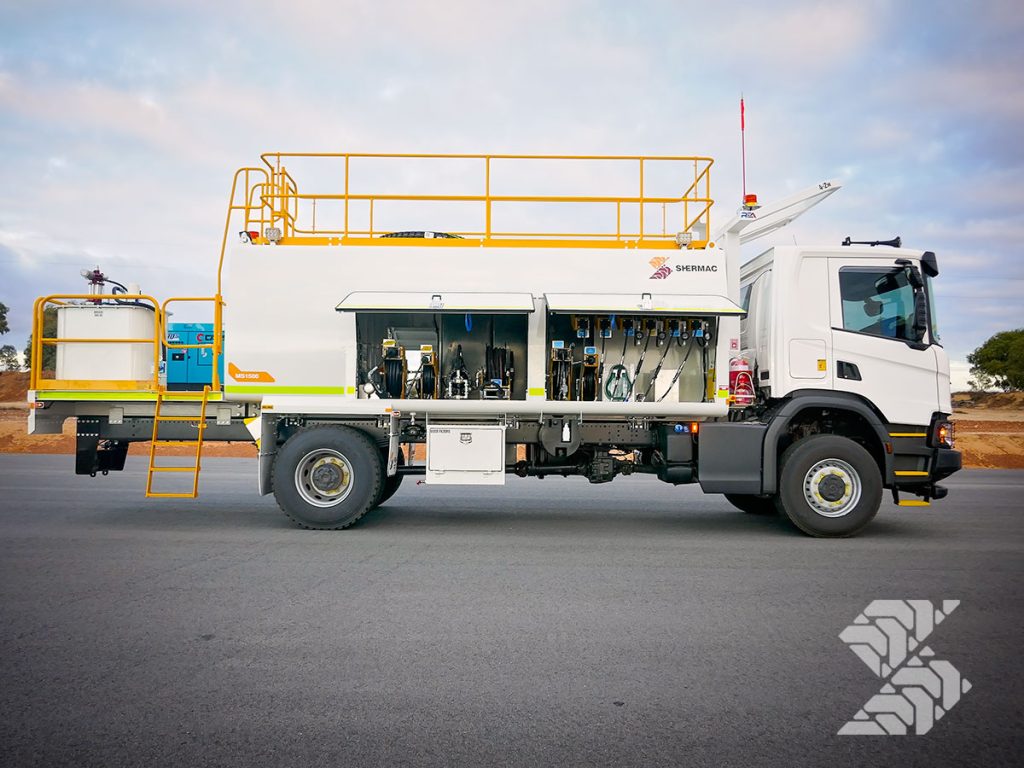
Vehicle weight distribution must be engineered into the vehicle from the beginning. In heavy-duty applications, layout decisions directly affect axle loading, stability and long-term durability.
At Shermac, weight distribution is assessed during the early design phase of every mine-spec build. This includes:
Even minor adjustments in layout can significantly alter front and rear axle loads, particularly in high-capacity fuel trucks.
Balanced weight distribution depends on how tanks and modules integrate with the chassis.
This protects the chassis, reduces fatigue and supports long-term reliability.
For fuel and service vehicles, liquid movement affects stability.
These engineering considerations help maintain predictable performance in demanding site conditions.
When weight distribution is designed correctly from the outset, your fleet will experience fewer compliance issues, a more balanced wear and stronger overall lifecycle outcomes.
Vehicle weight distribution is a foundational part of heavy vehicle performance. When axle loads, centre of gravity and component placement are engineered correctly, fleets operate more safely, remain compliant and experience fewer avoidable failures.
Shermac engineers mine-spec fuel trucks and service trucks with weight distribution assessed at the design stage, ensuring each build performs reliably in demanding Australian conditions.
If you are planning your next build, explore our range of mine-spec service trucks or speak with our engineering team on 1300 799 943 or email sales@shermac.com.au with your inquiry about a configuration tailored to your operation.
Talk to our well-trained and knowledgeable team to find out more about our customisation process and how we can help you.
Call our team on 1300 799 943 or email sales@shermac.com.au with your inquiry.