1300 799 943 Enquire Now

Why filtration is critical when buying a service vehicle

When purchasing a new service vehicle, filtration systems are often overlooked in favour of tank capacity, storage layout, or pump performance. But in mining and heavy equipment operations, fluid cleanliness directly impacts fleet reliability, servicing quality, and long-term operating costs.

A poorly designed or poorly maintained filtration system can create serious operational problems over time. That’s why filtration should be considered a critical part of any mine-spec service vehicle purchase decision.

Why fluid cleanliness matters in fleet operations

Modern mining and civil equipment relies on clean diesel, oils, coolants, and hydraulic fluids to operate reliably under heavy loads and harsh site conditions. Today’s engines and hydraulic systems are built with tighter tolerances than ever before, meaning even small levels of contamination can accelerate wear and reduce component life. This is something you don’t want to be responsible for.

Dust, grit, water, and microscopic metal particles can enter fluid systems during storage, transfer, or servicing. Once contamination reaches critical components such as injectors, pumps, valves, or hydraulic systems, the result can be reduced performance, premature failures, and unplanned downtime.

In high-production environments, these failures quickly impact servicing schedules, fleet availability, and site productivity.

What filtration does in a service vehicle
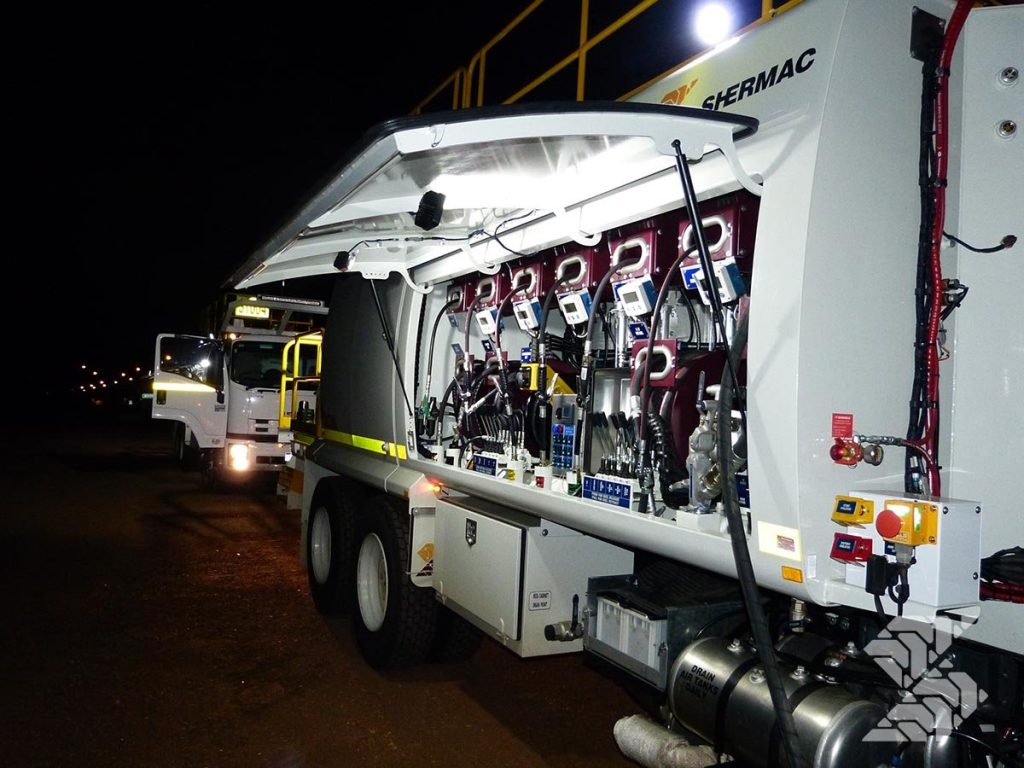
Every time diesel, oil, coolant, or hydraulic fluid is transferred into a machine, there’s a risk of contamination entering the system. Service vehicle filtration systems are designed to remove harmful particles before they reach critical components across the fleet.

A properly engineered filtration setup helps:

  • Remove dust, water, grit, and microscopic metal particles from service fluids
  • Protect injectors, pumps, valves, and hydraulic systems from contamination-related wear
  • Maintain cleaner fuel and fluid transfer during servicing operations
  • Support efficient high-flow delivery without compromising fluid cleanliness
  • Reduce servicing disruptions caused by blocked or poorly maintained filters

Not all service trucks are built with the same approach to filtration. In some cases, filters are removed to increase fuel delivery speeds, creating unnecessary risk for high-value equipment. Poor-quality or clogged filtration systems can also restrict flow rates, slow servicing operations, and impact overall fleet productivity.

A well-designed filtration system should balance servicing efficiency with long-term equipment protection.

The real cost of poor filtration

Contaminated fuel and fluids can create serious operational and financial consequences across a mining or civil fleet. Even small particles of dust, grit, or metal can damage injectors, pumps, seals, and hydraulic components, accelerating wear and increasing the likelihood of premature failures.

Shermac has seen service vehicles operating with heavily clogged filters that hadn’t been maintained to the recommended service schedule. Left unresolved, restricted filters can slow fuel delivery and allow contaminants to pass through the system, increasing the risk of equipment damage and unplanned downtime.

In high-production environments, the costs escalate quickly. According to AZO Materials, large mining equipment can cost up to $15,000 per hour to operate, while major engine rebuilds can reportedly exceed $400,000. When servicing quality is compromised, the flow-on effects can include production delays, maintenance disruptions, equipment downtime, and significant repair costs across the fleet.

Filtration, OEM compliance and asset protection

Modern mining and civil equipment manufacturers place strict requirements on fluid cleanliness to protect engine and hydraulic system performance. Standards such as ISO 4406 are used to measure contamination levels in oils and fluids, helping operators maintain consistent servicing quality and equipment reliability.

Many OEMs, including Caterpillar, also provide contamination control guidelines that operators must follow to maintain warranty compliance and protect critical components from premature wear.

This is why Tier 1 mining operators prioritise high-quality filtration systems across their fleets. Effective filtration helps protect high-value assets, maintain cleaner servicing practices, reduce contamination-related failures, and support longer service intervals between maintenance events.

When equipment uptime directly impacts production targets, filtration becomes an important part of both operational reliability and long-term asset protection.

Why engineered filtration systems matter

Not all filtration systems deliver the same level of protection, servicing efficiency, or long-term reliability. Generic or retrofitted setups are often designed around basic fluid transfer requirements rather than the realities of high-production mining and civil operations.

An engineered filtration system is designed to support both contamination control and operator usability. That includes compatible high-flow systems, logical hose and filter placement, safe access for servicing, and layouts that simplify routine maintenance.

Shermac also integrates clogging alert systems that notify operators when filters require cleaning or replacement. This helps avoid unnecessary servicing while reducing the risk of restricted flow rates or contaminated fluid transfer.

With complete filter replacement costs on some service trucks reaching between $5,000 and $6,000, smarter filtration management can help reduce unnecessary maintenance costs while protecting high-value fleet assets over the long term.

Better filtration means lower whole-of-life costs

Effective filtration plays a critical role in protecting the productivity and long-term value of your fleet.

Cleaner fluid transfer reduces contamination-related wear, improves servicing quality, minimises rework, and helps avoid costly downtime across mining and civil operations. Over time, that can lead to lower repair costs, longer equipment life, and more efficient day-to-day fleet performance.

The right service vehicle setup is an investment in operational reliability. A conversation with the right engineering team early in the process can make a significant difference to long-term outcomes.

If you’re planning a new service truck purchase, talk to the Shermac team about your filtration requirements and operational goals. We’ll help you build a solution engineered for the way your fleet works.
By: Robert Ray, National Business Developer Manager at Shermac

Shermac understand the importance of correct weight distribution on a truck chassis, and how if the limits aren’t adhered to, the consequences could be serious. All of our vehicles are designed and engineered to maximize the truck chassis capacity, but stay within the boundaries of the law and the vehicle ratings.

SERVICE TRUCK WEIGHT DISTRIBUTION AFFECTS SAFETY 

As Australia’s leading supplier of customised service vehicles for the mining and construction industries, Shermac takes safety very seriously.  We understand your zero tolerance in the workplace for having an operator injured, litigation costs, and the downtime cost of having a truck out of action.

Our knowledge on road rules, weight restrictions and loading limits is applied to every build here at Shermac.

We stand by our motto of  “safety engineered in – hazards engineered out”, giving you peace of mind, with your vehicle being 100% legally compliant in every way.

HOW CUSTOMISATION BENEFITS WEIGHT DISTRIBUTION  

Manufacturers of non-customised vehicles provide a standard body that fits certain sized vehicles, which limits ability to control axle loading. The Shermac customisation process finds out how a vehicle will be used and ensures it is built for this purpose. A mining vehicle, for instance, will be mostly used on private roads where highway laws do not apply. As such it can be more heavily loaded. But a vehicle for servicing construction machinery will likely be used on public roads. This needs to be taken into account when it is customised.  

The weight limit of a truck and its load on highways depends on the truck’s size and number of axles. While its technical weight limit as specified by the manufacturer might be 12 tonnes, the maximum load allowable for a road-going, single-steer axle vehicle is seven. In general, manufacturers’ weight limits are higher than road limits. Which means the onus is on the vehicle’s owner and the driver to ensure it stays within them. 

Shermac’s customised service trucks make it easier for weight limits to be adhered to and along with the safe distribution of loads, resulting in fewer crashes, less vehicle and operator downtime, and a better bottom line. 

Shermac Service Trucks are built to handle any challenge, they are custom designed and extensively tested to ensure they perform even in the harshest and most remote environments. Where possible, components are sourced from within Australia, minimising wait times if a part were to fail. By offering custom designed, purpose built vehicles, Shermac manufactured Service Trucks are packed full of features that make them more reliable and will allow you to get more production time from your equipment. 

FEATURES INCLUDE:

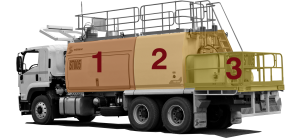
Unique Segmented Tank Design

The segmented tank design means that

  • reel cabinet and oil tanks
  • diesel tank, and
  • rear tray

are individually spring mounted to the chassis to minimise stress transfer, greatly increasing body integrity.

Curved Tanks

Every element in every truck design by Shermac has been engineered to perform during heavy-duty use in the harshest conditions. Shermac engineers create fatigue simulations in the design phase, any tank failures are used as an opportunity to further refine and reinforce where necessary, resulting in a more durable finished product.

One such feature that ensures the integrity and durability of Shermac tanks are the curved sides. Curved tanks are stronger than flat tanks, not to mention they also allow for more storage space.

Painted to Withstand Harsh Conditions

All Shermac tanks are blasted and painted internally and externally using a quality two-pack paint system, with optional corrosion protection systems for operation in corrosive site conditions.

Storage

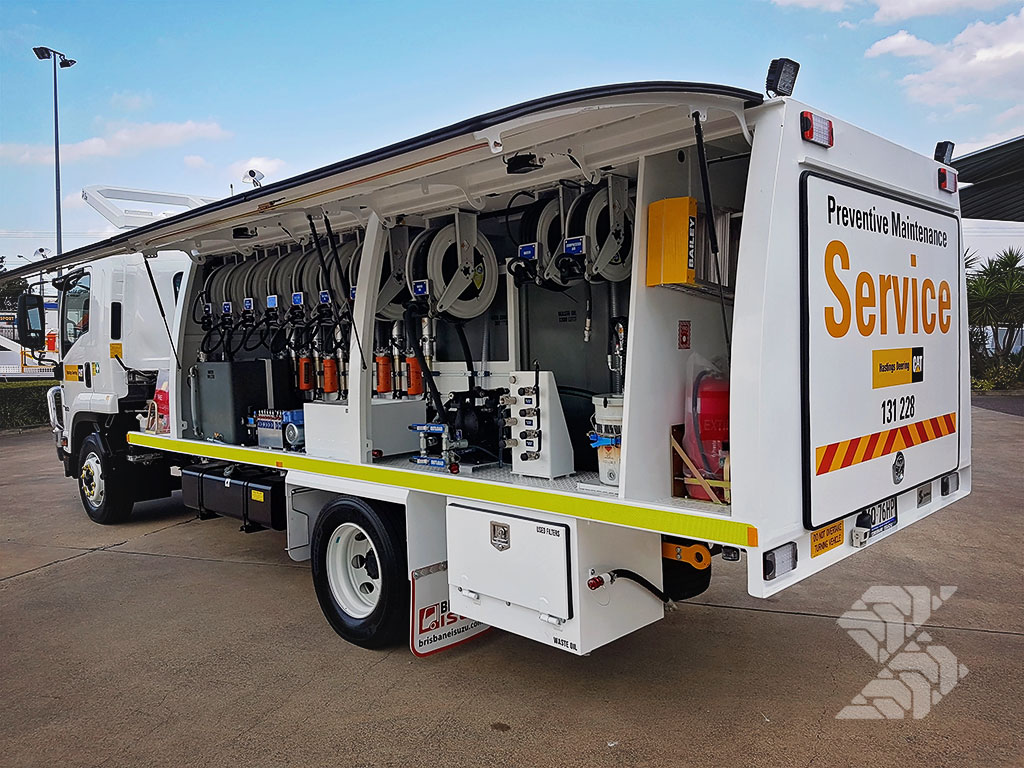
All of our truck designs maximise storage space, with ample room for filters and tools in secure, weatherproof lockers.

Rigorous Testing

All Service Trucks manufactured by Shermac are rigorously tested before being sent to the client. Each part is tested before and after assembly to ensure that no issues arise upon delivery to the client.

Usability, Flexibility, Reliability, and Safety

All products manufactured by Shermac are of a high-quality standard and are packed with safety features, ensuring safe and reliable operation. Through client consultation, Shermac offer an ergonomically designed and manufactured service truck that is easy to use and maintain, making life easier for operators.

Contact Us Today

For more information regarding Service Trucks and how we can manufacture to your specific needs, contact us on 1300 799 943 today, or watch the video below.

Operator fatigue is a serious and persistent risk across mining and civil operations. It affects focus, physical performance, and decision-making, increasing the likelihood of errors and putting pressure on both safety and output.

Most fatigue management strategies focus on work hours and compliance. But fatigue doesn’t just come from time on shift. It builds through the day, shaped by how work is performed and the conditions operators are working in.

In service operations, that’s where the problem often sits. Repetitive tasks, poor access, and inefficient vehicle layouts create unnecessary strain that slows servicing and reduces consistency. Over time, that strain carries through to equipment availability, longer servicing cycles, and overall uptime.

The hidden cost of operator fatigue in mining and civil operators

Operator fatigue is often recognised, but not always measured where it matters most. On site, it shows up in small delays, inconsistent servicing, and reduced output across a shift.

  • Tasks take longer than expected
  • Servicing windows start to slip
  • Output per operator drops over time

Individually, these don’t seem critical. But across a full shift or multiple crews, they compound into lost productivity, longer servicing cycles, and reduced fleet availability.

Fatigue management processes focus on reducing the risk of fatigue. But they don’t always address how fatigue builds in real time during day-to-day operations. That gap is where a large portion of uptime is lost.

What causes operate fatigue in service operations

In service operations, fatigue is often driven by the way the work is set up. Poor design forces operators to work harder than they should for routine tasks.

Poor layout and access

  • Climbing on and off the truck multiple times
  • Reaching awkwardly for controls, reels, or storage
  • Limited or unsafe access to key components

Repetitive manual handling

  • Handling heavy hoses and equipment throughout the shift
  • Constant lifting, pulling, and repositioning
  • No mechanical assistance where it’s needed

Inefficient workflows

  • Poor placement of tanks, reels, and tools
  • Unnecessary movement between tasks
  • Servicing processes that don’t follow a logical sequence

How operator fatigue directly impacts uptime

Fatigue doesn’t stay isolated to the operator. It shows up in how work gets done and how quickly equipment gets turned around.

  • Slower servicing times as physical and mental strain builds
  • Increased errors during refuelling, maintenance, or inspections
  • Rework caused by missed steps or inconsistent execution
  • Delays between jobs as operators need more time to complete tasks

When servicing slows down, equipment stays offline longer. When errors occur, machines often return with unresolved issues that require further attention.

This creates a compounding effect. Fatigue leads to errors. Errors lead to rework. Rework extends servicing time and increases unplanned downtime. Over time, this reduces equipment availability and disrupts the performance of the entire fleet.

How better service truck design reduces operator fatigue

Operator fatigue in service operations is often a design issue. When vehicles aren’t built around real workflows, operators compensate with more movement, more effort, and more time on task.

That added load builds across every job. Climbing, reaching, and handling tasks start to stack up. Over a full shift, it slows performance and increases strain in ways fatigue management alone can’t address.

Well-designed service trucks remove that friction. They support the way work is actually done on site, reducing unnecessary effort and improving consistency across every task.

Ergonomic layouts

  • Controls, reels, and storage positioned for easy reach
  • Logical placement that reduces unnecessary movement
  • Clear labelling for faster, more consistent operation

Safe and efficient access

  • Stable platforms, handrails, and access points
  • Less climbing and repositioning throughout the shift
  • Reduced physical strain during routine tasks

Workflow-driven design

  • Components arranged to match real servicing sequences
  • Faster turnaround between jobs
  • Less wasted time moving around the vehicle

Reduced manual handling load

  • Better hose reel positioning and assist systems
  • Improved equipment access without heavy lifting
  • Less repetitive strain across the shift

When the vehicle is designed around the task, operators work more efficiently with less strain. Servicing becomes faster, more consistent, and easier to sustain across long shifts.

Why generic service vehicles fall short

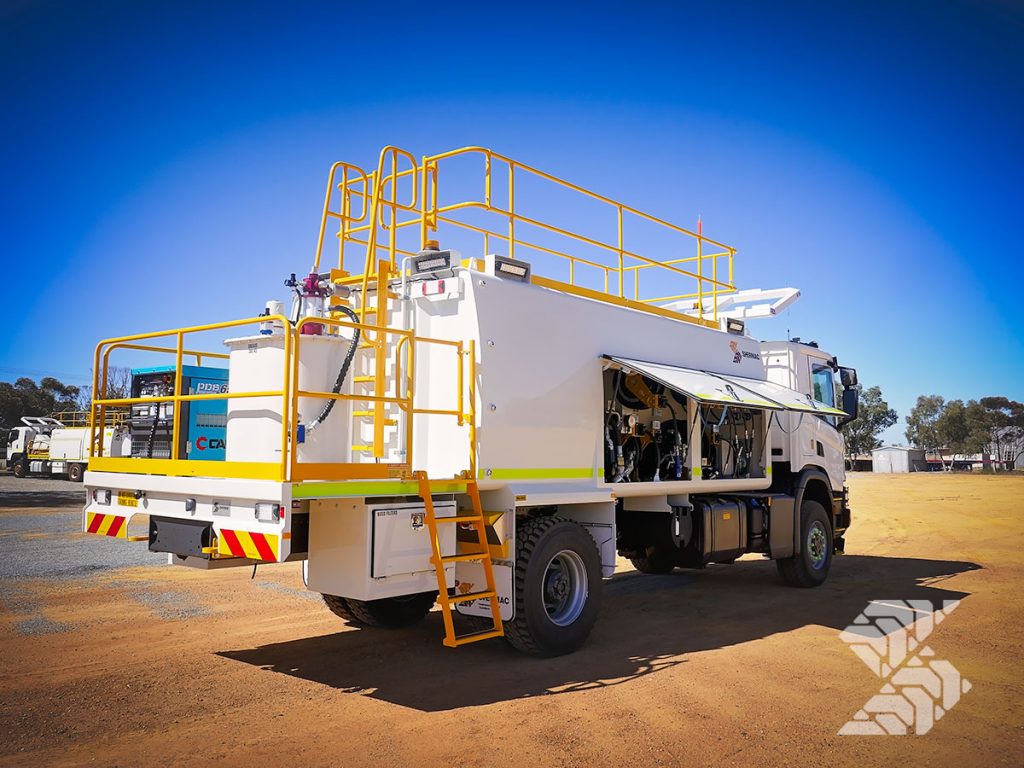
Mine-spec service truck with elevated platform, safety rails and ergonomic access system designed for efficient on-site maintenance operations

Many service vehicles are built to a general specification. They’re designed to suit a wide range of use cases, not the specific demands of your site.

And that’s where problems start.

  • Layouts don’t match real servicing workflows
  • Access points create unnecessary strain
  • Storage and systems aren’t positioned for efficiency
  • Operators adapt their process to the vehicle, not the other way around

Over time, these mismatches slow servicing, increase fatigue, and introduce avoidable inefficiencies into daily operations.

Here at Shermac, we take a different approach. Every service truck is engineered around your site conditions, workflows, and servicing requirements. Tank configurations, access systems, storage layouts, and dispensing setups are all designed to suit how your team works.

The result is a vehicle built around the way your team works. Reduced friction in daily tasks, lower operator strain, and more consistent performance across every shift.

Build fatigue out of your operation

Operator fatigue will always be a factor on site. But how much it impacts your operation is something you can control.

When service trucks are designed around real workflows, operators work with less strain, servicing becomes more predictable, and equipment returns to operation faster. That flow-on effect improves uptime, reduces unplanned delays, and stabilises performance across the fleet.

If your current setup is slowing your team down, it may not be a people issue. It may be a design issue.

Contact us to discuss your unique requirements and explore a service truck built around your operation.

Stay Updated