HOW HIRING CUSTOMISED SERVICE VEHICLES SOLVES MINING COMPANY PROBLEMS
THE PROBLEM
Many mining companies require the service and ancillary support vehicles working on their sites to be customised for particular tasks, conditions or needs. But this can become problematic when the company’s need is short term and it doesn’t wish to buy the vehicle outright. Or, it may not have the budget for capital expenditure, but has funds from an operational budget available for hiring a vehicle. However, finding one that exactly suits the company’s needs but doesn’t have to be added to the permanent fleet can be difficult.
THE SOLUTION
The solution to these dilemmas, for many mining companies, is to hire the vehicles they require instead of buying them. But given these are not run-of-the-mill vehicles that can be picked up at just any hire company, assistance from a specialised hire firm is needed.
One such company is Western Plant Hire, based near Perth. With 50 staff and more than 15 years’ experience, WPH specialises in renting service vehicles and equipment to mining and civil companies across WA and beyond. As it has grown, so has the demand for vehicles that suit the specific needs of its customers.
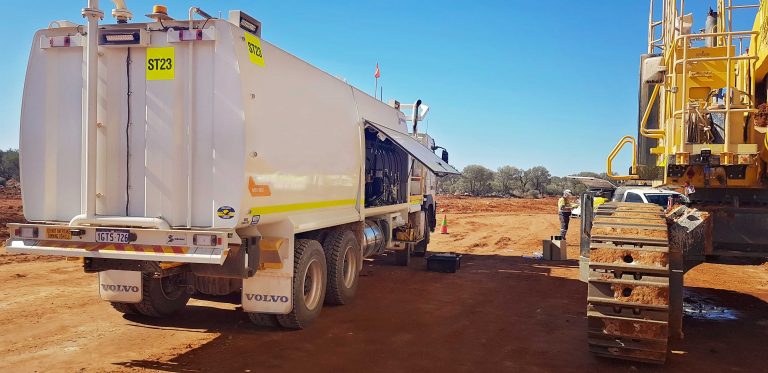
Five years ago WPH began sourcing customised vehicles from Australia’s leading manufacturer of customised mining vehicles, Shermac, also based in WA. It now regularly uses Shermac’s customised service trucks and water trucks to supply its clients with rental vehicles. Currently it has 15 Shermac vehicles in its fleet with more on order.
Executive general manager Luke Mateljan says the company uses Shermac for several reasons including quality, turnaround time, support levels and personal integrity. He says, ‘Shermac design vehicles differently. They have a knack for being able to reconfigure a truck so that, for example, where additional fuel tank capacity but less oil might be needed, they can come up with a design that provides this.’
Luke also praises the speed at which Shermac responds to quote requests. ‘They make the purchasing process easy with quotes back very quickly. Sometimes we can confirm a price back to our client and secure an order all within a few hours,’ he says.
Because Shermac are experienced in the supply of custom vehicles to the mining industry, they know the mine site compliance and design requirements of WPH’s customers. The end product we receive is always 100% work ready and within the design limits of the vehicle.
For instance, when a client requested a drill support truck with water, fuel, oil and grease on a 4×4 chassis, care needed to be taken to ensure that the vehicle was not overloaded but still had the required quantities of fluids on board. Standard, readily available 4×4 trucks would have been overloaded when the vehicle was full, however Shermac were able to source a custom Scania truck option with increased capacity to meet the requirements of both the client and the manufacturer.
No matter how high the quality of a vehicle, there is always going to be a need for repair and maintenance support. Again, Shermac excels with what Luke Mateljan describes as, ‘back up second to none’ with fast response to repair needs. He says when a problem is presented, Shermac is very quick to resolve the issue, focusing on resolution, not blame.
As well, WPH says Shermac will pull out all the stops if a customised vehicle is needed within a shorter timeframe than is usual. All these reasons make Shermac the ideal partner for firms hiring customised service vehicles to heavy industry customers.
HOW SHERMAC BUILDS CUSTOMER FEEDBACK INTO OUR DESIGNS
Shermac has been providing customised, engineered-for-purpose service vehicles to the resource sector for two decades. While customisation is critical as vehicle design must reflect the specific operational needs for the unique environment of the customer, it is also an opportunity for continual design improvements that increase vehicle reliability, productivity and uptime, and minimise risk for customers.
Shermac Production Manager, Steve Ray commented, ‘Shermac has been in business since 2002 and many buyers have been in and around service vehicles longer than we’ve been in business. They’ve worked their way through the ranks from servicing equipment to senior management roles. They’ve done the job, seen what works and what doesn’t work, and they bring insights from many years of experience. As customisation is part of our DNA, we actively seek input from our customers about what can be done differently and better’
An example of this is how Shermac addressed a customers’ concern about potential cross-contamination of fluids. A service vehicle might contain as many as eight different storage tanks with each compartment containing a different fluid. The customer was very concerned that undetected cross-contamination between, for example, coolant and engine oil would have a serious impact with huge potential repercussions if it were to occur.
In response to these concerns, Shermac re-engineered vehicle layout to separate oil-based and water-based fluids and separated individual tanks so that any leak was immediately apparent and cross-contamination could not occur.
Every service person would experience grease viscosity to be a problem. By designing our service truck modules so that the grease tank is adjacent to the hydraulic oil tank module, it is an effective solution to warm the grease, making it easier to transfer into the unit being serviced. It also helps cool the hydraulic oil.
Service vehicles operate in tough off-road environments where the potential exists for the vehicle to become bogged in poor conditions. Working with customers, Shermac designed recovery systems that make it easy and safe to tow the vehicle and these have now become now standard features of Shermac vehicles.
In another example, a standard service vehicle will require a stand-alone delivery system for each of the fluids on-board. Each delivery system will include a filter assembly to ensure the product being transferred complies with particular filtration levels, defined by ISO 4406. To assist in filter maintenance, each filter includes a pop-up alert to advise the operator when a filter change or clean is necessary.
These examples illustrate Shermac’s commitment to incorporating customer-led design and engineering into the build of service vehicles to ensure ease of maintenance that maximises vehicle uptime and availability with predictable lifetime cost.
Mining companies can ill afford unplanned downtime. The costs are eye-watering – around $180,000 per incident, according to industry experts. As an example, a dump truck out of action results in 17 percent reduction in mine output per hour. A custom support vehicle, such as Shermac’s purpose-built service trucks, would enable the dump truck to remain in service for longer, thus optimising productivity and uptime.
Productivity of core production assets is heavily influenced by the processes and resources that are deployed to optimise their uptime. These resources include an array of service vehicles that are the backbone of routine maintenance and service needs of critical production assets. Downtime on a service vehicle can increase the downtime of a mining vehicle or production asset.
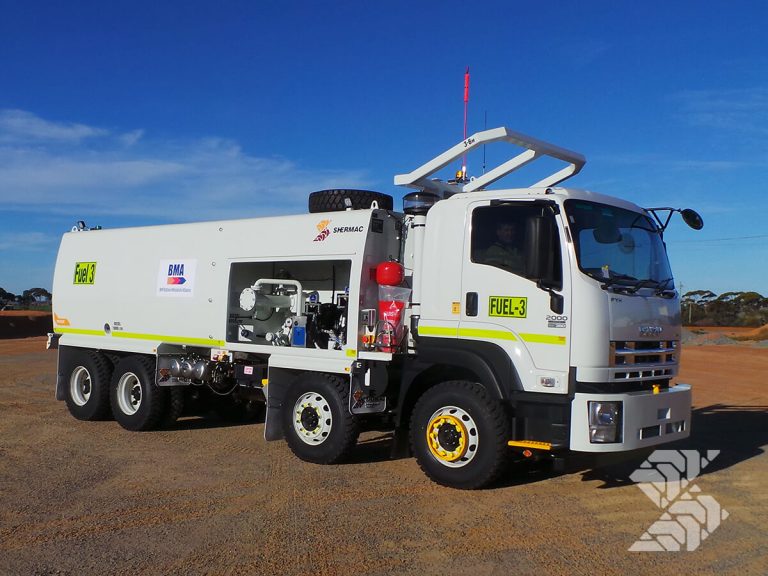
Shermac has been providing customised, engineered-for-purpose service vehicles to the resource sector for two decades. Customisation is critical as vehicle design must reflect the specific operational needs for the unique environment of the customer. A common example would be a vehicle customised to carry a larger than normal volume of fuel, coolants and lubricants. It can sufficiently service all the mining vehicles working at a particular location. One-size definitely does not fit all.
Customisation requires an understanding of the specific challenges faced by any customer, a deep-seated intellectual curiosity to look for ways to solve problems and do things better, and concept-to-delivery engineering and manufacturing capabilities.
CUSTOM SUPPORT VEHICLES CUSTOMISED FOR OUTPUT AND AVAILABILITY
In an upcoming series of blogs, we will shine a light on how Shermac’s unprecedented industry experience is reflected in everything that we do. This supports our goal to be the lowest risk supplier of service vehicles to the mining industry with the lowest lifetime cost of ownership.
Over the next few weeks, we’ll be exploring a number of critical themes:
How Shermac incorporates smart design and engineering into the build of service vehicles to ensure ease of maintenance that maximises vehicle uptime and availability with predictable lifetime cost.
Some of Shermac’s initiatives and innovations in systematically looking at all tasks that an operator might be expected to perform and using smart design to ensure that safety is engineered in, and hazards are engineered out.
Operators in the mining industry get the job done over and over again. We explore how spending site time and walking-the-walk with operators and understanding workflow has resulted in meaningful improvements in task productivity and efficiency.
Some of the initiatives and innovations that have been introduced by Shermac to minimise downtime of production assets.
Follow us on LinkedIn to ensure you don’t miss out on this mining industry series.
When purchasing a service vehicle, it’s easy to compare specifications and upfront costs. The bigger challenge is understanding how that vehicle will perform in day-to-day operations over the next five, ten, or even fifteen years.
The difference between a standard build and a purpose-built service vehicle often extends well beyond the initial purchase price, influencing productivity, efficiency, and long-term operational outcomes.
Why purchase price doesn’t tell the full story
When comparing service vehicles, it’s natural to focus on upfront purchase price. However, the lowest-cost option isn’t always the lowest-cost vehicle to own and operate.
A service vehicle plays a critical role in keeping equipment productive and maintenance activities moving. When evaluating long-term value, consider factors such as:
Refuelling efficiency
Fluid carrying capacity
Serviceability and maintenance access
Operator usability and safety
Compliance and vehicle ratings
Overall impact on equipment uptime
For mining and civil operations, where downtime carries significant operational costs, evaluating a service vehicle on purchase price alone can overlook the broader impact it will have on productivity and fleet performance throughout its working life.
Fuel delivery rates and the cost of downtime
Even short periods of downtime can have a significant impact on productivity. When service vehicles are unable to refuel, lubricate, or support equipment efficiently, critical assets spend more time idle and less time generating value.
For large mining machines, downtime can cost as much as $80,000 per hour. Even smaller primary assets can incur losses of up to $40,000 per hour. While these costs are often associated with equipment failures, servicing delays can create similar productivity losses across an operation.
Fuel delivery rate is one of the most important performance characteristics of a service vehicle. While tank capacity determines how much fuel can be carried, delivery rate determines how quickly equipment can be returned to operation.
Service Vehicle Type
Fuel Delivery Rate
Refuelling Time*
Standard Service Vehicle
~380L/min
30-45 minutes
Customised Shermac Service Vehicle
800-1,000L/min
15-20 minutes
*Based on refuelling a large mining machine.
By significantly increasing fuel transfer rates, customised service vehicles can reduce servicing times and improve fleet productivity. In some applications, reducing downtime by just a few minutes per service event can equate to savings of up to $30,000 per shift. Across a year, the productivity gains on a single machine can approach $10 million.
This is why service vehicles should be viewed as productivity assets rather than simply support equipment. The faster and more efficiently they can service machinery, the sooner those assets can return to work.
More fuel per trip starts with better vehicle design
The amount of fuel, oils, and lubricants a service vehicle can carry has a direct impact on operational efficiency. The more product a vehicle can transport in a single trip, the fewer journeys are required across site to keep equipment serviced and productive.
Purpose-built service vehicles are designed to maximise the available carrying capacity of the chassis. By carefully considering tank placement, fluid storage, and load distribution during the design process, it’s possible to increase usable tank capacity while maintaining safe and compliant vehicle operation.
The operational benefits include:
More fuel and lubricants delivered per trip
Fewer journeys across site
Reduced servicing delays
Improved fleet productivity
Less downtime for critical equipment
Over the life of the vehicle, these efficiency gains can contribute to meaningful reductions in servicing delays and operational downtime.
Why weight distribution matters
Weight distribution is a critical consideration when designing any service vehicle. While a standard body may fit a particular chassis, it doesn’t always maximise the vehicle’s carrying capacity or account for axle loading limitations.
Vehicle manufacturers specify technical weight limits, while road regulations impose additional legal restrictions. A purpose-built service vehicle is engineered to work within both requirements, helping maximise fluid capacity without compromising safety, compliance, or vehicle performance.
By taking a consultative approach to design, customised service vehicles can achieve a more efficient balance between carrying capacity, operational requirements, and legal obligations.
Solving the cold grease transfer problem
While fuel delivery often receives the most attention, grease transfer can also create inefficiencies during routine servicing. In colder conditions, grease becomes more viscous, making it slower and more difficult to transfer from the service vehicle to the machine being serviced.
To address this challenge, Shermac developed a practical engineering solution. The grease compartment is positioned adjacent to the PTO oil system that powers the vehicle’s pumps. As the PTO operates, it generates heat that helps warm the surrounding grease compartment.
By reducing grease viscosity, the system improves transfer efficiency and reduces the time required to complete servicing tasks. It’s a simple but effective design consideration that helps operators spend less time waiting for product transfer and more time keeping equipment productive.
This type of engineering detail highlights the difference between a standard service vehicle and one designed specifically around real-world maintenance workflows.
Designed for easier servicing and safer maintenance
A service vehicle’s value isn’t measured solely by how much product it carries. It also depends on how efficiently operators can use, maintain, and service the vehicle throughout its life.
Purpose-built service vehicles are designed around real maintenance workflows, helping improve productivity, safety, and ease of use on site.
Key design considerations include:
Ergonomic controls that are easy to reach and operate
Logical storage layouts that improve workflow efficiency
Accessible service points that simplify routine maintenance
Reduced reliance on confined space access
Safer maintenance procedures that minimise work at heights
Improved access to pumps, hose reels, and other critical components
Maintenance accessibility is particularly important. Traditionally, components requiring regular servicing were often difficult to reach, increasing maintenance time and safety risks.
By contrast, Shermac vehicles are designed with pumps positioned on one side of the vehicle and hose reels on the other. This allows technicians to safely access key service points without unnecessary obstacles, helping reduce maintenance time while supporting site safety requirements.
The real return on investment of a customised service vehicle
The true value of a service vehicle is measured by the productivity, efficiency, and uptime it delivers throughout its working life.
If you’re evaluating service vehicles for your fleet, speak with the Shermac team. We can help you identify the right configuration for your operational requirements and develop a purpose-built solution designed to reduce downtime and improve servicing efficiency.
As Australia’s leading provider of customised vehicles servicing mining, civil and construction, Shermac know what keeps buying managers awake at night.
Late delivery, products not matching specifications, vehicles not complying with state transport laws and on-site failures post-delivery are every purchasing manager’s worst nightmare.
Shermac have listened to their customers and refined their comprehensive design and manufacturing processes to ensure the challenges faced by most purchasing managers are solved before they become a problem.
From service trucks and trailers, to diesel trailers, water carts, tilt trays, drill support trucks, plant trailers, boilermaker’s vehicles, mobile workshops, and fuel and crane trucks, Shermac deliver exactly what customers need, when they need it.
Late delivery
Shermac are aware that failure to deliver a vehicle on time causes havoc for their customers, especially when additional work needs to be carried out by the dealer before it goes on-site. Not fitting within their schedules has a knock-on impact which affects training, inducting and ultimately production.
Delivery deadlines are reverse engineered by working out the total build time early in the production process, so the delivery date can be agreed by all departments involved with the design and build.
Each week a Shermac customer receives an update by email, including photographs where possible, to show in real time where the product is in the process. A production job board is checked daily to ensure progress toward the deadline is on track.
An extensive checklist aimed at early problem solving enables Shermac to minimise the time wasted on having to rectify mistakes. This 50-point checklist improves operational efficiency by solving nascent production problems, preventing errors and reducing the amount of reworking required, all of which cause delays. It provides an additional check on workmanship such as bolt-tightening and other standard but critical tasks.
However, in the unlikely event that a problem emerges – perhaps because of the late arrival of a component – Shermac always communicate this to customers in a timely fashion. The company believes it is better to be upfront than let the customer know the vehicle will be late the day before delivery is due.
Products not being exactly what they ordered
Customised vehicle buyers often complain that what they ordered isn’t what is eventually delivered.
Unlike some suppliers, the Shermac business model is to build what the customer wants and will solve their problem, not what the supplier might happen to have in stock.
For example, fuel delivery rates. If a customer wants a fuel pump that will fill a tank in eight minutes, it’s not acceptable to provide a pump that takes 15 minutes to do the job.
Shermac solve this problem by working closely with the customer during the design process, an additional point of difference in the industry.
They explain that each category of product has a master model, a standard design that is customised by manipulating the model to suit the job. The customer reviews the model before the componentry is ordered so they know what to expect and Shermac know what to build.
The initial proposal worked through with a customer becomes the checklist at the end of the job to ensure that what is delivered is exactly what was ordered.
Non-compliance with state transport laws
As every purchasing manager knows, transportation laws differ depending on state and whether the vehicle is intended for use on public or mining roads.
Shermac’s extensive experience with customising vehicles used in multiple situations, ensures that issues affecting rear signage, rear overhang, length, weight and height are all taken into consideration in the proposal phase of the process. For example, if a vehicle will be used on WA roads, it will be no wider than the regulation 2500mm and the rear indicator lights will be the requisite 1200mm above the ground.
Weight limits are observed to ensure maximum volumes without overloading and incurring hefty fines. Mine-site roads are subject to different rules, including strict loading limits, so Shermac work with customers to ensure the parameters such as weights and loads are observed while providing everything they want on their vehicle within allowable limits.
The processes that enable Shermac to guarantee compliance with local rules includes producing weight reports, understanding weight distribution on different vehicles for stability, and configuration so weight is loaded correctly over the axles.
Post-delivery on-site failures
Many of Shermac’s customers report that a particular problem is the difficulty of fixing vehicles when they are being used in remote areas. Understandably, they are unhappy if a product reaches the site and something goes wrong because it can be a big deal to fix.
They want their vehicles to be fit for purpose – whether that is for months or years – and not to cause headaches. They warrant workmanship for three years and provide product support by making parts available, and guaranteeing componentry matches what’s on-site.
Shermac pride themselves on understanding and focusing on customers’ pain points and working closely with them throughout the customisation process to ensure the finished vehicle is delivered on time, is fit for purpose, complies with relevant laws and won’t break down when it is least convenient.
Ready for a consultation?
Our team can create a customised vehicle to suit different budgets and requirements by assessing your needs and creating a custom vehicle solution. Call our knowledgeable and experienced team on 1300 799 943 with your inquiry.
In many buying situations, the customer knows exactly what they want and chooses their desired product off the shelf, out of a catalogue or from among the standard items the company produces.
That is not the way it works at Shermac.
Shermac is an Australian vehicle customisation company, based in Western Australia and we’ve been manufacturing customised equipment for mining vehicles for nearly two decades. The plant employs a team of designers, fabricators, painters and assemblers.
We mainly supply mining conglomerates – BHP, Rio Tinto and Fortescue Metals Group – but also customise equipment for OEM dealers (e.g. Caterpillar, Komatsu etc.) around the country.
The process of customisation begins months before the vehicle is scheduled to start work on a site when a fleet manager determines an existing vehicle is approaching the end of its useful life and needs to be replaced.
The customer comes to us with a concept in mind and the team asks a range of questions designed to uncover how the vehicle is going to be used. Questions such as the optimal servicing intervals for minimising downtime, what servicing products will be needed and whether they will be easily available. Only once all these and other queries have been satisfactorily answered, will we come up with a concept that meets the client’s objectives and does the job that needs to be done. A common example of this would be a vehicle customised to carry a larger than normal volume of fuel, coolants and lubricants to sufficiently service all the mining vehicles working at a particular location.
Shermac products are complex and often a linchpin of the production process. It needs to be reliable and a full complement of spare parts readily available. A further consideration is the environment with the spillage of hydrocarbons, oil, diesel, fuel coolants and other toxic products not acceptable practice.
Another part of the discovery process is for us to understand what each person involved in the purchase needs. For instance, the truck operator – who often treats their vehicle like family – wants to be sure there is storage available for their specific needs. The plant manager on-site is responsible for keeping the fleet at optimum performance, so will make decisions based on mechanical considerations such as oil change intervals, grease points etc. The commercial buying manager wants to reduce risk and to know that money is being spent wisely.
Once we feel that we have a full understanding of what the company is trying to achieve, our design engineers come up with a graphical representation of what the customised product will look like and its dimensions.
When all the stakeholders have had an input and the design is finalised, a purchase order is received from the customer and, if needed, finance arranged. Around 50% of the vehicles that we customise are on finance plans with Shermac paid on delivery of the vehicle. High levels of trust exist between Shermac and our customers and so we don’t require deposits.
With the purchase order safely in hand, the design is finalised and turned from a graphic representation to a finished design so the manufacturing process can begin. Shop drawings are made that include the details for parts needed to be brought in. This includes any steel needed, which arrives cut to shape, and is then bent, folded and joined to create the necessary product. It is tested for leakages and double-checked for quality control.
Once it passes quality tests, the product’s surface is prepared for finishing, which involves sandblasting, painting and assembly. Mounted electronic components are fitted and the product itself is affixed to the chassis.
Generally, durability of the product coating takes precedence over aesthetics, and high-quality industrial paint system is used. However, where the vehicle we build is the representation of our customer to their customer, then aesthetic values carry more weight, and alternative coatings such as powder coating may be used.
After finishing is completed, the vehicle is tested again for functionality. Fluid systems are wet-tested to ensure they’re working as designed and are run close to optimum settings for four hours to resolve any bugs.
Once every aspect of the product has been rigorously tested and retested, the vehicle is ready for delivery. If the product is truck mounted, it would go back to the truck dealer for them to carry out their final pre-delivery process. It is then either driven or carried to the work site. As a service to clients, we help arrange these final stages of the process to speed up deployment.
Our team works hard to understand the systems used on sites where the vehicles will be operating and to work with that system to help eliminate human error. For instance, to avoid fuels and liquids being transferred into the wrong tank or reservoir, connections are colour-coded. In another case, an oil change for a digger was taking 12 hours every two weeks. We devised a solution that slashed the oil change to just 45 minutes. This out-of-box thinking saved the customer both time and money.
We encourage clients to be clear on what they want to achieve so we can recommend the best solution from the outset. For instance, if the high number of trips required for refuelling is causing problems, we will use our knowledge and experience to come up with a solution that might not otherwise have been thought of.
This type of creative thinking is why we are nationally recognised vehicle customisation consultants and advisors with a reputation for integrity and quality.
1. LOWER TOTAL COST OF OWNERSHIP
Shermac specialist vehicles have a lower cost of ownership over their lifespan. Because they are built using only high-quality components that last longer than cheaper parts our customers report experiencing fewer breakdowns, resulting in less downtime for their vehicles.
2. EXCLUSIVITY
Shermac vehicles aren’t found on every street corner. They are most likely to be purchased by companies that understand the benefits of quality vehicles, supplied by a reputable company which delivers on its promises. We don’t aim to sell the most products; we sell the best products for the job our customers require them to do. We deliver the ideal solution for individual requirements, not an off-the-shelf, one-size-fits-all (but suits no-one) product. This means our lead times are longer than non-customised products which is why we recommend customers talk with us early in their decision-making process.
3. RELIABILITY
At Shermac, we pride ourselves on our reliability. We stand by the reliability of our products, the components we use to build them and our ability to service what we sell, no matter where in Australia you may happen to be. Also, we give you realistic timelines for delivery rather than make promises we know we won’t be able to keep. We undertake to keep you fully informed every step of the way.
4. QUALITY
Our customers tell us that the high quality of our products gives them significant advantage over their competitors, which saves both time and money. They have to replace their vehicles less often, spend less on servicing over a vehicle’s lifespan, experience fewer breakdowns and consequently have less downtime. This both reduces costs and improves margins and is reflected in their bottom line.
5. STANDARD FEATURES
Shermac vehicles come with standard features that others can only dream of! These include higher fuel delivery flow rates that reduce refuelling times and increase productivity rates.
6. NATIONWIDE SUPPORT
Even in locations where Shermac has no physical presence we provide full support for the products we sell. We have a strong network of agents which gives us local support plus we can have a fully qualified, experienced serviceman on your site within 48 hours.
7. CUSTOMISATION
No matter what the intended use of your vehicle or how unusual the customisation request you make, Shermac can supply what you need. We offer a wide range of truck brands and sizes, tank sizes and configurations, and flow rates that can solve any problem.
8. COST SAVINGS
A customised vehicle from Shermac can result in enormous cost savings through increased productivity. For example, when a vehicle costs $60,000 an hour to run, if refuelling time is reduced by half an hour a day, the annual saving is more than $10 million a year per machine. This extra production time means that a vehicle pays for itself in only two to three weeks.
9. REPUTATION
Shermac is a well-recognised brand with extensive industry experience, making us the lowest risk supplier of specialised support and service trucks in Australia.
10. SAFETY
We provide many extra safety features that come standard on our machinery rather than being optional extras. We believe strongly in providing safe working environments and including safety features is one way we can help our customers achieve this.
11. PRICE
When quality, total cost of ownership, reliability, cost savings, support, standard safety features and customisation are all taken into account, Shermac products are well priced. They are not the cheapest on the market, but we believe strongly in providing superior products built using quality components, that are crafted with true workmanship and include safety features which improve working environments.
As an operator, you need to be ready when unexpected situations come up, and solve challenges creatively, quickly and efficiently. You don’t have time to work with substandard vehicles that can’t withstand the harsh environment, including the extreme heat, cold, dust and other conditions you and your equipment are exposed to on a daily basis. You use these vehicles, so Shermac understands you know what you need to be successful.
Shermac is the solution to your business challenges. We design, manufacture, supply, and support innovative products and provide reliable, responsive services that help you carry out your responsibilities as an operator. You use it and know what you need, we listen and build it. We provide a wide range of specialised support vehicles that enable the mining, civil and commercial industries to get the job done, over and over again.
Shermac is an Australian-owned and operated business that custom-build water cartage and support vehicles for sectors from a purpose-built design and manufacturing facility in Dalwallinu, Western Australia. You want intelligent design that ensures productivity and efficiency. That’s why Shermac is a low-risk solution: We get it right the first time.
Other companies offer standard equipment, but you are confronted daily with unique situations where standard equipment doesn’t solve problems. You deal with dangerous situations and a harsh environment: it’s hot, it’s dry and safety is paramount. Shermac builds reliable equipment especially made for your specific preferences and needs. There’s nothing “standard” about it. Safety is engineered in; hazards are engineered out.
You have to travel long distances to reach a workshop for repairs and service in Western Australia, Queensland and New South Wales. We understand you need a customised, flexible, innovative design that gets the job done, over and over again. We provide knowledgeable field support and maintenance as well as spare parts in our mobile workshops. We go where you go.
We pride ourselves in always being responsive to our customers. Go to our website at www.shermac.com.au to get your preliminary questions answered, and then get your specific questions answered by contacting Shermac by phone or email. We welcome your questions, and our customers are our top priority.
Learn more about our customised solutions today: We customise service trucks and trailers; mobile workshops; fuel trucks and trailers; water carts; crane trucks; boilermakers; and other products such as trailers, tipper trucks and tilt trays.
Be sure to contact us about spare parts; our knowledgeable customer service will detail what parts we carry and what we have in-stock. Trust Shermac to provide end-to-end support from design, sourcing, manufacture, hand-over and ongoing support and maintenance. We focus on our customers’ needs and find solutions for the challenges you experience on a daily basis.
Your crew services, repairs and maintains heavy equipment outside of a workshop, and to ensure minimum downtime and maximum productivity, you rely on equipment that can do its job day-in and day-out. Customised equipment is everybody’s first choice, and it’s especially important for companies who encounter unique situations on a daily basis.
Shermac provides industrial quality products for the toughest environments. In fact, we design, manufacture, supply and support a wide range of specialised support vehicles for your particular needs, preferences, circumstances, and environment. When we say we customise and support vehicles for the mining, civil and commercial sectors, we mean it. Trust Shermac to focus on you, our customers, and on the best solution for your unique challenges.
Long distances are a given in Western Australia, Queensland and New South Wales, and Shermac understands productivity is crucial. As a maintenance supervisor, you know meticulous engineering is connected to productivity, because you can’t afford — the time or money — to have a vehicle break down on a regular basis. Shermac quality build means minimum downtime and maximum productivity. As a flexible, responsive, reliable company, our service includes supplying spare parts and field support and maintenance. We provide the support and after-sales service you’d expect from an industry leader.
This is the process: Whether you choose your own body or tray or we help you with that part of the process, we then design and build the perfect combination of innovative elements for your situation and environment you need on a daily basis, including service trucks and trailers; fuel trucks and trailers; water carts; and other products such as trailers, tipper trucks and tilt trays. Shermac provides predictable performance and predictable costs.
Get your questions answered quickly and completely today. Go to our website at www.shermac.com.au to get your preliminary questions answered. Contact us via phone or email to get your questions answered so you can make innovative recommendations to your supervisors.
Shermac is an Australian-owned and operated business that custom-build water cartage and support vehicles from a purpose-built design and manufacturing facility in Dalwallinu, Western Australia. That’s what Shermac is all about: Our customers are our top priority. We are focused on you and responsive to your business challenges. Be sure to contact us about spare parts; our knowledgeable customer service will detail what parts we carry and what we have in-stock. Shermac provides end-to-end support from design, sourcing, manufacture, hand-over and ongoing support and maintenance.
What’s important to you as a buying manager is important to Shermac: You need customized equipment for your service vehicles. You want creative, flexible products to reflect your particular needs, preferences and circumstances.
Other companies offer standard equipment and layouts, but your crew needs unique business solutions. Your crew has to deal with a harsh environment: It’s hot, it’s dry, and safety is paramount. Standard equipment doesn’t address your specifications. Shermac equipment is customised to your environment and application; Shermac builds innovative equipment especially made for your specific preferences and needs. There’s nothing “standard” about it. It’s customised to do the job that you need to be done.
When your company makes a purchase, it’s a significant purchase. You and your crew want a customized truck that lasts for years. Shermac designs and builds customized, fit-for-purpose equipment that’s delivered on-time, as-specified and ready to work. Shermac’s meticulous engineering and manufacture ensures optimum productivity and a predictable lifetime cost of ownership. Every product reflects our industry experience making us the lowest-risk supplier of specialised support and service vehicles in Australia.
Shermac understands productivity is crucial. Travelling long distances is the norm in Western Australia, Queensland and New South Wales, and productivity goes down when your crew has to travel long distances to reach a workshop for repairs and service. Shermac’s mobile workshops provide reliable, responsive, and flexible field support and maintenance as well as crucial spare parts. Shermac goes where you go, and gets you and your crew back to work as soon as possible.
Shermac is an Australian-owned and operated business that custom-build water cartage and support vehicles for the mining, civil and commercial sectors from a purpose-built design and manufacturing facility in Western Australia. Trust Shermac to get your questions answered quickly and completely by phone or email. We are customer-focused and solution-focused. Our customers are our top priority.
Our focus on the small details lets you focus on the big picture. Be sure to contact us about spare parts; our knowledgeable customer service will detail what parts we carry and what we have in-stock. Shermac provides end-to-end support from design, sourcing, manufacture, hand-over and ongoing support and maintenance.
Contact us via phone (1300 799 943) or email (sale@shermac.com.au) to get the questions answered that help you discuss solutions with your supervisors. We have the creative business solutions to help your business succeed.
Stay Updated
Make an Enquiry
Subscribe Now
Submit Your Testing Enquiry
Apply Now
Complete our simple pre-approval form below for instant pre-approval. We are able to turn the majority of application from pre-approval to purchase in less than 48 hours.
One of our team will review your application and get in touch.