Specifying a service truck for remote or FIFO work is rarely straightforward. The vehicle has to meet the site’s own compliance requirements while carrying enough fuel, fluids and equipment to support the fleet between resupply runs.
Once workshop access, harsh conditions and parts availability are factored in, the specification becomes much more than a capacity decision. The seven steps below will help you work through the key considerations before the build begins.
Before you decide on tank sizes or chassis type, work out what the truck needs to achieve between resupply runs.
Look at the fleet it will support, how often servicing is required and how much demand can build across a shift. A truck assigned to a large mixed fleet will need a very different setup to one supporting fewer machines with regular access to a depot.
Once that workload is clear, you can begin calculating the onboard capacity needed to keep the operation moving.
Tank capacity should reflect how much product the fleet will use before the truck can be replenished. This includes planned servicing, likely breakdown work and the waste fluid brought back from the field.
Start with the expected fluid use across the fleet, then allow enough reserve for unplanned work before the next resupply run.
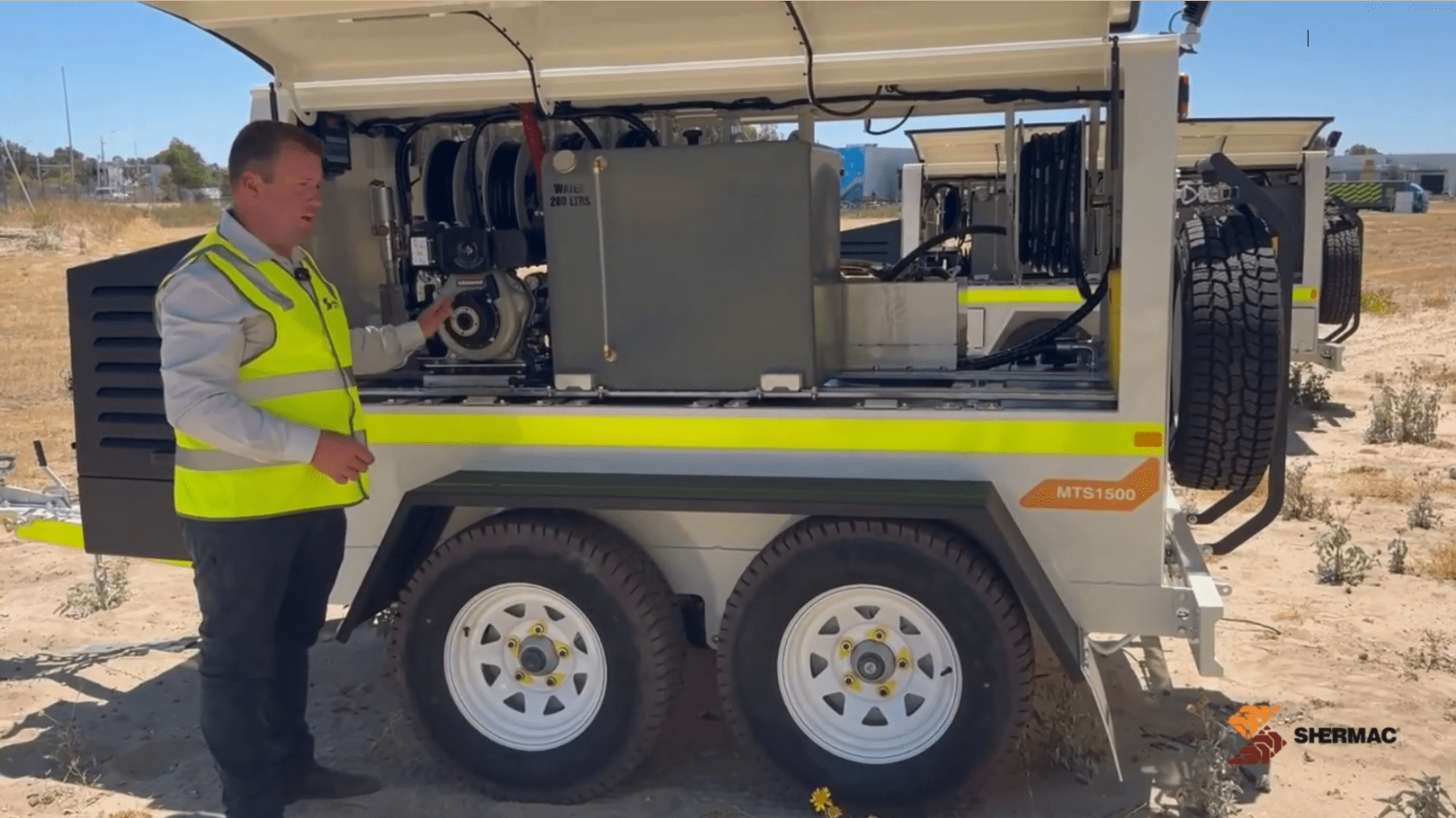
Shermac’s service truck range scales with the size of the operation:
Tank layouts can be tailored for diesel, oils, coolant, grease and waste fluid. Waste-fluid capacity should be planned alongside the supply tanks so the truck can complete the service cycle without returning early. As capacity increases, the chassis and weight distribution also need to be considered, which brings us to the next step.
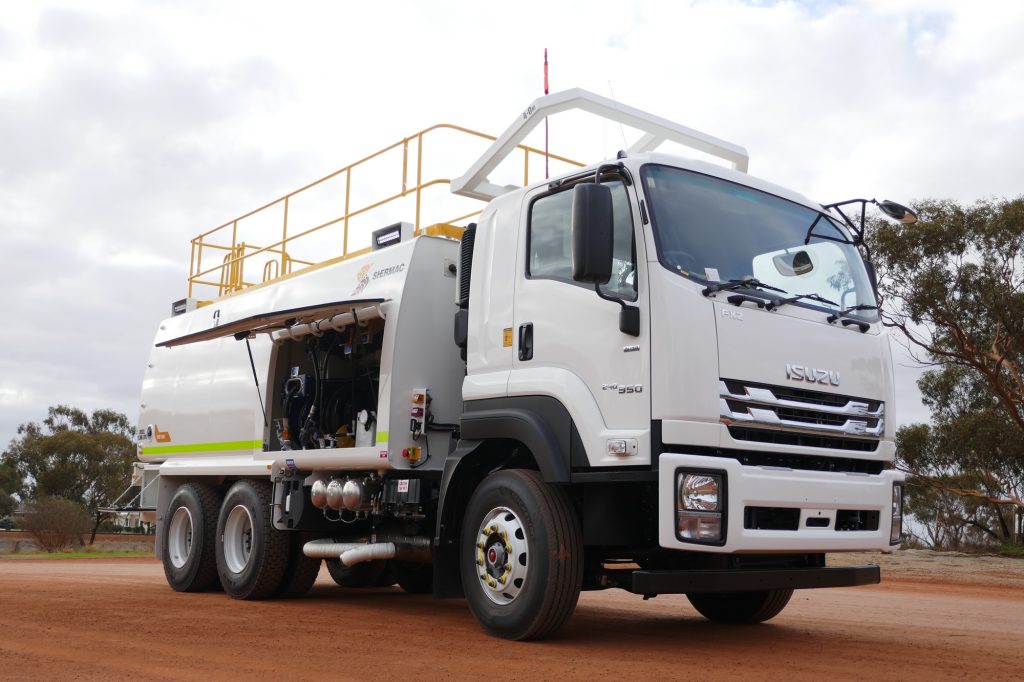
Once you know the required tank capacity, the next step is confirming that the selected chassis can carry the complete build.
This calculation needs to reflect the truck at operating weight, with every tank filled and all fitted equipment accounted for. The placement of that load also matters. Poor weight distribution can overload an axle even when the vehicle remains within its overall GVM.
The drive configuration should also suit the access roads and ground conditions the truck will face.
Shermac assesses vehicle weight distribution early in the design process. Tank layouts and service equipment can then be positioned to suit the selected chassis and support compliant operation. This becomes particularly important on remote sites where the truck will regularly travel over uneven ground.
On a remote site, your crew may not have quick access to a workshop when something goes wrong. The service truck needs to support the work that is most likely to arise between planned resupply runs.
Depending on the operation, that could include:
The priority is identifying which missing item or failed component would delay servicing in the field. Shermac can then configure storage, dispensing systems and service access around the way your maintenance team works.
Remote sites place constant stress on the truck and the people using it. Heat can affect seals and components. Dust can work its way into electrical and hydraulic systems. Repeated travel over rough ground adds vibration through the body, tanks and mounted equipment.
During specification, consider:
Shermac designs service trucks around these conditions, with durable tank systems, protected componentry and ergonomic layouts that support safer servicing. This also matters for FIFO crews, where different operators may use the same vehicle across changing rosters.
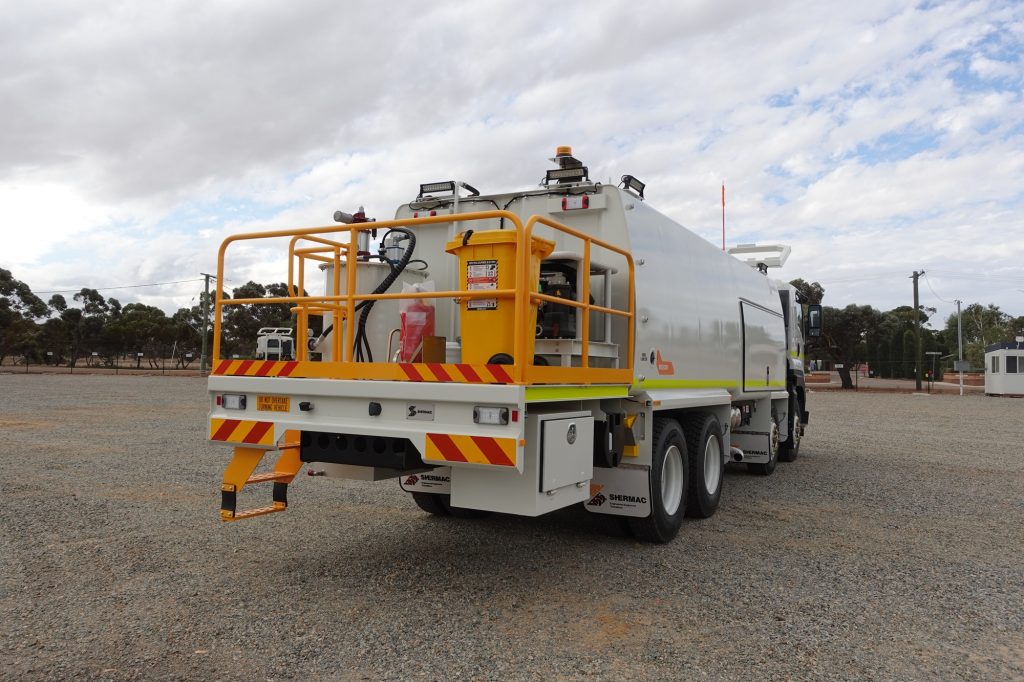
Before the build is finalised, confirm the site operator’s vehicle requirements and any additional safety features needed for approval. Requirements can vary between operators, particularly around access, electrical isolation, emergency controls and vehicle identification.
Every Shermac service truck comes fully mine-spec compliant as standard, with:
Shermac can also add further equipment to meet site-specific requirements, including isolators, emergency stops, additional lighting, guarding, access systems and safety signage.
Being stuck on a remote site without the spare part you need is not a situation you want to be left in. Before ordering, confirm how quickly replacement parts can reach the operation and what technical support is available if the truck goes down.
Shermac provides parts and servicing support throughout the life of the vehicle. Genuine components are stocked or sourced through trusted suppliers, with field support available for troubleshooting and on-site repairs. This support can make remote fleet maintenance more cost-effective by reducing delays and helping the truck return to service sooner. Shermac components are also backed by a three-year warranty.
Remote service trucks are easier to get right when the specification starts with a conversation. Shermac’s engineers use that discussion to understand the operating environment and the work the truck must complete between resupply runs.
Explore Shermac’s service trucks or speak with our team about your next remote or FIFO build. A consultative process helps make sure the final configuration is practical for the site before production begins.
Talk to our well-trained and knowledgeable team to find out more about our customisation process and how we can help you.
Call our team on 1300 799 943 or email sales@shermac.com.au with your inquiry.